What Is Mixed Use Property and Why It Matters for Owners
Learn what is mixed use property, how it is zoned and financed, and the tax rules owners, investors, and realtors need to know before buying or selling.

In this article
- What Mixed Use Property Really Means in Practice
- The Four Mixed Use Models You Will Actually See
- Vertical mixed use
- Horizontal mixed use
- Transit-oriented mixed use
- Live-work units
- Zoning, Permits, and How a Property Becomes Mixed Use
- How Lenders Underwrite a Mixed Use Property
- Tax Rules That Hit Mixed Use Owners Differently
- Allocation is not optional
- Depreciation does not follow one clock
- Passive activity rules still matter
- Personal use changes everything
- 1031 exchanges need clean boundaries
- Two Real World Scenarios You Can Picture
- Checklists by Role and When to Call a Tax Attorney
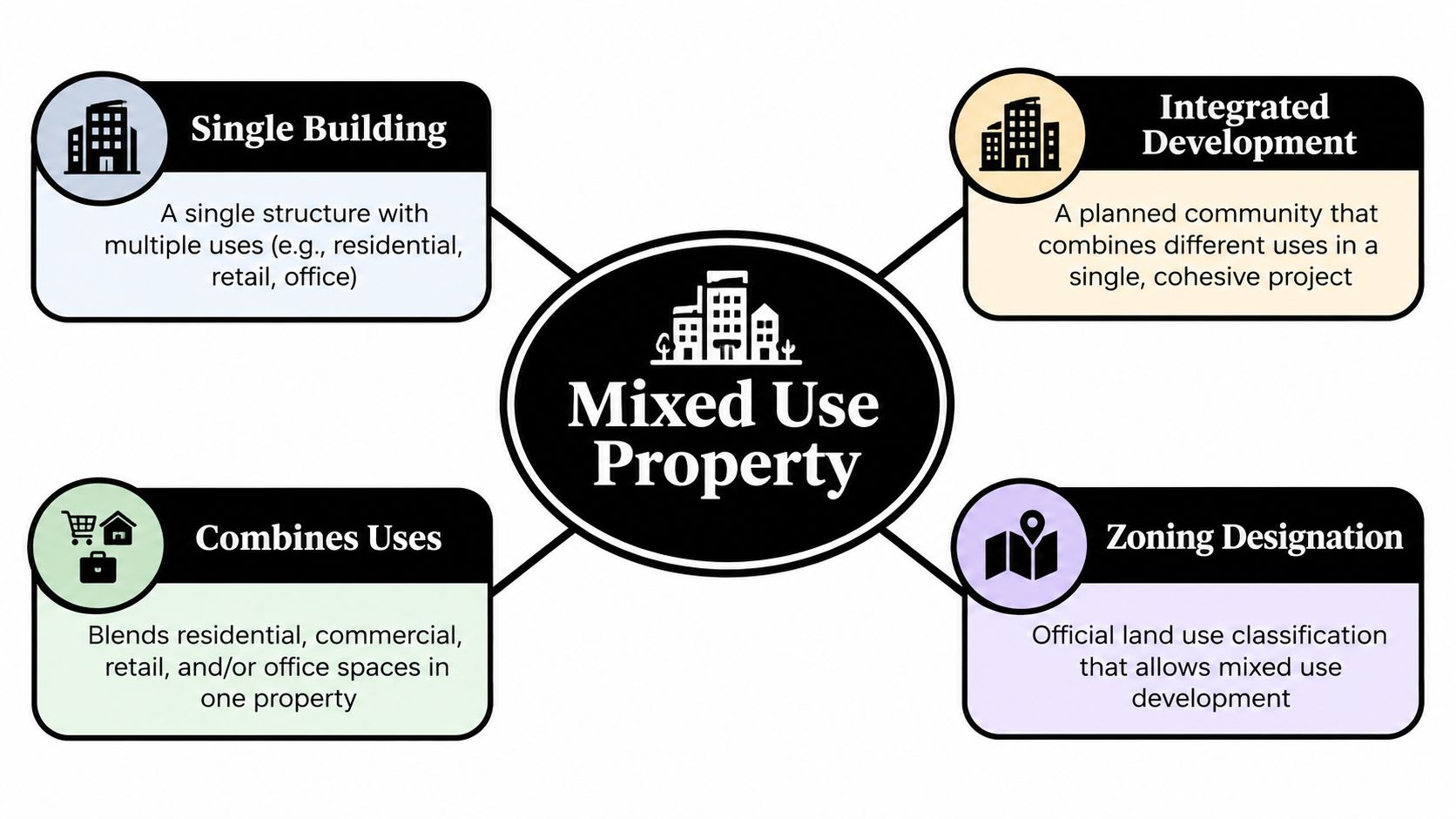
A mixed-use property is a single building or integrated development that combines two or more distinct uses, usually residential plus retail or office, and the uses are physically and functionally integrated. In market research, those properties have shown an 8.5% to 17% price premium over comparable single-use properties, so this is not just a zoning label, it's a pricing category too.
You're probably looking at a building with apartments over a storefront, or a small commercial property with a unit above it, and wondering which parts are taxable, financeable, and exposed when the IRS gets involved. That question matters because the same property can be treated one way by zoning, another way by a lender, and another way on a tax return.
What Mixed Use Property Really Means in Practice
A mixed-use property is not just a building with different tenants. It's a project that deliberately combines at least two significant uses in one building, block, or development, and those uses are meant to work together rather than sit side by side by accident. The classic setup is a retail or office space on the ground floor with apartments above, but the broader idea also includes office, hotel, civic, and recreation uses when they are built as one integrated asset. ICSC's mixed-use definition makes the integration point explicit, and that distinction matters when you are deciding whether you own a true mixed-use property or just a multi-tenant building.
The best shorthand is live-work-play. If the cafe downstairs feeds foot traffic to the apartments above, or the office lobby supports the retail frontage, you're in mixed-use territory. If the building has three unrelated office tenants on different floors, that's not the same thing. The design intent is to create a walkable environment, reduce sprawl, and use land more efficiently, but from an owner's perspective the bigger point is that the income stream is more complicated and the tax file is more fragile.
Practical rule: if the uses are integrated enough that one part of the property supports the other, assume the building will be analyzed as mixed-use until proven otherwise.
That matters because mixed-use assets behave differently on the income statement, the appraisal, the loan file, and the tax return. A lender may care most about the dominant use and rent mix. An assessor may care about value allocation. The IRS will care about how you split expenses, depreciation, and personal use. If you need a technical reference for the property side, the mixed-use property metering options from Axis Meter Solutions are a useful starting point because utilities and allocation problems usually show up before the tax return does.
The Four Mixed Use Models You Will Actually See
Vertical mixed use
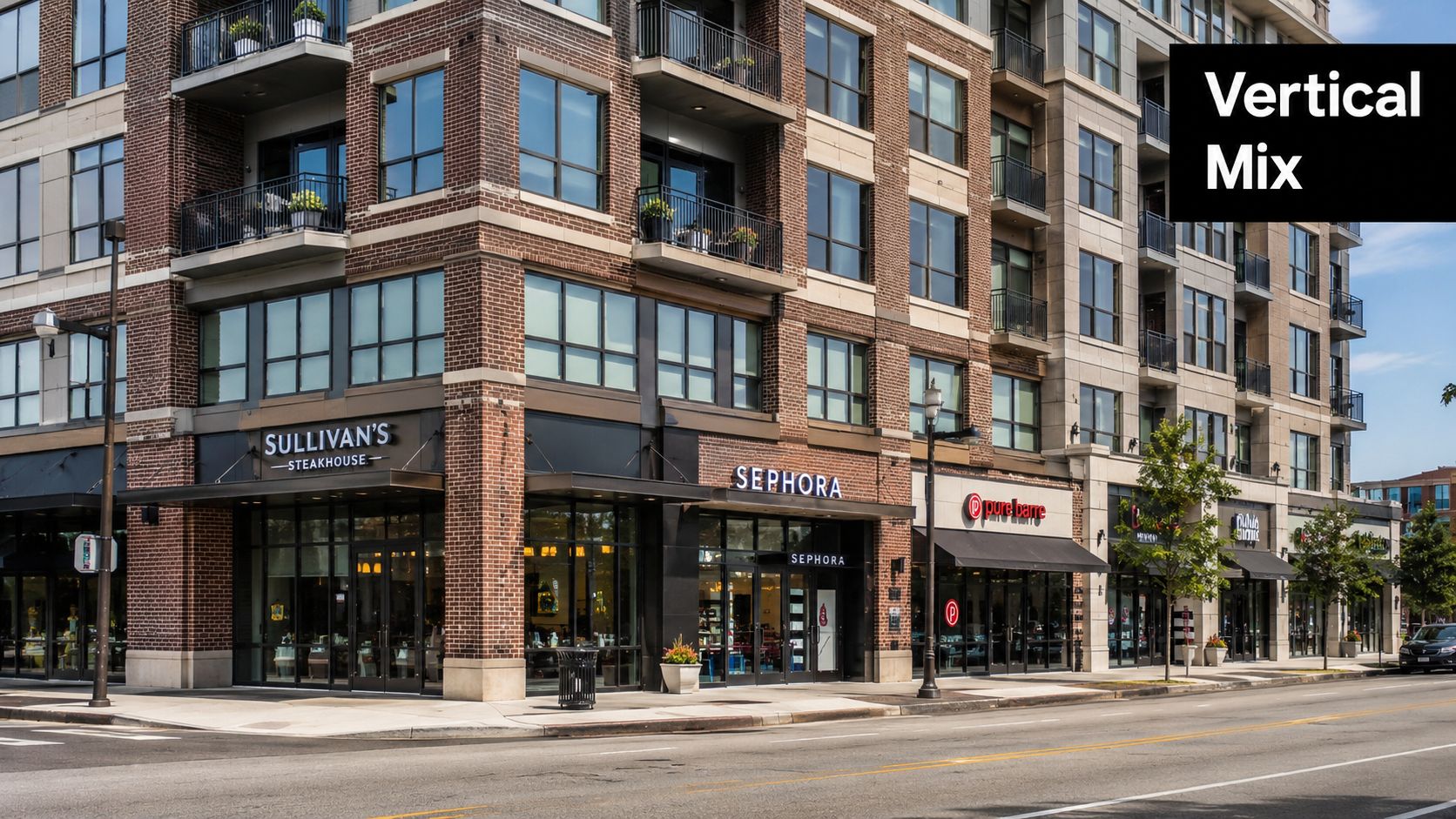
This is the version most picture first. Retail or office sits on the lower floor, and residences rise above it in the same building. The footprint is compact, the land use is efficient, and the rent roll usually has a clean split between commercial and residential income.
Horizontal mixed use
Here the uses are spread across separate buildings on one property or within one planned project. A courtyard, pedestrian street, or internal drive may connect the pieces, so the property still functions as one integrated development. This model shows up often where land is available but planners still want shared traffic flow and shared amenities.
Transit-oriented mixed use
This model clusters density around a transit hub. The design leans into convenience, because riders can live, shop, and work within the same walkable area. It often looks like a larger neighborhood plan rather than a single building, and that's why the classification issues can get messy fast.
Live-work units
These are the smallest mixed-use form, often one unit used partly for business and partly for living. Think studio space, small office, or a retail-facing room attached to the owner's residence. The legal and tax consequences can be harsher here because personal use and business use sit much closer together.
A useful way to sort the models is by how much separation exists between uses:
- Vertical: one structure, stacked uses, easiest to recognize in a downtown building.
- Horizontal: separate structures, shared site, more common in suburban master plans.
- Transit-oriented: clustered around transportation, designed for density and foot traffic.
- Live-work: one occupant often controls both the home and business portions, which raises the tax stakes immediately.
If you own or are buying one of these, don't get distracted by architecture. The question is always the same, which use is dominant, and how tightly are the uses tied together. That answer drives the zoning file, the loan file, and eventually the tax return.
Zoning, Permits, and How a Property Becomes Mixed Use
A building becomes legally mixed-use when the local land-use rules allow more than one function on the same parcel or in the same structure. Sometimes that happens because the zoning district already permits the combination. Sometimes it takes a rezoning, a special permit, an overlay district, or a site-specific approval. Planning departments tend to care about whether the uses are compatible, whether the site can handle traffic and parking, and whether the property's dominant use is residential, commercial, or something in between.
The dominant-use question is the hinge point. Once the jurisdiction decides which use is principal and which is accessory, everything else tends to follow, including parking ratios, fire protection, ADA scope, signage, and sometimes even how the property is treated for certificate-of-occupancy purposes. That's why the same building can be a perfectly acceptable mixed-use project in zoning but still create headaches when the lender or the IRS wants a cleaner classification.
The legal classification can also shift depending on the government office looking at it. A planner may call it mixed-use because the site contains housing and retail. A lender may classify it based on the revenue split. The tax return may treat portions differently depending on whether they're held for investment, used personally, or used in a business. That is not a minor paperwork issue. It changes the rules you live under.
A good owner checks the zoning before signing anything and checks the building file before assuming the title report tells the whole story. If the use mix is borderline, ask what was approved, what was built, and what the current certificate says. If those three things don't line up, you're already in correction mode.
For a tax assessment angle that often shows up after the fact, see the practical discussion in how to appeal tax assessment. Owners of mixed-use property get hit from both sides, local classification and tax valuation, and those fights are often connected.
How Lenders Underwrite a Mixed Use Property
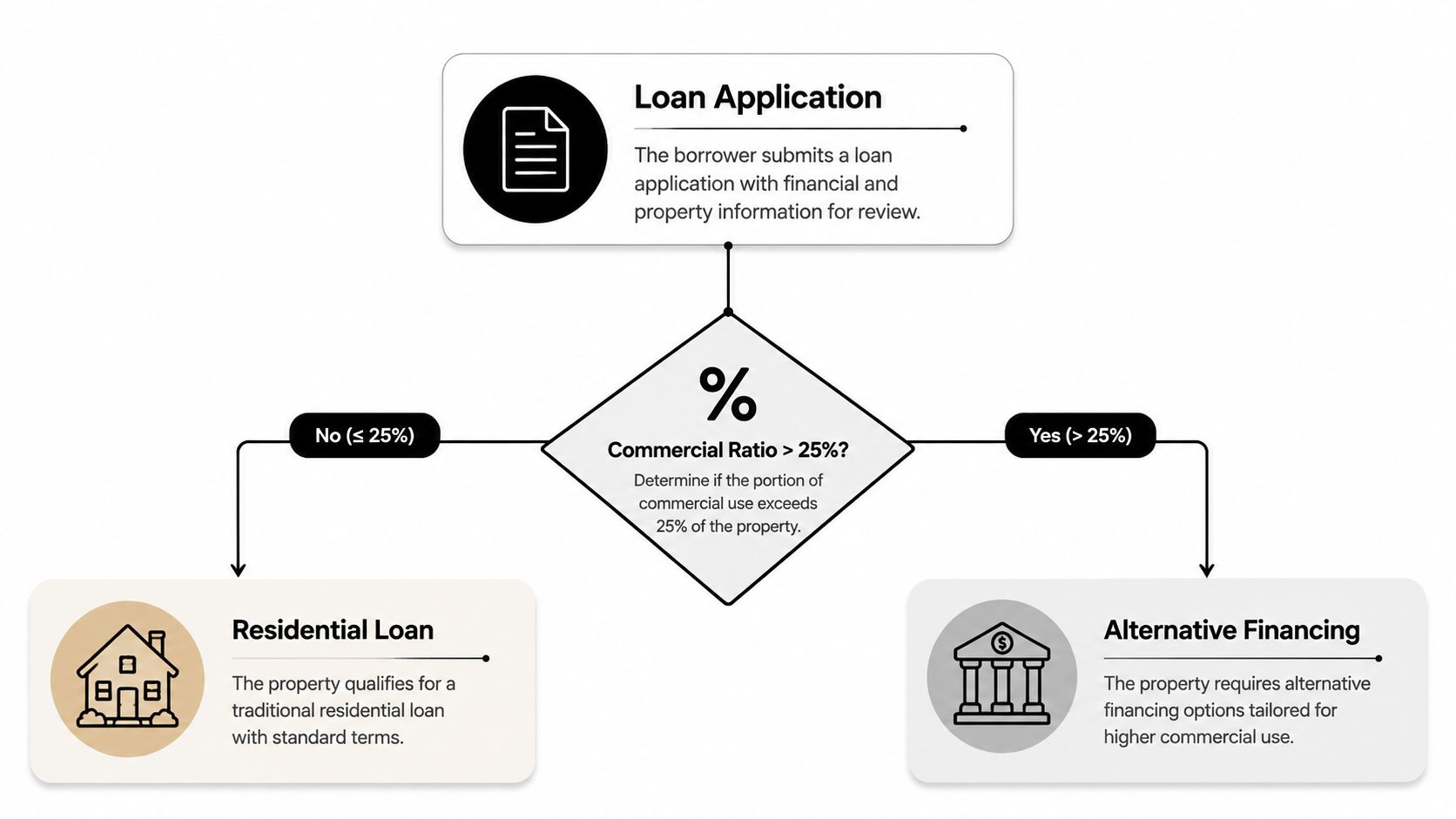
Mixed-use financing is where a lot of buyers get surprised. Residential lenders usually want a property that looks and feels residential. Commercial lenders want a property that behaves like a commercial asset. If the commercial component is meaningful, the deal usually shifts into a specialty lane with stricter underwriting, more documentation, and less room for sloppy assumptions.
The lender's first question is the one most buyers try to avoid. What is the dominant use? After that, the underwriter wants to know how the rent is split, how stable the tenant mix is, and whether the property can support debt service if one part underperforms. That is where the mixed-use file starts to look more like a commercial loan than a standard mortgage.
Mixed-use borrowers should expect the lender to underwrite the whole property, then stress the weak side of the income stream.
If you want a plain-English comparison of the lending logic, the distinction between DSCR vs DTI financing is a good way to think about it. Mixed-use deals often end up in DSCR-style analysis because the property's cash flow matters more than a simple household-income test, especially when the building has a commercial tenant or two. That does not mean the loan is easier. It usually means the lender will be more demanding about reserves, tenant quality, and the appraisal.
The appraisal side matters too. A competent appraiser has to understand both the residential and commercial components, or the value opinion will be shaky. Smaller assets may also require personal guarantees, especially when the owner-operator is trying to close without a deep institutional balance sheet. In practice, financing constraints decide which deals close and which die before they ever become a tax problem.
If the property has a tax issue already, don't close blind. Review the property record against delinquent taxes early, because mixed-use buyers inherit more than walls and rent rolls when a seller has ignored the tax file.
Tax Rules That Hit Mixed Use Owners Differently
Mixed-use tax work is where generic real-estate advice falls apart. You can't just drop the whole building onto one line and hope for the best. You have to allocate income, expenses, depreciation, and sometimes personal use between the residential and commercial pieces, and that allocation has to be defensible if the IRS asks questions.
Allocation is not optional
If part of the property is rented to tenants and part is used for your own business or personal living, the numbers have to be split. Shared costs like repairs, insurance, utilities, and property tax generally need a rational allocation method tied to square footage, usage, or another supportable basis. If the allocation is sloppy, you risk overstating deductions on one side and understating income on the other.
Depreciation does not follow one clock
Residential rental property and commercial property do not depreciate on the same schedule. That means a mixed-use building often has to be split into separate components before depreciation is claimed. The cost segregation issue is not a luxury here, it's a basic compliance step. If you don't separate the pieces, the return is almost certainly wrong.
Passive activity rules still matter
If you're not a real estate professional, passive activity loss limits can block deductions even when the property is bleeding cash. Mixed-use owners often assume that because they “work on the building,” they can use all the losses. They can't. The IRS looks at participation and classification, not just effort. If you own a building with an apartment above a store, the fact that you're busy does not make the losses automatically deductible.
Personal use changes everything
When you live in part of the property, or when a unit is tied to your own operating business, the tax treatment can shift hard. Income may move onto Schedule C, self-employment tax exposure can appear, and deductions can be limited or recharacterized. If employees of a commercial tenant use or service space that overlaps with residential areas, payroll and employment tax questions can follow. Short-term rental activity inside a mixed-use building can add another layer of classification problems.
| Issue | Residential Portion | Commercial Portion |
|---|---|---|
| Income reporting | Usually rental income or personal-use allocation | Usually business or rental income, depending on structure |
| Expense allocation | Shared costs must be split fairly | Shared costs must be split fairly |
| Depreciation | Separate recovery treatment applies | Separate recovery treatment applies |
| Loss limits | Passive activity limits may apply | Different rules may apply based on use and reporting |
| Personal use | Raises deduction limits and classification issues | Usually less personal-use contamination risk |
1031 exchanges need clean boundaries
A mixed-use property can qualify in part for a like-kind exchange, but only the portion held for investment or business use belongs in the exchange analysis. A personal-use apartment above your own store is generally not treated the same way as an investment unit. That is where many owners get burned. They try to exchange the whole property when only part of it fits the rules, and the replacement property has to be analyzed just as carefully.
The IRS does not care that the building feels like one asset to you. It cares how each piece was used, how the return was filed, and whether the supporting records match the story.
Two Real World Scenarios You Can Picture
A landlord owns a five-story building with a cafe on the ground floor and 12 apartments above it. The cafe pays rent, and its common-area maintenance charges need to be tracked separately from apartment income. When a roof leak hits, part of that repair belongs to the residential side and part may relate to the commercial lease area, so the expense allocation has to follow the facts, not the owner's mood on the day the invoice arrives. If the cafe tenant falls behind, the landlord can't bury that loss inside the apartment numbers and hope the return still works.
The second owner runs a bakery on the first floor and lives upstairs. She also rents a small back unit to a hairstylist. Her personal living space is not deductible the way the rental unit is, and part of her mortgage interest may be nondeductible because the residence and business are interwoven. If she's claiming deductions like an ordinary business owner without separating the housing piece, that's how mixed-use audits get ugly.
For owner-occupied setups, the line between personal and business use matters more than the floor plan. The IRS treatment of a home office inside a mixed-use building can be unforgiving, so the standards discussed in home office deduction requirements are worth reading before you file anything. A nice storefront under your living space does not erase the need for clean allocation.
The owner who keeps records wins. The owner who treats the whole building as one bucket usually ends up paying a professional to reconstruct the bucket later.
Checklists by Role and When to Call a Tax Attorney
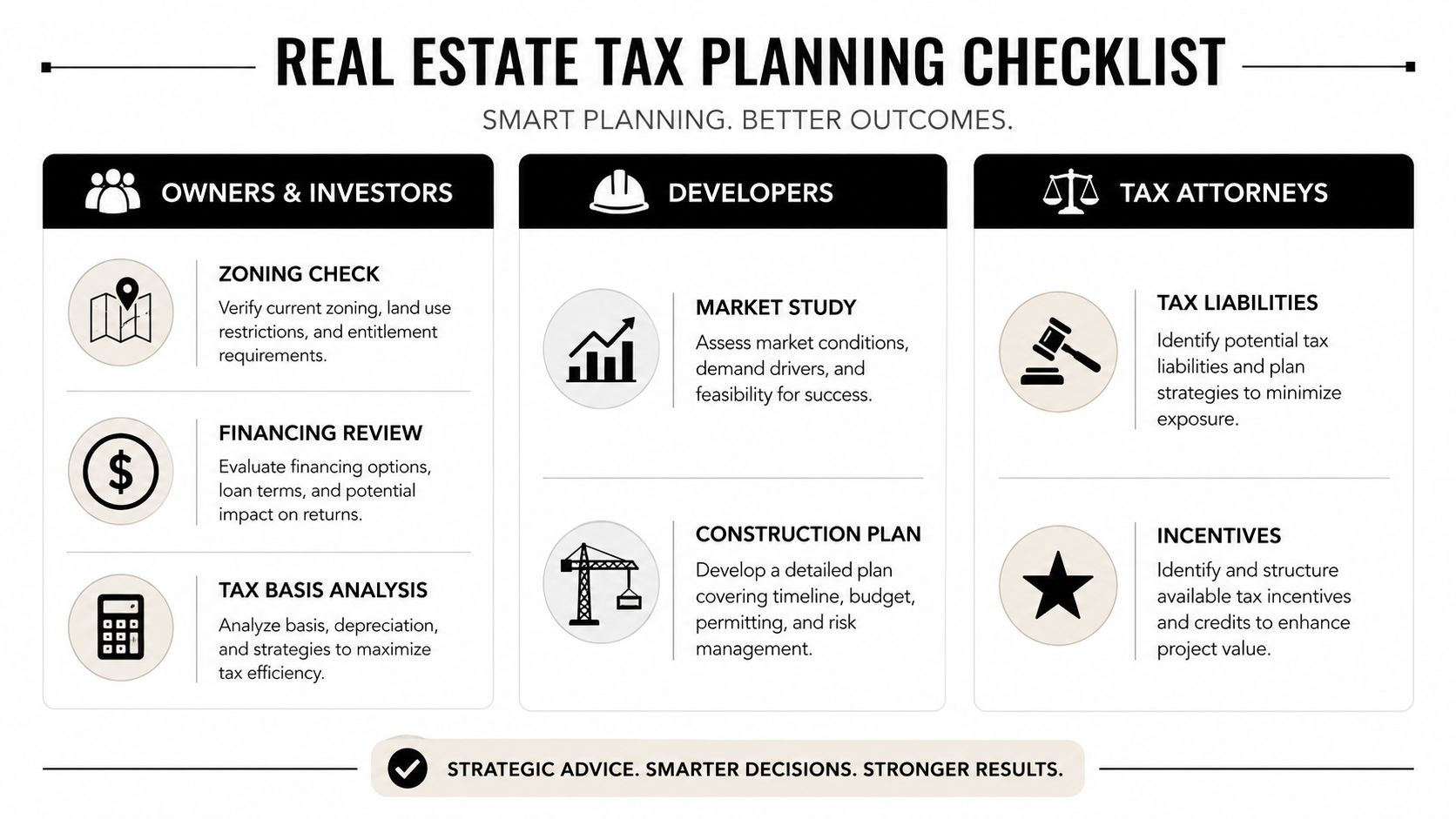
Owners and investors should start with zoning documents, the rent roll, the deed, and a basis calculation that separates the uses. Don't buy a mixed-use property without understanding the current permitted use, the insurance cost, and whether the commercial side will scare off your preferred lender. If you need a practical organizing tool, the small business tax checklist is a solid reference point for the records that usually matter most.
Realtors and mortgage professionals should pull the tax picture early. Ask for Form 8825 if the entity files one, confirm whether the property is being reported on Schedule E or Schedule C, and check for outstanding payroll tax liens, trust fund exposure, or other tax debt that could derail closing. Tax professionals should review allocation methods, depreciation support, passive-activity worksheets, and any exchange planning before the transaction locks in.
Call a tax attorney when the file already has tax debt, a notice of federal tax lien, payroll or trust fund recovery penalty exposure, a pending audit, or a 1031 exchange involving mixed-use property with any personal-use component.
That's the line. A free initial tax-debt analysis should tell you whether the problem is manageable, what the risks are, and what path makes sense before closing money moves. In mixed-use deals, fixing the tax issue first protects the buyer, seller, lender, and title company from a mess they don't want.
If you own a mixed-use property, are buying one, or are trying to clean up an IRS problem tied to a building with both residential and commercial space, get a real review before the deal moves forward. Tax Attorney Stephen A Weisberg helps owners, businesses, and professionals sort out tax debt, audits, and mixed-use classification problems before they turn into expensive disputes, and you can start with a free tax debt analysis to see what can be fixed.


