what is a bank account levy: Your essential guide
what is a bank account levy: Learn what it means, how it may affect you, your rights, and practical steps to respond.

In this article
- Understanding a Bank Levy and Key Players
- Key Players in a Bank Account Levy
- How the Bank Levy Process Unfolds
- The Critical Holding Period
- The Legal Authority Behind a Bank Levy
- The Role of Court Judgments
- Bank Levy vs. Lien vs. Wage Garnishment
- How Each Collection Method Works
- Comparing Common Debt Collection Actions
- Your Action Plan for a Bank Levy Notice
- Evaluating Your Response Options
- Taking Control of the Situation
- Answering Your Top Questions About Bank Levies
- Can a Bank Levy Really Take All My Money?
- Will I Get a Warning Before My Bank Account Is Levied?
- How Can I Prevent a Future Bank Levy?
- What if There Isn’t Enough Money in My Account?
So, what exactly is a bank account levy?
Simply put, it’s a legal process that allows a creditor to take money directly out of your bank account to cover an unpaid debt. It's not a temporary hold or freeze; a levy means the funds are actually removed from your account and sent to the creditor after a set period. This is one of the most serious collection actions a creditor can take.
Understanding a Bank Levy and Key Players
Imagine a creditor has tried other ways to collect a debt from you without success. As a last resort, they can get a court order—the levy—and serve it to your bank. This order acts like a legal key, giving them access to the funds in your account to satisfy what you owe.
This isn't something that happens out of the blue. A levy is typically the final step after you've received multiple notices and the creditor has gone through the proper legal channels. For private creditors like credit card companies, this almost always means they had to sue you and win a judgment in court first. The IRS is a major exception; they have the power to levy your account without a court order. You can learn more about the specifics of what happens when the IRS freezes your client's bank account and how that process works.
A lot of people mix up levies and liens, but they're very different. A lien is a claim placed on your property to secure a debt, while a levy is the actual act of seizing that property to pay it off.
To get a handle on how this all works, it helps to understand who’s involved. Three main parties play a part in every bank levy.
Key Players in a Bank Account Levy
Understanding the roles of each party involved when a bank account levy is initiated is crucial. Here's a quick breakdown of who does what.
| Party | Role and Responsibility |
|---|---|
| The Creditor | This is who you owe money to—it could be the IRS, a state tax agency, a credit card company, or even a hospital. They start the process by getting the legal authority to collect the debt from your account. |
| The Bank | Your financial institution is a neutral intermediary. Once they get a valid levy order, they are legally required to freeze funds in your account up to the amount specified. They hold the money for a short time before sending it to the creditor. |
| The Debtor | This is the person or business that owes the debt. After a levy hits your account, you have a very limited time to contact the creditor to work something out, dispute the levy, or claim any legal exemptions before the money is gone. |
Knowing who these players are and what they're responsible for is the first step in figuring out how to respond if you ever face a bank levy.
How the Bank Levy Process Unfolds
A bank account levy doesn't just happen overnight. It's usually the final play in a long collection game, and it only comes after a series of legally required warnings designed to give you a chance to settle things. Knowing how this process works is the first step in protecting yourself.
The journey to a frozen account starts long before the levy itself. For a private creditor to take this step, they first have to take you to court and win a judgment against you. When it comes to tax debt, the IRS has its own process, which involves sending several notices that get progressively more serious. The last one you'll receive is the "Final Notice of Intent to Levy," a clear signal that they are about to take action.
You can learn more about this crucial document in our guide to understanding levy notices.
Once the legal groundwork is laid, the creditor sends the levy order directly to your bank. From that moment, your bank is legally required to freeze funds in your account, up to the total amount of the debt. They have no choice in the matter.
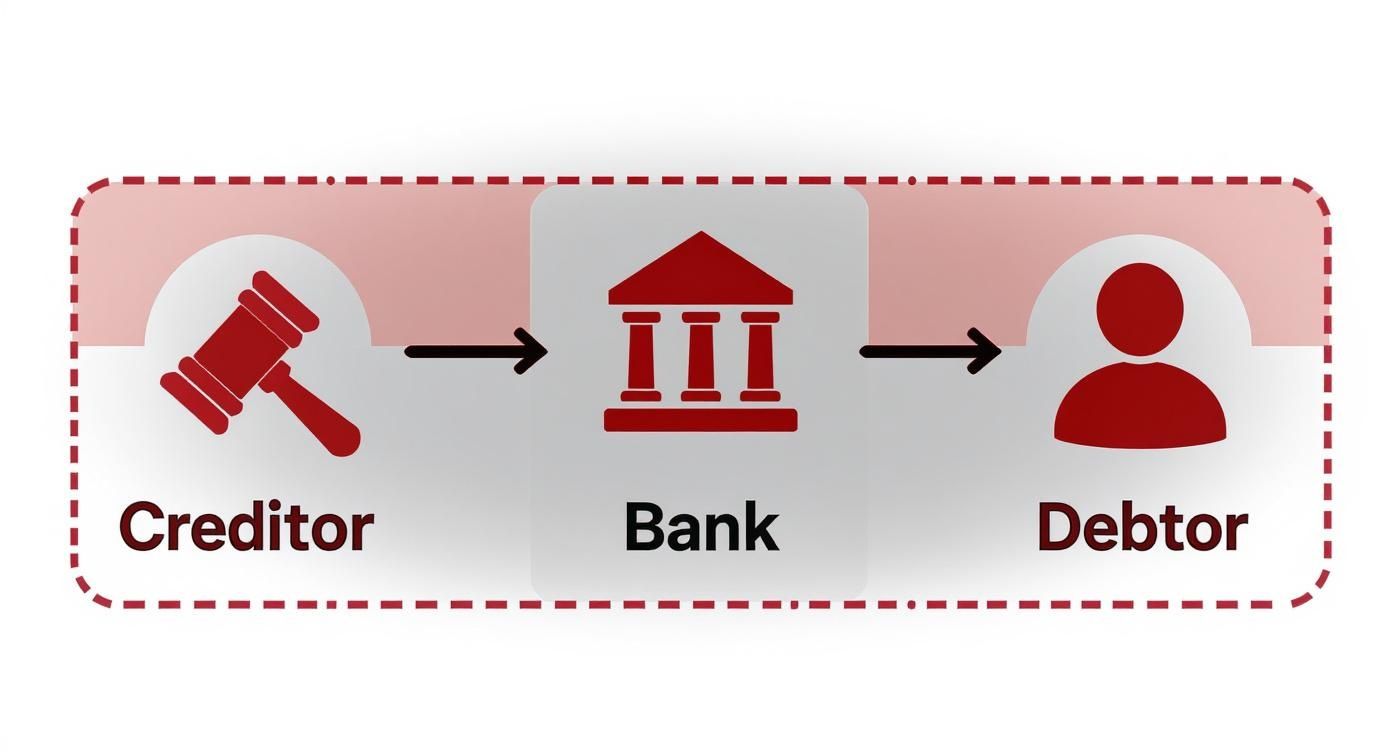
As you can see, the bank is essentially a middleman that has to follow the creditor's legal instructions. You won't get a heads-up from them before it happens.
The Critical Holding Period
When the IRS issues a levy, a critical window opens the moment your account is frozen. Your bank is required to hold onto your funds for 21 days before handing them over to the IRS. This isn't just a courtesy; it's a legally mandated grace period.
This 21-day period is your last, best chance to resolve the situation. It’s the time to get on the phone with the IRS to work out a payment plan, challenge the levy, or demonstrate that it would cause you severe economic hardship.
If you don't act within those 21 days, the bank is obligated to send the money to the IRS, and that part of the collection process is over. The IRS itself notes this period is also for correcting any errors or getting bank fees reversed if the levy was a mistake. Once that money is gone, getting it back is incredibly difficult.
The Legal Authority Behind a Bank Levy
A creditor can’t just reach into your bank account and take money whenever they feel like it. A bank levy is a serious collection action, and it has to be backed by some real legal muscle before it can happen. The path to a levy really depends on who you owe money to.
Government agencies, especially the IRS, play by a different set of rules. Thanks to federal law, the IRS doesn't need a judge's permission to levy your account for unpaid taxes. They follow a strict internal process, sending a series of required notices. Once those steps are complete, they have the direct authority to order your bank to freeze and turn over your funds. It’s worth knowing how initiatives like the Automated Federal Payment Levy Program work, as they streamline this process for the government.
The Role of Court Judgments
For just about everyone else—think credit card companies, hospitals, or private lenders—the road to a levy is much different. First, they have to take you to court and win a lawsuit.
The prize they get for winning is a court judgment. This is an official document, signed by a judge, that legally confirms you owe the debt. It essentially turns a private IOU into a powerful, court-enforced order.
Without that judgment, a private creditor has no legal power to touch your bank account. This is a critical distinction. Simply ignoring a lawsuit is often the quickest way to hand a creditor the very weapon they need to levy your account.
Once they have that judgment in hand, they can get what's called a writ of execution from the court. This is the document they serve on your bank, officially kicking off the levy. For those who want to dig deeper into the legal precedents that give these judgments their teeth, understanding how to find case law is a great way to see how these rules were established.
Bank Levy vs. Lien vs. Wage Garnishment

When you're dealing with serious debt, creditors have several powerful tools they can use to collect what they're owed. Three of the most common are the bank levy, the lien, and wage garnishment. It's easy to get them mixed up, but knowing exactly how each one works is the first step toward figuring out your next move.
Let's break them down. Think of a lien as a legal sticky note a creditor places on your property, like your house or car. It doesn't take the asset away, but it does flag their legal interest in it. You can't sell or refinance that property until you've paid the debt and had the lien removed.
A bank levy, on the other hand, is much more direct. It's not a claim; it's an action. The creditor, usually with a court's blessing, reaches directly into your bank account and takes the funds to satisfy the debt.
How Each Collection Method Works
Wage garnishment is a different beast altogether. Instead of going after property you already have, it targets the money you haven't even received yet. Your employer gets a court order to withhold a certain amount from every paycheck and send it straight to your creditor.
The key difference here is timing and frequency. A levy is typically a one-shot deal—it seizes whatever is in your account on that specific day. A wage garnishment is an ongoing drip, siphoning money from your pay until the entire debt is cleared.
Knowing which tool a creditor is using is absolutely critical. It tells you what's at risk—your property, your cash, or your future income—and helps you, your attorney, or your tax advisor build the right strategy to respond.
To see these differences side-by-side, it helps to put them in a table.
Comparing Common Debt Collection Actions
Understanding the key differences between a bank levy, lien, and wage garnishment can help you identify what's happening and how to respond. Here’s a clear comparison.
| Action | What It Does | Who Is Involved | Typical Creditor |
|---|---|---|---|
| Bank Levy | Seizes existing funds directly from a bank account. | You, your bank, the creditor, and the court. | IRS, state tax agencies, judgment creditors. |
| Lien | Places a legal claim against your property to secure a debt. | You, the creditor, and a county recorder’s office. | IRS, mortgage lenders, mechanics, tax authorities. |
| Wage Garnishment | Intercepts and diverts a portion of your earnings from your paycheck. | You, your employer, the creditor, and the court. | Child support agencies, student loan lenders, credit card companies. |
Ultimately, while all three are designed to collect a debt, they operate in fundamentally different ways. A levy takes your cash now, a lien secures a future payment against your assets, and a garnishment takes a piece of every paycheck.
Your Action Plan for a Bank Levy Notice

It’s easy to feel panicked when a bank levy notice shows up. But taking a deep breath and acting immediately is the single best thing you can do. Time is absolutely critical here, especially since certain deadlines, like the 21-day hold period the IRS puts on your funds, are set in stone.
Your very first step is to play detective. Who sent this? How much do they say you owe? Don't just assume every detail is correct. You need to confirm the creditor, the exact debt amount, and why they have the legal right to take this action. This initial fact-finding mission sets the stage for everything that follows.
Whatever you do, don't just ignore the notice. A bank levy is a serious escalation that comes after a long collections process. Wishing it away won't work, but a strategic response within the first 24 to 48 hours can make a world of difference.
Evaluating Your Response Options
Once you've got the facts straight, it's time to figure out your next move. It might feel like you're cornered, but you often have more leverage than you think—particularly with the IRS. To give you an idea, in 2024 alone, the IRS set up over 3.4 million new installment agreements, which shows they are often willing to find a workable solution.
Generally, you'll be looking at one of these four paths:
- Pay the Debt in Full: The quickest way to release the levy, but for most people, it’s simply not an option.
- Negotiate a Payment Plan: You can often arrange an installment agreement to pay off the debt over time, which usually convinces the creditor to lift the levy.
- Submit an Offer in Compromise (OIC): If you qualify, this allows you to settle your tax debt for less than you originally owed.
- Dispute the Levy: If you have proof the levy was made in error or the debt isn't valid, you have every right to challenge it.
When the IRS is involved, proving your financial situation is key. You'll likely have to fill out specific forms, and knowing your way around a guide to Form 433-F is a huge advantage when trying to settle a collection case.
Taking Control of the Situation
If the levy is just one symptom of a larger debt problem, it might be time to think bigger. When multiple creditors are creating financial stress, it's worth it to explore debt consolidation for small business as a way to get organized and regain some breathing room.
The goal here is to move from reactive shock to a proactive strategy. By confirming the levy's details, understanding all your options, and opening a line of communication with the creditor, you can start working toward not just releasing the levy, but resolving the root debt for good.
Answering Your Top Questions About Bank Levies
Finding out your bank account has been levied is jarring, and it’s natural to have a flood of urgent questions. When your money is suddenly locked up, you need straight answers, fast. Let's walk through some of the most common concerns people have when they're hit with a levy.
Can a Bank Levy Really Take All My Money?
In short, yes. A levy is a powerful collection tool, and it can grab every last dollar in your account up to the full amount of your debt, plus any penalties and fees. The creditor is legally authorized to take what's there to settle the score.
But there's a crucial catch: not all money can be legally seized.
It's incredibly important to know that certain types of income are protected. If exempt money gets frozen, you have to act fast—you'll need to notify both the bank and the creditor to get those protected funds released.
For instance, federal benefits that are directly deposited, like Social Security, SSI, or veterans' benefits, get automatic protection for an amount equal to two months' worth of payments. On top of that, many states have their own laws that shield a certain amount of your wages or other funds from being taken.
Will I Get a Warning Before My Bank Account Is Levied?
You'll get warnings, but probably not from your bank. When a bank receives a levy order, they are legally obligated to comply immediately. They won't give you a courtesy call to let you know it's coming.
The real heads-up happens much earlier. If you owe the IRS, they send a series of notices, culminating in a “Final Notice of Intent to Levy.” That’s your last chance to act. For private debts, like a credit card bill, the creditor has to sue you and win a judgment in court first. That whole process involves receiving official legal documents you should never ignore.
How Can I Prevent a Future Bank Levy?
The absolute best way to stop a levy from ever happening is to be proactive. Don't let a small problem snowball into a crisis. The moment you know you're going to have trouble paying a debt, get on the phone with the creditor.
Here are the most important steps to take:
- Open a Dialogue: Don't wait for them to call you. If you know you're going to miss a payment, reach out. Many creditors would rather work out a payment plan than go through the hassle of a levy.
- Never Ignore Official Mail: This is critical. Whether it's a letter from the IRS or a court summons, ignoring it is the quickest path to a levy. These documents are your warning signs.
- Address the Debt Head-On: Even small, good-faith payments show you're trying to resolve the debt. This can often convince a creditor to hold off on more aggressive collection tactics.
What if There Isn’t Enough Money in My Account?
If the levy hits and your account balance is less than the total debt, the creditor gets whatever is in there at that moment. The levy itself is typically a one-time snapshot—it seizes the funds available on that specific day and then the freeze is lifted.
But that doesn't wipe the slate clean. The rest of the debt is still very much alive, and you're still legally on the hook for it. The creditor will likely try again later, maybe with another levy, or they could switch tactics and go after your wages or put a lien on your property.
At Attorney Stephen A Weisberg, we know how stressful dealing with the IRS can be. That's why we don't ask for a big retainer fee just to talk. We start with a FREE Tax Debt Analysis to see exactly how we can help you get things sorted out. Learn more at https://weisberg.tax.


