Secure Your Future: Tax Fraud Defense Attorney
Protect your rights with an expert tax fraud defense attorney. Get help for IRS investigations, understand defenses, and find the right lawyer in 2026.

In this article
- Facing a Tax Fraud Investigation
- Understanding What Constitutes Tax Fraud
- Start with the intent question
- Where the line usually gets crossed
- Common Defenses in Tax Fraud Cases
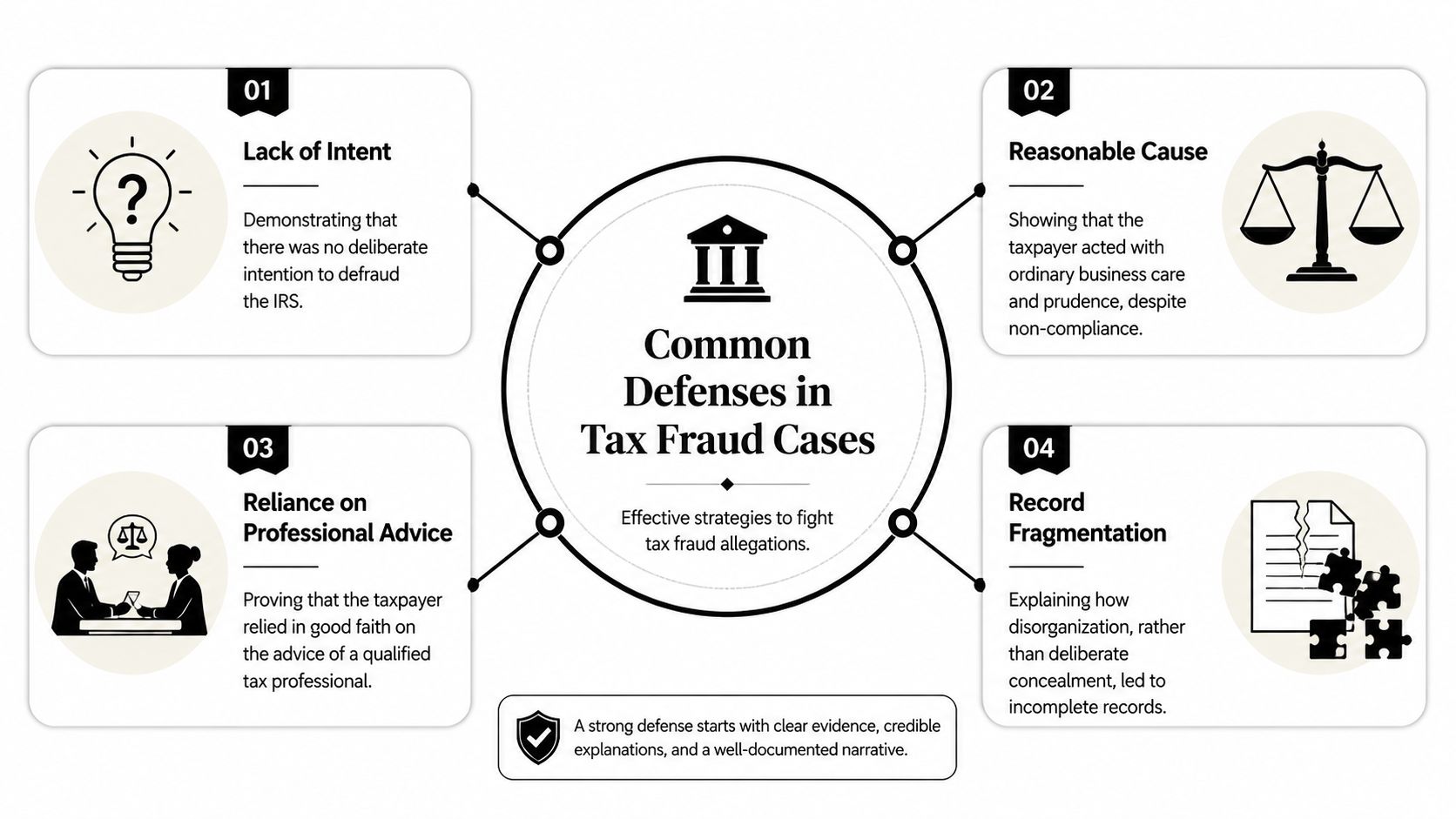
- Lack of intent and reasonable cause
- Reliance on professional advice
- Record fragmentation
- Why You Need a Tax Fraud Defense Attorney
- The wrong lawyer can cost bargaining power
- Counsel coordinates the moving parts
- Actions to Take When You Are Investigated
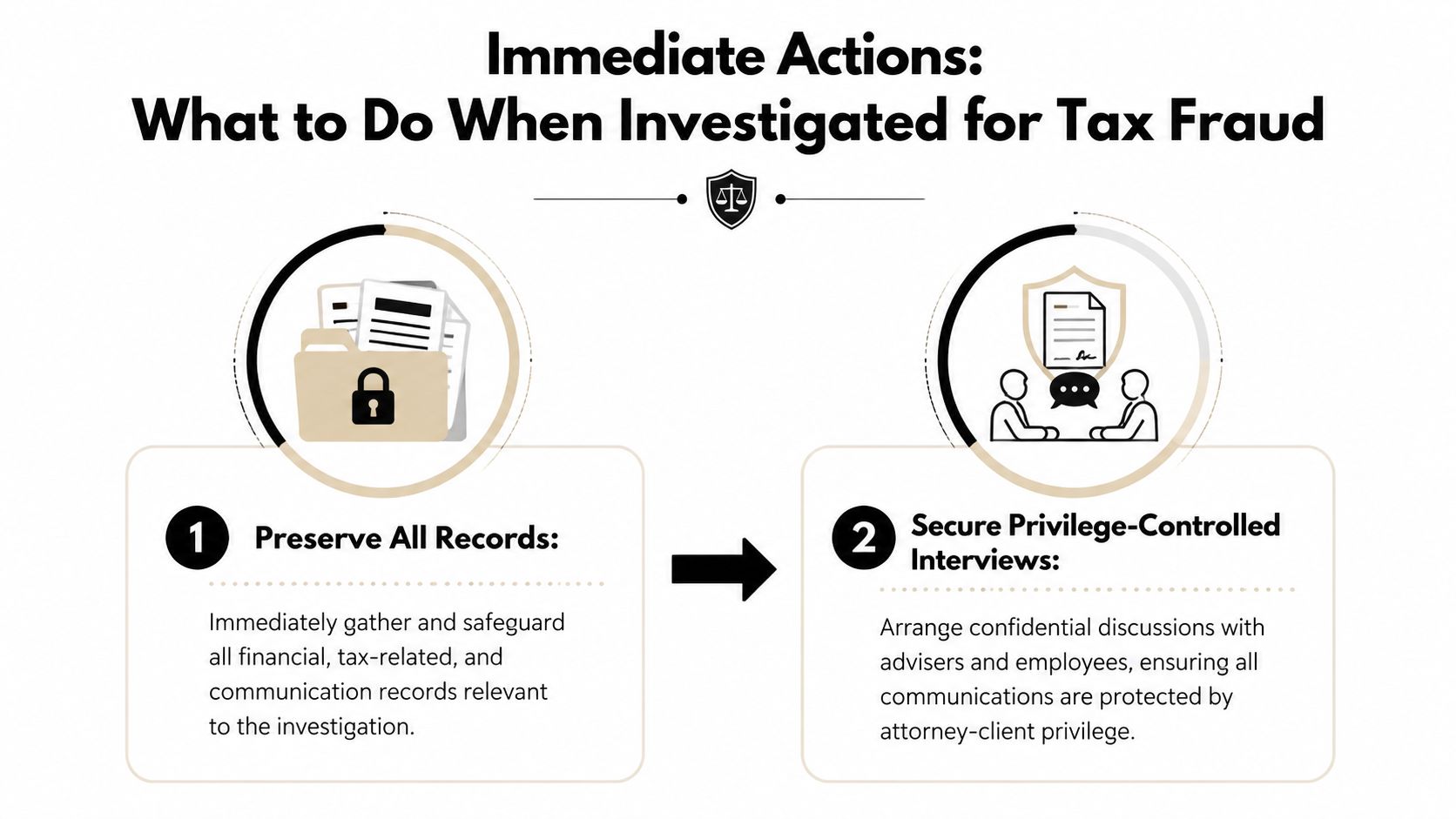
- Preserve the records first
- Make privilege-controlled interviews the next move
- Choosing the Right Tax Fraud Defense Attorney
- What to compare before you hire
- Ask about documentation and privacy
- A quick comparison helps
- Guidance for Professionals Referring Clients
- Conclusion and Next Steps
The envelope looks ordinary until you see the IRS return address. Maybe it's a notice about missing records, maybe it's a follow-up on a return you thought was already handled, or maybe it's the first sign that a routine tax issue is being treated as something more serious. At that moment, panic is normal, but guessing is expensive. A tax fraud defense attorney helps you sort out what kind of problem you're facing, because the right response depends on whether the government is still in civil territory or has started moving toward criminal enforcement.
The distinction matters because the IRS doesn't treat every dispute the same way. In fiscal year 2023, the IRS Criminal Investigation division initiated 1,714 investigations, which led to 1,372 prosecutions and 682 incarcerations, and the agency reported a 92.3% conviction rate for accepted cases in that period (IRS Criminal Investigation data). Those numbers don't mean every audit turns into a case like that. They do mean that once a matter leaves the civil lane, the stakes change fast. If you're in the middle of an audit and you want a practical overview of how to prepare, the IRS audit preparation guidance from Weisberg Tax is a useful place to start.
Facing a Tax Fraud Investigation
The first sign is often boring on its face. A taxpayer opens a letter asking for records, explanations, or a meeting, and assumes it's just another administrative request. Then the questions get narrower, the tone gets more focused, and the file starts to feel less like a routine exam and more like an accusation in slow motion.
A civil inquiry can still stay civil, but timing matters. If you answer carelessly, hand over incomplete records, or give an explanation that sounds better in the moment than it will later in writing, you can hand the government the framing it wants. Early counsel helps you decide whether the issue is a document problem, an accounting problem, or something that could be read as deliberate conduct.
Practical rule: Treat the first IRS notice like a fork in the road, not a courtesy reminder. What you do in the first response often shapes the rest of the file.
A lot of people wait because they believe the IRS would “tell them” if fraud were involved. That's not how these matters usually unfold. The question is not only whether something went wrong, but whether the facts can be interpreted as intentional evasion rather than mistake. That's why a tax fraud defense attorney will often ask for the notice, prior filings, bookkeeping records, and any correspondence with preparers before making a single substantive response.
The strongest early move is a structured one. Preserve records, stop informal explanations, and get advice before you improvise. Once the government starts reading your answers as admissions, it becomes much harder to redirect the case toward a civil resolution or a narrower dispute.
Understanding What Constitutes Tax Fraud
Tax fraud is not just “a bad return.” It's conduct the government argues was intentional, not accidental. That intent requirement is the reason so many civil and criminal tax cases look similar at the start but diverge sharply later, because federal tax crimes generally turn on willfulness, not ordinary carelessness (Kostelanetz on criminal tax investigations).
Start with the intent question
Think of the difference this way. A traffic ticket says you made a mistake on the road. Vehicular homicide says something far more serious happened, and the law cares about the mental state behind it. Tax fraud works the same way. A missed schedule, a messy ledger, or a wrong classification might be fixable as a civil issue, but the government will look for signs that the taxpayer knowingly hid income, distorted deductions, or kept misleading records.
The IRS and DOJ usually build that intent theory from patterns, not one isolated line item. Repeated omissions, inconsistent explanations, backdated documents, and books that don't match filed returns can all become part of the story. That's why the defense often centers on showing a different story, one supported by contemporaneous records and a believable accounting trail.
Where the line usually gets crossed
Aggressive tax positions don't automatically become fraud. Claiming a deduction the IRS dislikes is not the same as inventing a false expense. The line is crossed when the position is paired with concealment, fabricated facts, or a strategy designed to keep the government from seeing the truth.
A useful internal comparison is the difference between a disputed interpretation and a hidden fact pattern. The first belongs in civil controversy. The second can become criminal exposure. For a plain-language comparison of those concepts, see Weisberg Tax's overview of tax fraud versus tax evasion.
If you can explain the return with the records that existed when it was filed, your position is usually stronger than when you're rebuilding the story after the notice arrives.
That's why a tax fraud defense attorney starts with the mental-state evidence. The issue is not just what was filed. It's why it was filed that way, what the taxpayer knew at the time, and whether the paper trail supports an innocent explanation.
Common Defenses in Tax Fraud Cases
When the government alleges fraud, the defense usually starts with intent, then moves outward to the records. The facts don't need to be perfect. They do need to show that the taxpayer's conduct can be explained without assuming a deliberate plan to deceive. One practical reason this matters is that professional assistance is only persuasive when the documentation supports it, as reflected in guidance on tax fraud defense and reliance on advisors.
Lack of intent and reasonable cause
The cleanest defense is often the simplest one, the taxpayer did not mean to defraud anyone. That can come from bad bookkeeping, a misunderstood rule, a software error, or a rushed filing process. Reasonable cause can also matter when the taxpayer acted with ordinary business care but still missed the mark.
The key is coherence. If the return, emails, and bank records line up with an error explanation, that's different from a story that changes every time the IRS asks a new question. A strong defense usually looks boring on paper, because boring records are easier to trust than dramatic explanations.
Reliance on professional advice
This defense comes up often, and it's narrower than many clients expect. Hiring a CPA, EA, or payroll provider is not a magic shield. The taxpayer has to have disclosed the relevant facts, the advice has to be reasonable, and the records have to show the position was taken in good faith.
That matters in self-employment, single-member LLCs, S corporations, and payroll tax cases, where the same person may mix personal and business transactions. If the adviser never saw the full picture, the government will argue the advice was incomplete. If the advice wasn't documented, the defense gets weaker fast.
Record fragmentation
Some cases look like concealment when they're really disorganization. A broken filing system, inconsistent bookkeeping, or scattered bank statements can make a taxpayer appear evasive even when the underlying conduct was sloppy rather than criminal. The defense here is reconstruction, not excuses.
A practical way to think about it is this. The more fragmented the file, the more important it becomes to reconstruct dates, sources, and ownership of each transaction. That's where a defense team often turns to source documents, bank feeds, payroll records, and prior filings to show the government that the missing structure is an administration problem, not a fraud scheme.
For a helpful overview of timing issues in contested tax matters, the statute of limitations discussion on tax evasion can help frame why records from older periods still matter.
Why You Need a Tax Fraud Defense Attorney
A tax fraud matter rarely stays in one room. It can start as a civil exam, move into Appeals, and then shift into a DOJ-led criminal investigation or litigation in federal or state court, with each forum carrying different burdens and settlement power (Alston tax controversy overview). That forum choice is not a technical detail. It can shape how much the government has to prove, how much room exists to resolve the case, and which documents become protected.
The wrong lawyer can cost bargaining power
General practice counsel may understand taxes, but not necessarily criminal tax strategy. That gap matters because the early response often decides whether the file gets treated as a compliance issue or a willfulness case. If someone gives an uncontrolled interview, sends an overexplained letter, or produces records without a plan, the government may lock onto details that should have stayed ambiguous.
Specialized counsel also knows when to preserve evidence instead of polishing it. There is a difference between cleaning up bookkeeping and creating a better narrative after the fact. One helps the defense. The other can create new problems.
If you want a broader explanation of the practical value of specialized counsel, this guide to the benefits of hiring a tax attorney gives a useful starting point.
Counsel coordinates the moving parts
A tax fraud defense attorney does more than write letters. The lawyer decides whether to negotiate, whether to push for civil resolution, whether to involve accountants under privilege, and whether to keep the case in a record-preservation mode until the facts are stable. In larger matters, the team can include investigators, forensic accountants, and litigation support, which matters because tax disputes often turn on transaction history rather than a single document.
That coordination matters because tax fraud cases are often built like a chain. If one link is weak, the whole story can change. A defense lawyer helps decide which links need support, which documents should be gathered first, and which conversations should happen only after privilege is in place.
If you are comparing firms, one useful resource is this guide to privacy-focused legal AI, which can help you think about how firms manage confidential information during document review. Technology is not a substitute for judgment, but it does affect how carefully a team handles sensitive records.
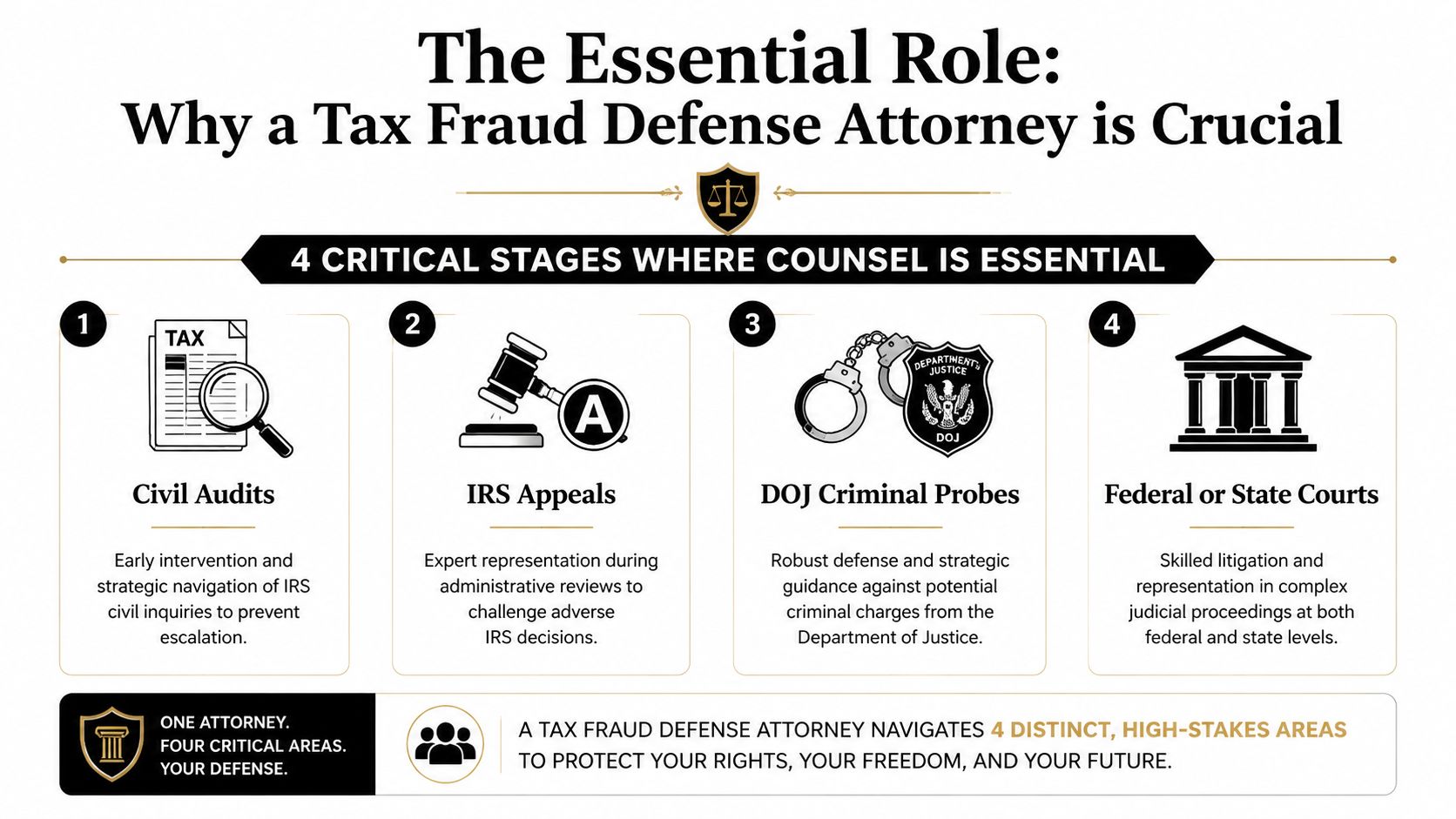
The practical point is simple. Once the IRS or DOJ starts asking pointed questions, you need someone who can represent you in the forum, control the evidence, and keep a civil issue from becoming a criminal one.
Actions to Take When You Are Investigated
The first job is to stop the bleeding. That means collecting records before they disappear, locking down communications, and making sure nobody on your team starts freelancing with explanations. A tax fraud defense attorney will usually want the paper trail before the next letter goes out, because the shape of the file matters as much as the facts inside it.
Preserve the records first
Save returns, workpapers, bank statements, invoices, payroll reports, emails, text messages, bookkeeping exports, and anything else that explains how the numbers got onto the return. Don't rely on memory. If the case turns on whether something was known at the time, later reconstruction won't carry the same weight as contemporaneous documents.
If you use a preparer or outside bookkeeper, gather their notes too. A missing email can matter less than a missing explanation chain, especially when the IRS tries to build a willfulness theory from gaps. The goal is not to make the file look perfect. The goal is to keep the evidence intact.
Make privilege-controlled interviews the next move
After records are preserved, counsel can decide who needs to be interviewed and how. That includes CPAs, EAs, bookkeepers, payroll providers, and in some cases employees who handled transactions or approvals. Those conversations should be controlled through counsel so the defense can assess what they knew, what they documented, and what can safely be used later.
Practical rule: Never assume an advisor's memory is enough. If the advice wasn't grounded in disclosed facts and documented guidance, it may not help you much later.
A voluntary disclosure may still be worth evaluating, but that decision should be made with full facts, not panic. The same goes for written responses. A short, accurate answer can help. A defensive, overbroad answer can create new exposure. The point is to respond in a way that matches the forum and preserves options if the matter shifts from civil examination to a more serious path.
Choosing the Right Tax Fraud Defense Attorney
A tax fraud notice can start like a routine IRS letter and turn into something far more serious once records are reviewed. That is why the right lawyer needs to understand both civil controversy work and criminal defense, since a case can shift between those tracks before a taxpayer realizes what is happening. You want counsel who can read the file the way an IRS agent, a CI investigator, and a defense lawyer each would.
What to compare before you hire
Experience comes first, but it should be specific experience. Ask whether the lawyer has handled criminal tax matters, civil examinations, and cases involving professional reliance defenses, then ask who will work on the file each day. A solo lawyer can be a good fit for a smaller matter with clean records, while a larger team may be better when several entities, accounts, or returns are involved.
Fee clarity is part of the evaluation too. You should know whether the work is billed hourly, by retainer, or under another arrangement, and what the engagement entails. If the scope is vague, that usually means the response plan is vague as well, which is a problem in a matter that may require quick action, document review, and witness interviews.
Ask about documentation and privacy
A defense is only as strong as the records behind it, so ask how the firm handles uploads, internal notes, and communications with third parties. That question matters even more when prior accountants, payroll providers, or earlier lawyers are part of the history. If the team cannot explain how it protects confidential information, the file is not ready for trust yet.
The same point applies to how the firm uses the documents once they arrive. A lawyer should be able to explain how records are sorted, how factual gaps are flagged, and how the team avoids mixing privileged material with ordinary business documents. That kind of discipline helps prevent confusion later, especially if the IRS tries to use missing explanations as evidence of willfulness.
For a broader professional-services model, some firms, including Tax Attorney Stephen A Weisberg, also point clients to a guide to privacy-focused legal AI as part of careful workflow planning. The point is not the tool itself. The point is whether the firm has a clear system for triage, confidentiality, and deciding whether the matter belongs in civil controversy, negotiated resolution, or criminal defense planning.
A quick comparison helps
- IRS CI experience matters when the file may already be moving toward criminal scrutiny.
- Civil and criminal track record matters because many matters begin as audits and later change direction.
- Firm resources matter when records are scattered and deadlines are tight.
- Team composition matters when accountants, investigators, and litigators all need to coordinate.
- Fee transparency matters because surprise costs can slow a fast-moving defense.
The right lawyer should make the situation clearer in the first conversation, not more confusing.
Guidance for Professionals Referring Clients
CPAs, EAs, wealth advisors, mortgage professionals, bankruptcy attorneys, and family law lawyers all run into clients with tax problems before the client understands how serious the issue is. The referral challenge is not just finding “a tax lawyer.” It's matching the client to the right lane, civil controversy or criminal defense, without making the situation noisier than it already is.
The fastest way to help is to gather the basics before the introduction. Get the notice, the most recent return, entity information, and a short timeline of what happened. If the problem looks like a collection issue or an audit with no fraud indicators, the referral may belong in civil controversy first. If the facts include hidden income, altered records, or inconsistent explanations, it's safer to loop in defense counsel quickly.
A smooth handoff also protects your reputation. Clients remember who sent them to the right person when the stakes were high, and they remember who delayed while the file got worse. That's why coordination matters, especially where a transaction, refinance, divorce, or bankruptcy can't close until the tax issue is under control.
Good referral partners don't solve the tax problem themselves. They spot the risk early, gather the paper trail, and connect the client to the right kind of help before the file hardens.
If you're a professional who keeps seeing tax issues that fall outside your lane, build a short internal checklist for referrals. Use it to decide when civil resolution is enough and when you need a tax fraud defense attorney who can handle privilege, records, and escalation risk.
Conclusion and Next Steps
Tax fraud allegations are serious because they can emerge subtly and then change shape fast. The key distinction is usually not “tax problem versus no tax problem.” It's civil controversy versus criminal exposure, and that answer often turns on willfulness, not just on whether a return was wrong. Good defense work starts early, before the facts get filtered through panic or incomplete explanations.
If you're facing a notice, an audit, a subpoena, or a call that feels off, gather the documents first and get the right lawyer involved next. Bring the notice, prior returns, bookkeeping records, correspondence with your preparer, and any IRS letters that show how the matter began. The more complete the file, the better a defense team can assess whether the problem belongs in civil resolution, appeals, or criminal defense planning.
The safest path is usually the one that preserves options. That means protecting records, controlling communications, and making sure the response fits the actual stage of the case. A careful first move can change the whole trajectory of the matter.
A CTA for Tax Attorney Stephen A Weisberg.


