Tax Debt Guide: Types, Consequences, and Resolution Options
Understand tax debt types, IRS penalties, liens, levies, and resolution options like OIC and installment agreements. Get a free Tax Debt Analysis today.
In this article
- What Is Tax Debt and Why It Matters Now
- Why voluntary compliance doesn't eliminate tax debt
- Three Types of Tax Debt and Their Different Liabilities
- Individual income tax debt
- Payroll tax debt
- Trust Fund Recovery Penalty liability
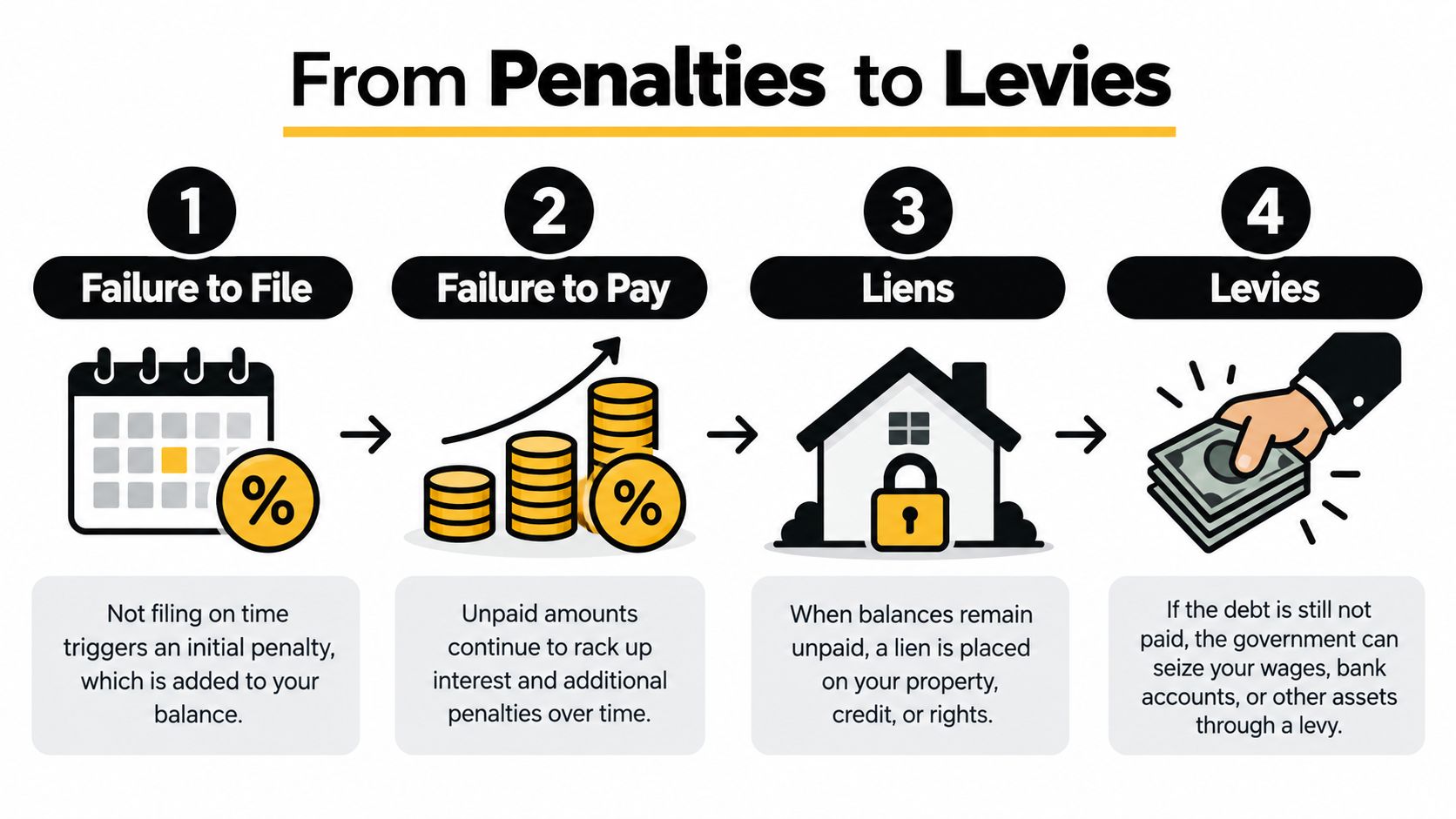
- How Tax Debt Escalates From Penalties to Levies
- The escalation ladder
- Resolution Options, OIC, Installment Agreements, and Alternatives
- Compare the four main paths
- Match the remedy to the cash flow
- Statute of Limitations and Collection Deadlines
- Why the date matters
- When to Hire a Tax Attorney Versus Handling It Yourself
- Handle routine matters carefully
- Escalate when legal exposure exists
- Next Steps and Getting Your Free Tax Debt Analysis
The federal tax gap reached a historical high of $688 billion for tax year 2021, showing that tax debt is a widespread problem affecting millions of taxpayers. Tax debt is usually solvable, but the right solution depends first on identifying exactly what kind of tax you owe.
You may be looking at an IRS notice on the kitchen table, a frozen business bank account, or a balance that appeared after filing a return you thought was accurate. Maybe you're self-employed and set aside too little for estimated taxes. Maybe your business collected payroll taxes but ran short of cash before sending the money to the IRS. Or perhaps you filed late, ignored several notices, and now a levy feels imminent.
Those situations all create “tax debt,” but they don't carry the same legal consequences. Individual income tax debt, payroll tax debt, and Trust Fund Recovery Penalty liability require different analysis and different resolution tactics.
What Is Tax Debt and Why It Matters Now
A self-employed consultant can file a return and discover that the reported income far exceeded the quarterly payments made during the year. A small-business owner can face a more serious liability after using employee withholding for rent, inventory, or payroll. Both situations create an IRS balance, but the available solutions depend on how the debt arose, whether the returns are accurate, and what income or assets remain.
Tax debt is the amount owed to federal, state, or local tax authorities when your actual liability exceeds what you paid by the applicable deadline. It can result from an honest mistake, unreported income, insufficient estimated payments, a late return, or a business cash-flow crisis. Penalties and interest may continue adding to the balance, turning an initially manageable obligation into a harder collection problem.
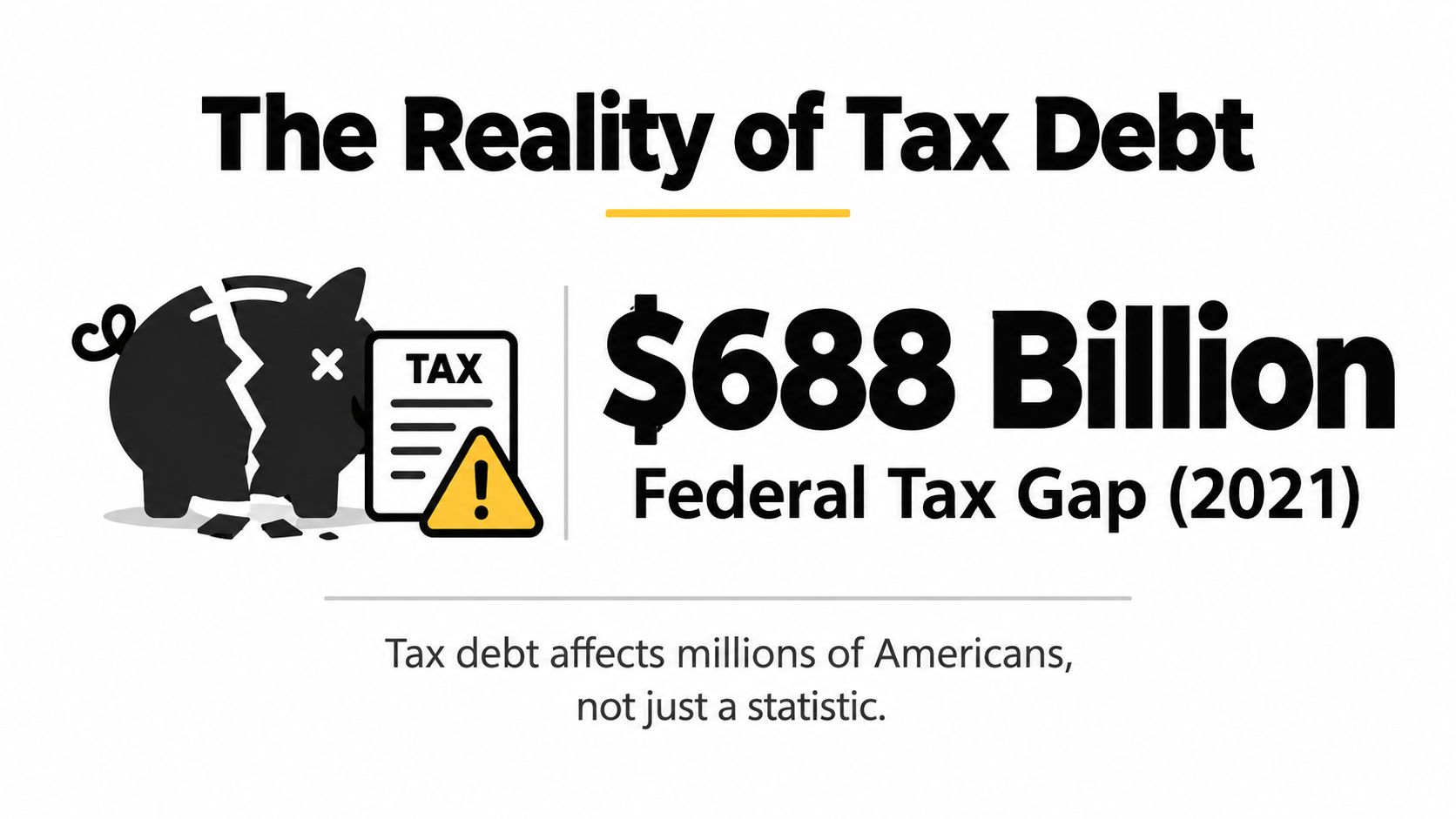
The IRS estimates that the federal tax gap reached $688 billion in 2021, compared with $345 billion in 2001, according to the USAFacts federal finances report. The tax gap measures tax legally owed but not paid on time. It reflects households and businesses that filed incorrectly, misunderstood their obligations, could not pay, or lacked available cash.
Why voluntary compliance doesn't eliminate tax debt
The voluntary compliance rate remained relatively high, moving from 83.7% in 2001 to 84.9% in 2021, as reported in the same federal tax gap data. A small compliance shift across a large tax system can still produce substantial unpaid balances.
That context matters if you feel embarrassed or assume the IRS has classified you as a bad actor. Many cases begin with ordinary financial pressure, confusing reporting requirements, or a business owner making a short-term decision that creates a long-term liability. Payroll withholding deserves particular attention because money collected from employees is not ordinary business cash. Treating that debt like a routine income tax balance can lead to the wrong resolution strategy, including an offer in compromise that does not address the underlying exposure.
Start by confirming whether the balance is accurate. Review account transcripts, filed returns, payment records, and IRS notices before choosing a resolution strategy. Use this guide to check whether you owe taxes. Ignoring the account will not erase the liability. It can reduce your available options and give collection activity more time to escalate.
Three Types of Tax Debt and Their Different Liabilities
Not all tax debt belongs to the same legal bucket. Treating every balance as ordinary income tax debt is one of the most expensive mistakes a taxpayer or business owner can make.
Individual income tax debt
This is the most familiar category. It commonly comes from unpaid balances on individual returns, underpaid estimated taxes, self-employment income, investment income, or income that wasn't reported correctly. The liability generally belongs to the taxpayer, although a joint return can create joint and several liability for both spouses.
An individual income tax balance is serious, but it's usually analyzed through ability to pay, equity, income, expenses, and collection alternatives. The first task is to verify the returns and determine whether the balance is correct. Organized source records and tax return working papers can help identify missing deductions, unsupported figures, and inconsistencies before you negotiate with the IRS.
Payroll tax debt
Payroll tax debt is different because an employer withholds certain taxes from employees and holds those funds for the government. The money isn't ordinary business revenue. Using it for operating expenses creates a fiduciary problem, and paying other creditors first can expose the people who controlled the funds.
A company may owe employer-side payroll taxes as well as withheld employee taxes. The business entity may be liable for the balance, but the responsible individuals can face separate personal exposure for the trust fund portion.
Trust Fund Recovery Penalty liability
The IRS can impose the Trust Fund Recovery Penalty, or TFRP, on a responsible person who willfully fails to collect, account for, or pay over trust fund taxes. The penalty equals 100% of the unpaid trust fund portion, and the IRS may pursue collection through levy or court action during the 10-year collection statute after assessment, according to IRS Internal Revenue Manual guidance on the TFRP.
Practical rule: A business closure doesn't automatically protect the owner from payroll tax liability. Determine who was responsible, what they knew, and which tax periods are involved.
The TFRP analysis turns on specific facts, including authority over payments, knowledge of the delinquency, and whether the failure was willful. Your personal home, bank accounts, wages, and other assets may be at risk even if the company operated through an LLC or corporation. The legal distinctions are explained in this overview of what the Trust Fund Recovery Penalty means.
How Tax Debt Escalates From Penalties to Levies
Collection rarely begins with an immediate seizure. The IRS generally sends notices and gives the taxpayer opportunities to respond, but those opportunities are not open indefinitely. Your response should match the stage of collection.
The escalation ladder
Failure to file. A late or missing return can trigger a filing penalty and leave the IRS without the information needed to calculate your account accurately. Filing every required return is often the first prerequisite to a workable resolution.
Failure to pay. A filed return can still produce an unpaid balance. Interest and payment penalties continue while the balance remains outstanding, so delay makes the account more expensive.
Federal tax lien. A lien gives the government a legal claim against property and rights to property. It can complicate refinancing, selling assets, obtaining credit, or closing a business transaction. A lien isn't the same as an immediate seizure, but it signals that the government has secured its interest.
Levy. A levy takes property or rights to property. It can reach wages, bank funds, accounts receivable, or other assets, subject to applicable collection rules. Once a levy is active, the issue becomes an emergency rather than a routine planning problem.
The OECD describes unpaid tax debt as a structural feature of tax administration, reporting about EUR 1.8 trillion in unpaid tax debts across member jurisdictions, with roughly EUR 800 billion considered collectible, as summarized in the tax data overview from Just Facts. That broader context doesn't excuse delay. It shows why agencies use formal systems to sort accounts and prioritize collection.
Respond to every notice, preserve proof of delivery, and don't assume a phone call has stopped collection. If wages, bank funds, or business receivables are under threat, use the IRS collection procedures explained in this resource on levies and garnishments.
Resolution Options, OIC, Installment Agreements, and Alternatives
An Offer in Compromise should not be the automatic first recommendation. “Settle for pennies on the dollar” is easy to market, but an OIC succeeds only when the taxpayer's assets, income, and expenses support it. The IRS accepted about 5,500 offers in compromise in fiscal 2025, down 57% from about 12,700 in fiscal 2023, according to reported IRS offer data.
Start with the liability type and the available cash flow. Payroll trust fund debt deserves immediate attention because responsible individuals may face personal exposure, while ordinary business tax debt may remain with the company. A settlement strategy that ignores that distinction can leave an owner exposed even after the business account changes.
If regular income supports a reasonable payment, an installment agreement usually deserves analysis before an OIC. Penalty relief may solve the main problem when penalties drive the balance. Currently not collectible status may fit documented hardship when necessary living expenses consume available income.
Compare the four main paths
| Resolution Option | Best For | Success Likelihood | Timeline |
|---|---|---|---|
| Offer in Compromise | Taxpayers whose assets and future income do not support full payment | Fact-dependent and selective | Often extended because financial documentation and review are substantial |
| Installment Agreement | Taxpayers with reliable income who can make an affordable payment | Commonly suitable when the balance can be paid over time | Usually faster than an OIC when returns and financial information are current |
| Penalty Abatement | Taxpayers with reasonable cause or an eligible compliance history | Depends on the penalty and supporting explanation | Can be addressed during account review or through a formal request |
| Currently Not Collectible | Taxpayers whose documented income and necessary expenses leave no practical payment capacity | Appropriate only while hardship is genuine and supportable | Collection may be suspended, but the account still requires monitoring |
The IRS uses installment agreements when the debt can be paid through a structured plan. A 2025 procedural change replaced the individual simplified installment agreement with a simpler installment agreement framework. That change makes payment-plan eligibility worth reviewing before preparing an OIC package.
Match the remedy to the cash flow
A business owner should separate tax obligations from ordinary business debt, then prepare a cash-flow picture showing what the company can pay without creating another delinquency. A practical debt strategy for growing businesses can organize the broader obligations, but it does not replace tax-specific analysis.
Review asset equity, disposable income, filing compliance, penalties, and payroll exposure before hiring a firm to pursue an OIC. Do not choose a settlement because the balance feels overwhelming. Choose the remedy that fits the evidence and protects the taxpayer's position. For a focused explanation of compromise and related choices, read this guide to settling debt with the IRS.
Statute of Limitations and Collection Deadlines
The IRS generally has a 10-year collection period after assessment for a federal tax liability. The clock doesn't usually begin on the filing deadline. It begins when the IRS assesses the tax, which makes the assessment date on your transcripts more important than the date you remember filing.
Certain events can suspend or alter the practical collection period. Bankruptcy proceedings, collection appeals, offers in compromise, and other legal or administrative events may affect the calculation. Don't rely on a generic “tax debt expires after seven years” rule. That shortcut is unreliable.
Why the date matters
An installment agreement doesn't merely reset the clock in the casual sense. It can affect collection activity while the IRS continues to calculate the applicable statutory period, and other actions may suspend the period. An accepted OIC also involves its own compliance requirements and consequences if you default.
Payroll cases require separate attention. The TFRP has its own assessment process, and the collection period runs from the formal assessment of that personal penalty, not automatically from the company's original payroll filing date. That difference can materially change the strategy for an owner or officer.
Request account transcripts and identify the assessment dates for each tax period. If a deadline appears close, don't provoke unnecessary collection activity or sign a resolution agreement without understanding how it affects the calculation. Ask a tax professional to review the actual transcript history, including periods of suspension and assessments.
The OECD reports outstanding tax arrears of about EUR 2.7 trillion, with roughly EUR 990 billion classified as collectible, and defines arrears to include overdue tax, interest, penalties, and deferred amounts under payment arrangements in its tax administration collection data. That definition reinforces why you must review the complete account, not just the original tax shown on a return.
When to Hire a Tax Attorney Versus Handling It Yourself
You can often handle a straightforward, verified balance yourself if all returns are filed, the amount is correct, no levy is pending, and you can afford a payment arrangement. The situation changes quickly when the IRS questions your conduct, your business payroll records, or your personal responsibility for company taxes.
Handle routine matters carefully
A self-directed approach may work when you can:
- Confirm the balance: Compare IRS transcripts with filed returns and payment records.
- Bring filings current: Submit missing returns before requesting many collection alternatives.
- Document affordability: Prepare income, expense, asset, and liability information.
- Meet every deadline: Keep copies of notices, submissions, and payment confirmations.
That approach still requires discipline. A payment plan doesn't fix an incorrect return, remove a TFRP assessment, or defend you in an audit.
Escalate when legal exposure exists
Hire experienced representation when the IRS is considering the Trust Fund Recovery Penalty, has filed a lien, issued a levy, or is examining conduct that could create civil or criminal exposure. Business sales, closures, divorces, bankruptcy planning, and real-estate transactions also deserve coordinated advice when tax debt could block the transaction or transfer personal liability.
A tax attorney can represent you before the IRS, analyze procedural options, protect confidential legal communications where privilege applies, and negotiate from a documented factual position. The value isn't a promise of a particular result. It's avoiding a preventable admission, missed deadline, or resolution that your cash flow can't sustain.

Ask any tax-resolution firm who will personally handle your case, what work is included, whether an attorney reviews the facts, and how fees are charged. Tax Attorney Stephen A Weisberg works with individuals, business owners, and professionals who need IRS and state tax controversy assistance, including cases involving tax debt, audits, and payroll exposure.
Next Steps and Getting Your Free Tax Debt Analysis
Start with evidence, not a sales pitch. Gather your IRS account and wage transcripts, filed returns, payment records, notices, bank statements, profit-and-loss reports, and documentation supporting necessary household or business expenses.
Use this checklist before seeking advice:
- Tax filings: Collect prior-year returns and identify every missing federal or state return.
- Current obligations: Estimate current-year income and tax payments so new debt doesn't accumulate.
- Financial position: Prepare an asset, liability, income, and expense summary.
- Collection record: Save every IRS notice, lien filing, levy notice, and payment-plan letter.
- Payroll records: For business cases, organize payroll reports, canceled checks, bank statements, and records showing who controlled payments.
A free Tax Debt Analysis should determine whether an attorney can help and which strategy fits, before you commit to expensive work. The answer may be an installment agreement, penalty relief, currently not collectible status, a challenge to the balance, or an OIC. Not every case requires compromise or litigation.
Tax debt is solvable when you identify the liability accurately, protect the deadlines, and choose a remedy your finances can support.
Tax Attorney Stephen A Weisberg offers a free Tax Debt Analysis for individuals, businesses, and owners facing IRS or state tax debt, audits, liens, levies, and payroll-tax exposure. Visit Tax Attorney Stephen A Weisberg to review your situation and identify a practical resolution strategy before paying for unnecessary services.


