Find a Tax Attorney Near Me Free Consultation That Gets Results
Struggling with the IRS? Learn how to find and prepare for a tax attorney near me free consultation. Our guide covers what to ask and how to get real value.

In this article
- Your First Step When Facing IRS Trouble
- Why This Initial Call Is So Important
- Free Consultation: What You Get vs. What You Don't
- How to Find the Right Local Tax Attorney
- Start with Smart, Targeted Searches
- How to Properly Vet Your Shortlist
- Preparing for Your Free Consultation to Maximize Its Value
- Gather Your Key Documents
- Prepare Your Most Important Questions
- Red Flags to Watch Out for During Your Consultation
- Unrealistic Guarantees and Vague Answers
- High-Pressure Tactics and the Bait-and-Switch
- What to Do When Professional Fees Are a Barrier
- Understanding Low Income Taxpayer Clinics
- LITC vs. Private Firm: Which Is Right for You?
- Common Questions About Tax Attorney Consultations
- What Kind of Legal Advice Can I Get?
- Is the Consultation Always with an Attorney?
- How Do I Know if I Need a Tax Attorney or a CPA?
- What Happens After the Free Consultation?
That letter from the IRS just landed, and your stomach is in knots. It’s a feeling I’ve seen countless times. Before you panic or hide the envelope in a drawer, take a deep breath. Your first move is actually a simple, no-risk step: a free consultation with a tax attorney.
This initial call is your best tool for figuring out what you're really up against. It's a chance to get a professional read on your situation without spending a dime. Think of it as a diagnostic check-up for your tax problem.
Your First Step When Facing IRS Trouble
An IRS notice is designed to be intimidating. It's full of dense legal language and scary-sounding terms like "lien" or "levy." It’s easy to feel completely alone and out of your depth. But this is the exact moment when you need a clear head and a solid plan, not panic.
That first consultation is your buffer. It’s a safe space to get answers and understand the landscape before you're forced to make any big decisions.
This is basically a fact-finding mission for both of us. You get to lay out the whole story—how you got here, what the notice says, what you're worried about. I, in turn, can start piecing together the facts to give you a preliminary analysis. You'll walk away knowing whether this is a five-alarm fire that needs a professional or something you might be able to resolve with a bit of guidance.
Why This Initial Call Is So Important
A free consultation is much more than a sales pitch. It's a strategic meeting. It’s your chance to see if an attorney really knows their stuff, to get a feel for their communication style, and, most importantly, to decide if you trust them with your financial future. It puts you in the driver's seat by giving you access to expert legal thinking without any upfront cost.
This infographic breaks down the core value you get from that first conversation.
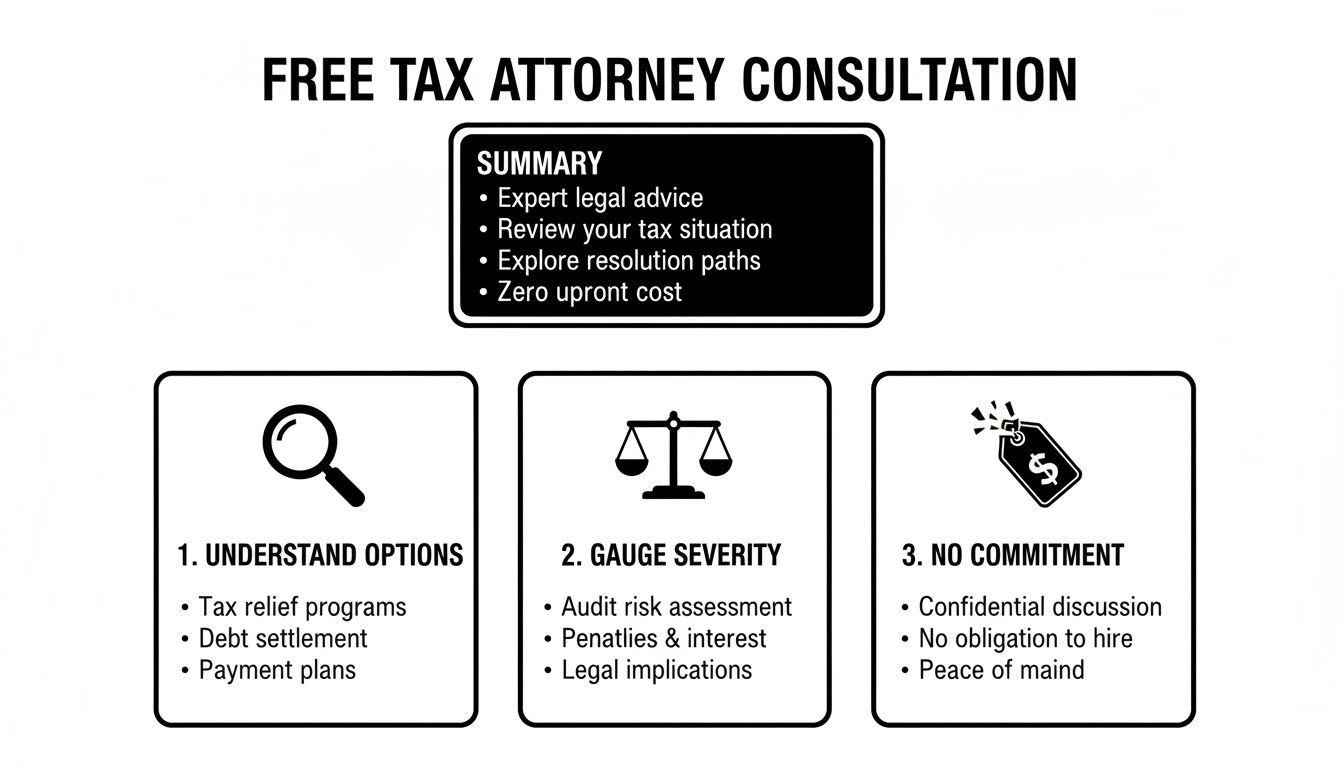
As you can see, it’s all about getting a clear picture of your options and the seriousness of your tax issue, all with no strings attached.
A lot of people think you only need to call a tax attorney when things are dire. The truth is, even small IRS issues can spiral out of control if they aren't handled correctly from the start. A quick consult can spot those risks before they become major headaches.
There's a reason this is such a common practice in the industry. Roughly two-thirds of tax law firms that work with individuals offer some kind of "free case evaluation." It works. Firms often see a 10–30% jump in people reaching out when they remove that initial financial barrier, which is great for both the taxpayer and the firm.
Many people hesitate, thinking their problem isn't "bad enough" to warrant professional help. But as I've explained before, you might need professional tax representation even if you don't think you do.
Taking advantage of a no-obligation conversation is, without a doubt, the smartest first step you can take toward getting this resolved and reclaiming your peace of mind.
Free Consultation: What You Get vs. What You Don't
It's crucial to have the right expectations for a free consultation. It's an incredibly valuable first step, but it's not the same as hiring an attorney to take over your case. This table breaks down what a good free consultation should provide and what it typically won't.
| What You Can Expect to Get | What You Should Not Expect |
|---|---|
| A preliminary assessment of your tax problem. | A complete, in-depth legal analysis of every document. |
| An overview of potential strategies and resolution options (like an OIC or Installment Agreement). | Definitive legal advice or a guarantee of a specific outcome. |
| A clear explanation of the attorney's fees and process if you decide to hire them. | The attorney to start working on your case or contact the IRS on your behalf during the free call. |
| A chance to ask your most pressing questions and get a feel for the attorney's expertise. | Someone to fill out forms or prepare legal documents for you. |
| An honest opinion on whether you truly need professional help or not. | A final, binding resolution to your tax problem. |
Setting these expectations helps you make the most of the call. Your goal is to gather information, assess the expert, and understand your path forward—all of which a quality consultation delivers.
How to Find the Right Local Tax Attorney
When you’re staring down a tax problem, typing "tax attorney near me free consultation" into a search bar can feel like opening Pandora's box. The results are a chaotic mix of national firms with flashy ads, small local practices, and everything in between. Your real job is to sift through that noise to find a qualified, local professional offering a genuinely helpful consultation, not just a thinly veiled sales pitch.
The goal here is simple: you want to talk to an actual attorney, not a call center agent who's just qualifying you as a lead. Going local is non-negotiable. A local attorney understands the nuances of Michigan tax law and often has working relationships with the very IRS agents in your area—an advantage you just can't get from a national firm.
Start with Smart, Targeted Searches
A simple Google search is just the first step. To really narrow down the field, you need to use the right tools.
Legal Directories: Websites like Avvo, Justia, and the National Association of Tax Professionals (NATP) are fantastic resources. They let you filter your search by city, specific practice area (like tax controversy), and, most importantly, check the box for a free consultation.
State Bar Associations: The State Bar of Michigan website is your official source for due diligence. Before you even pick up the phone, you can verify that an attorney is licensed, in good standing, and has a clean disciplinary record. It's a critical check.
As you search, you'll see a "map pack" of local listings. While being at the top is a good sign, it helps to understand the basic strategies to rank higher on Google Maps. You don't need to be an SEO expert, but recognizing that high visibility often points to an established, active local practice can help you interpret the results.
How to Properly Vet Your Shortlist
Okay, you have a few names. Now the real work begins. A slick website means nothing if the expertise isn't there. You need to verify their credentials and look for proof of real-world, local experience.
Start with client reviews, but learn to read between the lines. Ignore the generic "They were great!" comments. Instead, look for testimonials that tell a story—reviews that describe a specific problem, like an audit or a tax lien, and detail how the attorney helped them navigate it. That's where you'll find gold.
A true tax professional’s value lies in their ability to diagnose your specific issue and outline a clear, realistic path forward. The initial consultation should feel like a diagnostic session, not an aggressive pitch for a one-size-fits-all solution.
Look for attorneys who specifically mention handling tax controversy cases. This is the area of law that deals directly with disputes against the IRS and state tax agencies. It's a highly specialized field. For example, our team is built around these complex situations, and you can see how a dedicated Detroit tax attorney approaches these very cases. An attorney focused on tax controversy is a much better bet than a general practitioner who lists tax law as one of a dozen other things they do.
Finally, learn to spot the difference between a real local firm and a national "tax resolution" factory. Those big companies often use local phone numbers that just forward to a massive call center. When you first make contact, ask one simple, direct question: "Will my consultation be with the actual attorney who would handle my case?" If you get a vague answer or are pushed to a "senior consultant" or "case analyst," that’s a major red flag. You deserve to speak directly with the expert from the very beginning.
Preparing for Your Free Consultation to Maximize Its Value
Walking into a consultation unprepared is a huge missed opportunity when you're facing an IRS issue. You typically only get about 30 minutes, so you need to treat this meeting as an active fact-finding mission, not just a passive listening session. When you're prepared, you transform the entire dynamic. It allows the attorney to offer specific, relevant advice and helps you accurately gauge their expertise.
The whole point is to give the attorney a clean, concise snapshot of your tax problem right from the get-go. This helps them cut through the basic questions and get straight to the core of your issue, leading to a much deeper, more valuable analysis for you.

Gather Your Key Documents
Before you even pick up the phone, pull together every piece of paper related to your tax problem. The more organized you are, the more productive the conversation will be. Don't stress if you can't find everything, but do your best to locate the most important items.
Here’s a quick checklist of what you should have on hand:
- Recent IRS Notices: This is non-negotiable. Letters like a CP504 (Notice of Intent to Levy) or a Letter 1058 (Final Notice) tell an experienced attorney exactly where you are in the dreaded collections process.
- Last Two Filed Tax Returns: These documents give a quick overview of your income, filing status, and the financial picture the IRS is looking at.
- Any Other Relevant Correspondence: This bucket includes letters from state tax agencies, notes from conversations with revenue officers, or records of any past attempts you've made to solve the problem on your own.
Having these documents ready lets a professional immediately assess the severity and timeline of your case. For instance, if you're in collections, the attorney will likely need more detailed financial information. You can get a head start by reviewing our guide to Form 433-F, a critical document the IRS uses to determine what you can afford to pay.
Remember, this free consultation isn't just for the attorney to evaluate you—it's your chance to evaluate them. Arming yourself with smart, direct questions is the best way to decide if they're the right expert to trust with your financial future.
Prepare Your Most Important Questions
Beyond your paperwork, your questions are your most powerful tool. This is your interview. It's your opportunity to understand the attorney's approach, their process, and, of course, their fees. Don't be timid—ask direct questions that paint a clear picture of what it would actually be like to work with them.
Here are a few smart questions to get you started:
- "Based on what I've shared, what are the potential outcomes for my situation?" This question is a great way to test their ability to set realistic expectations from the start.
- "Who would be my primary point of contact if I hire your firm?" It’s crucial to know if you'll be working directly with an experienced attorney or handed off to a junior associate or paralegal.
- "Can you explain your fee structure clearly?" Get specifics. Ask about retainers, hourly rates, and any other costs that might pop up down the road.
- "What is the next immediate step if we decide to move forward?" A confident, competent attorney will have a clear, actionable plan ready to go.
To make sure you remember everything, it’s a good idea to learn how to take effective meeting notes and action items. This simple habit ensures you walk away from the consultation with a tangible plan, not just a fuzzy memory of the conversation.
Red Flags to Watch Out for During Your Consultation
A free consultation is a two-way street. Yes, you're getting a professional's initial take on your tax problem, but you're also interviewing them for a critical role. Your mission is to find a trustworthy expert, not just the first person who calls you back. Keeping your eyes peeled for a few key warning signs can save you a world of future headaches and wasted money.
Some tax firms come out swinging with bold promises that sound incredible—and that’s because they usually are. These grand guarantees are almost always a symptom of a high-pressure sales pitch, not a serious legal practice. A real tax attorney understands that every single case is different, and they know better than to guarantee a specific outcome before they've dug into the details.

Unrealistic Guarantees and Vague Answers
You need to be extremely cautious if a professional makes a sweeping promise just minutes into hearing your story. Resolving a tax issue is a complex process governed by strict IRS rules; it’s not a magic show.
Listen for these classic red-flag statements:
- "We guarantee we can settle your tax debt for pennies on the dollar!" The Offer in Compromise (OIC) is a real IRS program, but it has incredibly strict eligibility rules. Promising you'll qualify without a deep dive into your finances is just plain irresponsible.
- "We'll stop all IRS collections immediately." An attorney can often negotiate a temporary halt to collections, but anyone promising an instant, permanent stop is bending the truth.
- "Don't worry about the details, we handle everything." A good attorney wants you to be informed. They'll need your active help to get the documents and information required to build a strong case.
A reputable attorney will talk about potential outcomes and walk you through the factors that could influence your case. They manage your expectations by outlining a realistic strategy, not by selling you a dream. If it sounds like a late-night infomercial, it's time to hang up.
High-Pressure Tactics and the Bait-and-Switch
Your consultation should feel like a diagnostic session with a specialist, not a trip to a used car lot. Aggressive, high-pressure tactics are a massive warning sign that the firm cares more about its bottom line than your actual problem. This can look like being pushed to sign an agreement or pay a hefty retainer right there on the spot, before you've had a moment to process the conversation.
Another trap to watch for is the classic "bait-and-switch." This is a favorite tactic of many large, national "tax relief" companies. You call looking for a "free consultation with a tax attorney near me" but get routed to a slick salesperson—often called a "case analyst"—who is not a licensed attorney at all.
Your very first question on any call should be: "Are you the attorney who will personally be handling my case?" If the answer is no, or if they give you a vague, roundabout response, you're probably talking to a sales closer. Insist on speaking directly with the lawyer who would actually represent you.
At The W Tax Group, your free consultation is always with an experienced attorney. We believe you deserve real expertise from the very first conversation.
What to Do When Professional Fees Are a Barrier
So, the free consultation confirms what you already knew deep down: you need a pro. But then the attorney mentions their retainer fee, and your stomach drops. It’s a common moment of panic, where the way forward suddenly seems to vanish. It can feel like you've hit a dead end, but I promise you, you haven't.
When hiring a private tax attorney just isn't in the budget, you still have excellent options. The most important one to know about is the Low Income Taxpayer Clinic (LITC) program. These aren't government agencies; they're independent organizations that get some funding from the IRS specifically to help taxpayers who can't afford representation.
Understanding Low Income Taxpayer Clinics
Think of LITCs as a crucial safety net. They exist for people who fall below a certain income level and are tangled up in a dispute with the IRS. These clinics are staffed by dedicated attorneys, CPAs, and enrolled agents who volunteer their time (pro bono) or work for the clinic to represent people in audits, appeals, and collection cases.
To get help from an LITC, your income generally needs to be at or below 250% of the federal poverty guidelines. While the exact services can differ from one clinic to another, their mission is universal: to make sure everyone has a fair shot at representation, regardless of their bank account.
And they get real results. In 2023 alone, LITCs represented nearly 20,000 taxpayers. They helped those taxpayers secure over $10 million in refunds and reduced or corrected more than $41 million in tax liabilities. These aren't small numbers; they represent life-changing relief. You can see more about their impact and find a local clinic on the IRS Taxpayer Advocate Service website.
Key Takeaway: An LITC isn't a "lesser" option—it's the right option for those who qualify. They provide expert legal help designed specifically for people in a tough financial spot.
LITC vs. Private Firm: Which Is Right for You?
The choice between an LITC and a private firm really just comes down to your specific situation. One isn't better than the other; they're built to serve different needs. The world of tax help can be murky, and our guide to tax debt relief companies can also shed more light on your options.
Here’s a quick way to think about it:
- An LITC is likely your best bet if: Your income is below their threshold, your fight is with the IRS, and you need someone to directly represent you in an audit, appeal, or collection matter.
- A private firm like The W Tax Group might be the better fit if: Your income is over the LITC limit, your case is particularly complex (like a significant business tax issue), or you need the kind of immediate, dedicated attention a busy clinic might not be able to offer.
Going up against the IRS alone is incredibly stressful. Just knowing that expert, affordable help is available through resources like LITCs means that a tight budget doesn't have to stand between you and a fair outcome.
Common Questions About Tax Attorney Consultations
Stepping into the world of tax law can feel overwhelming, and it's completely normal to have a ton of questions before making that first call. When you start searching for a "tax attorney near me free consultation," what you really want is a straight answer and a sense of direction.
Think of this as your prep sheet. I’ll walk you through the most common questions people ask so you can go into that initial meeting feeling prepared and confident. The more you know upfront, the more you'll get out of it.
What Kind of Legal Advice Can I Get?
This is a big one. A free consultation is really a high-level case evaluation, not a deep-dive strategy session. The attorney's job during this first call is to listen to your story, get the basic facts of your tax problem—be it an audit, back taxes, or a scary-looking lien—and then sketch out a few potential paths forward.
For instance, after hearing your situation, an attorney might say, "It sounds like an Offer in Compromise could be on the table for you." What they won't do is tell you the exact dollar amount to offer the IRS. That kind of specific, actionable advice requires a formal attorney-client relationship, which only begins after you've signed an engagement letter and they've had a chance to really dig into your financials.
Is the Consultation Always with an Attorney?
You’d think so, but it's a critical question to ask right out of the gate. At a reputable, client-first firm, your free consultation will absolutely be with an actual tax attorney. You need someone with real legal experience to give you an accurate assessment from the get-go.
Unfortunately, that's not always how it works, especially with some of the huge national "tax relief" companies you hear on the radio. With those outfits, you might find yourself talking to a salesperson or a "case analyst." Their primary goal isn't to evaluate your legal options; it's to sign you up.
Expert Tip: Always ask, "Will I be speaking directly with a tax attorney?" A real conversation with a qualified lawyer is infinitely more valuable. They can give you a realistic, no-nonsense opinion on your situation from the very first call.
How Do I Know if I Need a Tax Attorney or a CPA?
This really boils down to the nature of your problem. A Certified Public Accountant (CPA) is your expert for tax planning, preparation, and staying compliant. They’re the professional you turn to for filing accurate returns and finding smart ways to minimize what you owe each year.
But the second your issue becomes a legal fight with the IRS, you need a tax attorney.
You’re in attorney territory when you're dealing with things like:
- A serious IRS audit or examination
- A notice of a tax levy or wage garnishment
- The need to appeal an IRS decision in U.S. Tax Court
- Any hint of a criminal tax investigation
The key difference? A lawyer provides attorney-client privilege, which means your conversations are legally protected from the IRS. A CPA's confidentiality privilege is much weaker and doesn't hold up in the same way. If there's a legal threat or enforcement action on the table, you want an attorney in your corner.
What Happens After the Free Consultation?
If the initial call goes well and both you and the attorney feel it's a good fit, they will lay out the next steps very clearly. You are never, ever obligated to move forward.
Here’s what you can generally expect:
- Engagement Letter: The firm will send you a formal agreement. This document is crucial—it details the exact scope of work they’ll perform and lays out the fee structure so there are no surprises.
- Review and Sign: Take your time with this. A good attorney will want you to read it carefully and will be happy to answer any questions you have about it.
- Power of Attorney: Along with the engagement letter, you'll complete an IRS Form 2848. This is a Power of Attorney that legally permits your attorney to speak directly to the IRS and handle things on your behalf.
Once those pieces are in place, the real work of solving your tax problem can begin.
Facing the IRS is intimidating, but it's not a fight you have to take on by yourself. At The W Tax Group, your free consultation is always with an experienced tax attorney—like me, Stephen A. Weisberg—who will give you an honest, straightforward assessment of your case. Take the first step toward peace of mind and schedule your Free Tax Debt Analysis today.