Stopping a Wage Garnishment: How to Stop and Protect Pay
Discover practical steps for stopping a wage garnishment, how to claim exemptions, negotiate with creditors, and protect your finances.

In this article
- Your First Moves After a Garnishment Notice
- Identify the Debt Source
- Create Your Garnishment Response File
- Protecting Your Paycheck by Claiming Exemptions
- Federal vs. State Exemption Laws
- Common Garnishment Types and Their Limits
- How to File a Claim of Exemption
- Real-World Scenarios Where Exemptions Work
- Negotiating Directly with Your Creditors
- Crafting a Realistic Offer
- Making Contact and Documenting Everything
- Taking the Fight to Court: How to Challenge a Garnishment
- Do You Have a Valid Reason to Object?
- Navigating the Court Process
- Preparing for Your Day in Court
- Using Bankruptcy to Stop Garnishments Immediately
- Chapter 7 vs. Chapter 13 Bankruptcy
- The Long-Term Impact and Key Considerations
- Frequently Asked Questions About Wage Garnishments
- Can I Be Fired for a Wage Garnishment?
- How Long Does a Wage Garnishment Last?
- What Is Disposable Income in Garnishment Calculations?
- Do I Really Need a Lawyer to Stop a Garnishment?
Getting a garnishment notice is a gut punch. I've seen it countless times—that official-looking envelope sends people into a spiral of panic and fear. But right now, you can't afford to freeze. The actions you take in the next 48 hours are absolutely critical.
Your First Moves After a Garnishment Notice
When that notice lands in your hands, it’s easy to feel powerless. But this is the moment to shift from shock to strategy. The very first thing to do is make sure the notice is real. Scammers are ruthless and often use official-looking documents and threatening language to scare you into paying a debt you don't even owe.
Once you've confirmed it's not a scam, you need to pinpoint exactly who is coming after your wages and why. The game plan for stopping a garnishment changes drastically depending on the type of debt.
Identify the Debt Source
Not all debts are created equal in the eyes of the law, and garnishment rules vary wildly.
- Credit Card and Medical Debt: For most private debts like these, a creditor can't just start taking your money. They have to sue you in court and win a judgment first.
- Federal Student Loans: The Department of Education plays by a different set of rules. They can start an administrative wage garnishment and take up to 15% of your disposable income without ever seeing the inside of a courtroom.
- Tax Debt (IRS or State): Government tax agencies are the most powerful creditors. The IRS, for example, can issue a wage levy directly to your employer without a court order. If an IRS notice shows up, you need to act immediately. For a deeper dive, check out this comprehensive guide on understanding a notice of levy from the IRS.
- Child Support and Alimony: These are top-priority debts. Garnishments for family support can take a staggering 50-60% of your disposable income, far more than any consumer creditor can touch.
This flowchart can help you think through the initial verification process when you get a call or notice.
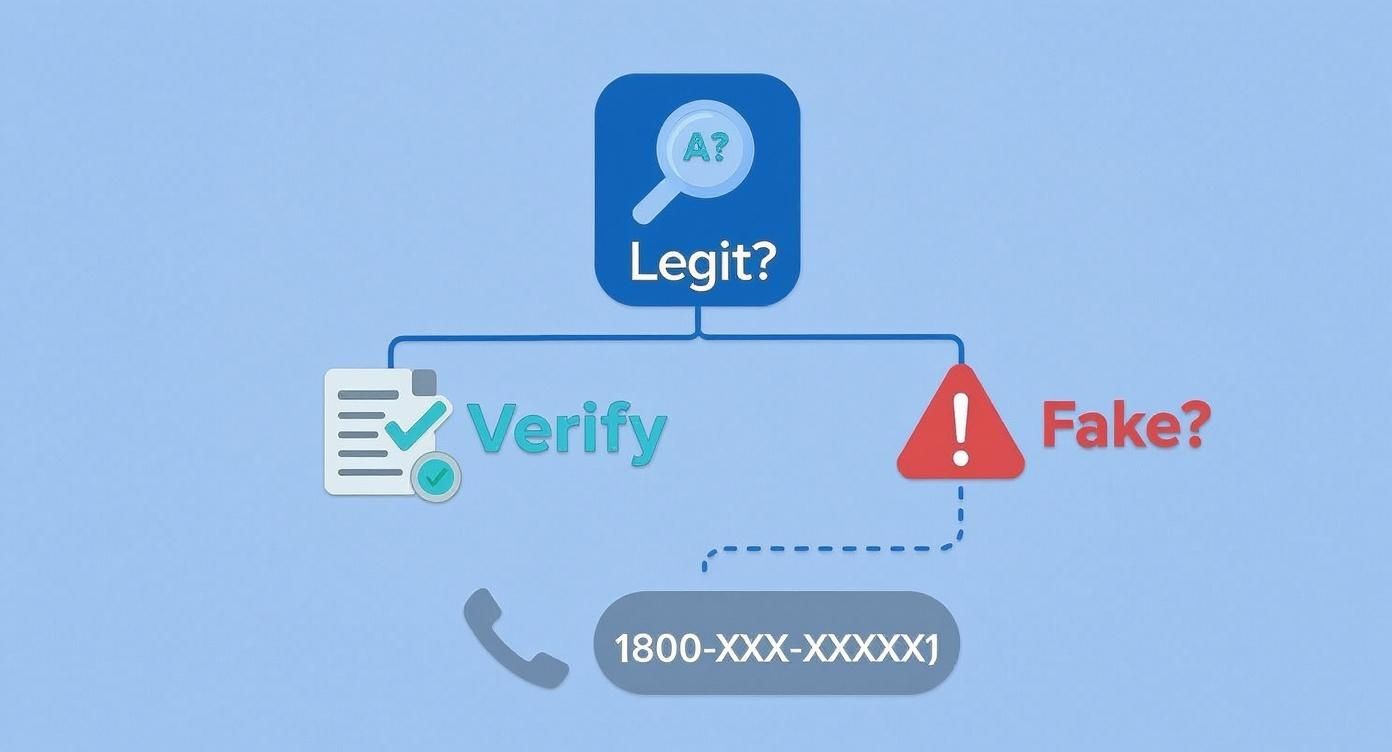
The bottom line is simple: always verify before you react. Confirming the source and the legitimacy of the notice is your non-negotiable first step.
Create Your Garnishment Response File
Okay, you know who the creditor is. Now it’s time to get your paperwork in order. Don't put this off. Having everything in one place will save you a world of stress and buy you precious time.
A wage garnishment notice feels like an ending, but it’s actually the beginning of your chance to formally respond and protect your income. Ignoring it is the worst thing you can do.
Start building a file with these essentials:
- The Garnishment Notice Itself: The whole packet—the court order, the notice to your employer, everything.
- Recent Pay Stubs: Grab your last two. You'll need them to calculate your "disposable income," which is your take-home pay after legally required deductions like taxes.
- Original Debt Paperwork: Dig up any loan agreements, old credit card statements, or the court judgment related to this debt. This is how you'll confirm if the amount they claim you owe is even accurate.
- Proof of Dependents: If you support a family, find those birth certificates or your latest tax return. This information is key to claiming financial hardship exemptions that can reduce or even stop the garnishment.
Getting these documents together moves you from being a victim to being an active player in solving this problem. This prep work is the foundation for everything that comes next, whether you end up fighting the garnishment in court, negotiating a settlement, or seeking legal help.
Protecting Your Paycheck by Claiming Exemptions

When that garnishment notice lands, it’s easy to feel powerless. But here’s something the creditors don't broadcast: you have rights. Both federal and state laws create a crucial safety net called exemptions, designed to keep you from falling off a financial cliff.
These laws exist for a simple reason: to make sure you have enough money left to cover basic living expenses. Understanding and asserting these rights is your first and best line of defense. It all starts with a formal "claim of exemption" filed with the court.
Federal vs. State Exemption Laws
Think of federal law as the minimum level of protection everyone gets. The Consumer Credit Protection Act (CCPA) sets a baseline for most consumer debts, like credit cards or medical bills. Under the CCPA, a creditor can’t take more than the lesser of these two amounts:
- 25% of your weekly disposable earnings.
- The amount your weekly disposable earnings are over 30 times the federal minimum wage.
A quick but important note on "disposable earnings"—that’s your paycheck after mandatory deductions like federal and state taxes have been taken out, not your gross pay. It's a critical distinction that can make a big difference.
But the federal law is just the floor. Many states have stepped in with their own laws that offer far more generous protections. Some states might completely block wage garnishment for certain consumer debts, while others set much higher income thresholds. You always get to use the law—federal or state—that helps you the most.
To give you a clearer picture, here’s a quick breakdown of the typical federal limits for different kinds of debt.
Common Garnishment Types and Their Limits
This table outlines the typical federal limits for different types of debt, helping you quickly understand what percentage of your disposable income is at risk.
| Type of Debt | Federal Garnishment Limit | Key Considerations |
|---|---|---|
| Consumer Debt | Lesser of 25% of disposable income or amount over 30x federal minimum wage. | Includes credit cards, medical bills, personal loans. State laws often provide more protection. |
| Federal Student Loans | Up to 15% of disposable income. | The Department of Education doesn't need a court order. Limited hardship options exist. |
| Back Taxes (IRS Levy) | Amount varies based on a specific formula (IRS Publication 1494). | The IRS calculation considers your filing status and number of dependents. It can be aggressive. |
| Child & Spousal Support | Up to 50% if supporting another family; up to 60% if not. An extra 5% if over 12 weeks in arrears. | These have the highest limits and are prioritized over other debts. |
Remember, these are the federal rules. Always check your specific state laws, as they might offer you a much better shield against creditors.
How to File a Claim of Exemption
The garnishment notice you receive should include instructions and a form for claiming your exemptions. This isn't just paperwork; it’s your formal, legal response. You need to fill out this form, file it with the court clerk, and sometimes send a copy to the creditor's attorney, all within a very strict timeframe.
If you miss that deadline, you could automatically lose your right to claim any exemptions. Time is absolutely critical. On the form, you’ll explain exactly why some or all of your income should be shielded from the creditor, citing your specific circumstances.
This has become a harsh reality for millions. With federal student loan collections back in full swing, garnishments have spiked. As noted in a Fortune article, by mid-2025, nearly two million Americans were having their wages garnished, a number that continues to grow.
Real-World Scenarios Where Exemptions Work
Your specific situation and state laws will determine which exemptions apply, but a few powerful ones come up all the time.
1. Head of Household Status
Many states offer a robust "head of household" exemption. You generally qualify if you provide more than half of the financial support for a dependent, whether it's a child or an elderly parent living with you.
- Real-Life Example: Maria is a single mother making $800 a week after taxes. A credit card company gets a judgment and tries to garnish her wages. Her state has a head of household exemption that protects 100% of her wages from consumer debt. By filing the claim of exemption form on time and proving her status, she can block the garnishment entirely.
2. Protected Government Benefits
Some sources of income are almost completely off-limits to consumer creditors. If these funds are in your bank account (and can be traced), they should be protected there, too.
Key Takeaway: Funds from Social Security, Supplemental Security Income (SSI), veterans' benefits, and unemployment compensation are generally protected from garnishment by most creditors. You must claim this exemption for the court to recognize it.
3. Low-Income Protection
If your earnings fall below a certain level, they may be fully exempt. The federal rule protecting income up to 30 times the minimum wage is a start, but many state laws are more generous. This is designed to ensure a wage garnishment doesn’t push you below the poverty line.
When you're dealing with an IRS levy, the exemption rules are completely different and much more complex. To get a handle on what the IRS can and can't take, you can learn more about the math behind the IRS wage levy formula.
Filing a claim of exemption is your most direct and powerful tool for fighting back. It forces everyone involved—the creditor, your employer, and the court—to stop and recognize your legal right to keep enough of your hard-earned money to live.
Negotiating Directly with Your Creditors

It might sound strange, but one of the most effective ways to stop a wage garnishment is to talk directly to the people taking your money. Even after they've won a court judgment against you, many creditors are surprisingly willing to negotiate.
Why? Because for them, garnishing wages is a slow, bureaucratic pain. They’d often much rather get a reliable payment directly from you—or better yet, a lump-sum settlement—than deal with the hassle. By opening a direct line of communication, you can often work out a better deal and get your full paycheck back.
Think of it less as asking for a favor and more as a business proposition. You're offering them a cleaner, faster way to get paid.
Crafting a Realistic Offer
Before you ever pick up the phone, you absolutely must know what you can actually afford. If you make a promise you can't keep, you'll destroy your credibility and they'll never trust you again. Sit down and create a real, honest-to-goodness budget to figure out what you can pay without falling behind on your other bills.
Once you have that number, you can frame your offer. Generally, you have two main options:
- Lump-Sum Settlement: This is the gold standard if you can swing it. If you have access to cash—from savings, a loan from family, or even a 401(k) loan—offering a single payment to close the books is incredibly powerful. You can often settle the entire debt for 40% to 60% of what you owe.
- Voluntary Payment Plan: If a lump sum is out of the question, propose a new monthly payment plan you know you can stick to. It needs to be a realistic amount for your budget, but also enough to show the creditor you're serious.
The whole point is to make your offer more attractive than the slow drip of a garnishment.
Remember, the person on the other end of the line is often just an employee following a script. Your job is to present a logical, financially sound alternative that makes their job easier and gets them paid faster.
Making Contact and Documenting Everything
When you call, stay calm and professional. Have your account or case number ready and clearly state why you’re calling.
Try an opening like this: "Hi, my name is Jane Doe, and I’m calling about case number 12345. I’ve received a garnishment notice and I’d like to propose a voluntary payment arrangement that I think will work better for both of us."
This next part is non-negotiable: document every single conversation. Keep a simple log with the date, time, the name of the person you spoke with, and what was discussed. If you come to an agreement, do not send a dime until you have it in writing. This written proof is your only protection.
Keep in mind, if you're dealing with the IRS, the rules are completely different. They have formal programs like an Offer in Compromise or Installment Agreements. You'll need to understand how to negotiate IRS debt, as their process is far more rigid than a private creditor's.
Your final written agreement must clearly state three things:
- The exact settlement amount or the new payment plan terms.
- That this agreement satisfies the debt in full.
- That the creditor will immediately file to stop the wage garnishment with the court.
Without this on paper, you're at risk of them taking your new payments and continuing the garnishment. It takes some legwork, but negotiating directly can be the fastest way to take back control of your finances.
Taking the Fight to Court: How to Challenge a Garnishment
So, you’ve received a garnishment order that just doesn’t seem right. Maybe you were never even aware of a lawsuit. It's a gut-wrenching feeling, but you don't have to just roll over and accept it. The court system offers a formal path to fight back, as long as you have a solid legal reason.
This isn't about simply telling a judge you can't afford the debt. It's about demonstrating that the garnishment order itself is legally flawed. Taking this step means you're officially telling the court that the creditor, or the process they used, violated your fundamental rights. It’s a serious move, but it’s often the only way to stop a wage garnishment when you've been wronged.
Do You Have a Valid Reason to Object?
You can’t just walk into court and say you don’t want to pay. To get a judge to listen, you need to present a specific, legally recognized argument. From my experience, some of the most successful challenges are built on these grounds:
- Improper Service of Process: This is a big one. Were you ever legally notified of the original lawsuit? If a creditor can't prove they properly "served" you with the initial summons, the entire judgment against you could be thrown out.
- The Numbers Are Wrong: Is the amount being garnished demonstrably incorrect? This happens more than you'd think. It could be from miscalculated interest, illegal fees tacked on, or a failure to credit payments you already made.
- It's Not Your Debt: If you're a victim of identity theft, you have a powerful case. You can challenge the garnishment on the grounds that you are not the person who actually owes the money.
- The Debt Was Wiped Out: If this specific debt was already included and discharged in a past bankruptcy, the creditor is breaking the law by trying to collect it again.
When you're figuring out how to challenge a garnishment, it's incredibly helpful to be up-to-date on relevant employment law and compliance information, as these rules often play a direct role in how your case is handled.
Navigating the Court Process
Once you know your legal argument, you have to move fast. Your garnishment notice will state a deadline to file a formal objection—and it's often a very tight window, sometimes just 10 to 30 days. If you miss that deadline, you could lose your right to challenge the order for good.
It's interesting to note that the number of people facing garnishment can swing wildly based on economic policies. ADP payroll data, for instance, showed the garnishment rate hit a peak of 3.9 percent in March 2020 right before pandemic relief measures caused a massive drop. Learn more about the findings on wage garnishment trends.
Your immediate task is to prepare for a hearing. This is where your hard work will make all the difference.
Preparing for Your Day in Court
To win this fight, you need more than a good story—you need proof. Your goal is to present a clear, organized case that leaves no doubt in the judge's mind that the creditor made a critical legal error.
Here's how to build your case for the judge:
- Gather Your Evidence: Collect every single document that supports your claim. This means bank statements showing payments, a police report for identity theft, or even mail with your name on it proving you lived at a different address when the lawsuit was supposedly "served."
- Organize Your Argument: Don't just show up with a pile of papers. Write down your points logically. Start with your core claim (e.g., "I was never served with the lawsuit") and then list each piece of evidence that proves it.
- Present Your Case: On your court date, stay calm and stick to the facts. Address the judge respectfully ("Your Honor") and present your evidence clearly. If the judge asks questions, answer them directly and honestly.
Key Insight: A judge is going to be far more persuaded by a well-documented, factual argument than by an emotional plea. Your job isn't to talk about the financial hardship—it's to expose the legal flaw in the creditor's case.
A successful challenge can result in the judge "quashing" or "vacating" the garnishment order. That's legal-speak for voiding the order completely. Once that happens, your employer must stop taking money from your paycheck immediately. It’s a powerful outcome that proves the system can work when you know your rights.
Using Bankruptcy to Stop Garnishments Immediately
When a wage garnishment hits your paycheck, the world can feel like it's closing in. If you're already juggling multiple debts, seeing your hard-earned money disappear before it even reaches your bank account can feel like a final blow. While other methods for stopping a garnishment take time, filing for bankruptcy is a powerful legal move that offers immediate protection. It's a serious decision, but it's a tool designed to give people a chance to press the reset button.
The second you file for bankruptcy, a federal protection called the automatic stay kicks in. This isn't a suggestion or a request—it's a court order that slams the brakes on nearly all collection activities. Creditors, collection agencies, and even government entities are legally forced to stop what they're doing.
The automatic stay is your emergency brake. It instantly halts wage garnishments, stops lawsuits in their tracks, and silences the harassing phone calls. It gives you the critical breathing room you need to figure things out without your paycheck shrinking week after week.
This immediate halt is what makes bankruptcy such a potent weapon against garnishments. Your employer gets notified of the stay, and by law, they must stop withholding money from your pay for any debts included in your filing.
Chapter 7 vs. Chapter 13 Bankruptcy
While both primary forms of personal bankruptcy trigger the automatic stay, they are two very different paths. Understanding how they work is the key to figuring out if this is the right move for your situation.
Chapter 7 Liquidation Bankruptcy
This is often what people think of as a "fresh start" bankruptcy. Chapter 7 is built to wipe out many common types of unsecured debt completely. This is a game-changer for debts that often lead to garnishments, like:
- Credit card bills
- Medical debt
- Personal and payday loans
To be eligible for Chapter 7, you have to pass what’s called a "means test." This test basically compares your income to the median income in your state. If you’re below that line, you generally qualify. If you're above it, there's a more complex formula to determine eligibility. A court-appointed trustee might sell some of your non-essential (non-exempt) property to pay creditors, but the good news is that most people who file find their essential property—like their car, home, and retirement accounts—is protected by exemptions.
For many, Chapter 7 provides a way to get out from under crushing debt in just a matter of months, permanently ending the garnishments tied to it.
Chapter 13 Reorganization Bankruptcy
Think of Chapter 13 as a structured repayment plan. Instead of wiping the slate clean, you create a plan to pay back a portion of your debts over a three to five-year period. This is a common route for people whose income is too high for Chapter 7, or for those who have valuable assets they want to protect from being sold.
The automatic stay still stops the garnishment right away. The difference is that your debts get consolidated into a single, manageable monthly payment. You make this payment to a bankruptcy trustee, who then distributes the money to your creditors based on the court-approved plan. It’s an especially useful tool for getting caught up on secured debts like a mortgage or car loan while still tackling the unsecured ones.
The Long-Term Impact and Key Considerations
Let’s be clear: filing for bankruptcy is a major financial decision with long-lasting effects. While the immediate relief from a wage garnishment is undeniable, you have to weigh the pros and cons honestly.
A bankruptcy will stay on your credit report for seven years for a Chapter 13 and up to ten years for a Chapter 7. This will definitely make getting new credit, loans, or a mortgage more difficult and expensive for a while. That said, if your credit is already wrecked by missed payments, collections, and judgments, bankruptcy is often the first real step toward rebuilding your financial health.
It's also critical to know that bankruptcy doesn't solve every debt problem. The automatic stay will stop garnishments for nearly everything, but some debts are considered non-dischargeable. This means they won't go away, and you'll still owe them after the bankruptcy is over. These typically include:
- Most recent tax debts
- Child support and alimony payments
- The vast majority of student loans
Tax debt, in particular, has its own complex rulebook when it comes to bankruptcy. To get a clear picture of what tax liabilities you might be able to get rid of, you can learn more about how bankruptcy can clear tax debt in our in-depth guide.
Ultimately, bankruptcy offers a final, legal solution to a wage garnishment. It's a formal process that can pave a way out from under a mountain of debt, giving you back control over your paycheck and your future.
Frequently Asked Questions About Wage Garnishments

When you're hit with a wage garnishment, your mind is probably racing with questions. It's a stressful situation, and getting clear answers is the first step toward getting things back under control.
Let's walk through some of the most common things people worry about when their paycheck is on the line.
Can I Be Fired for a Wage Garnishment?
This is easily one of the biggest fears, and for good reason. The good news is that federal law provides a layer of protection. Under the Consumer Credit Protection Act (CCPA), your employer cannot legally fire you because of a single wage garnishment.
But—and this is a big but—that federal shield only covers your first garnishment. If you get hit with a second or third one from different creditors, that protection is gone. It's always smart to look up your state's laws, too, as some offer more robust protections for employees than the federal baseline.
How Long Does a Wage Garnishment Last?
For a typical consumer debt like a credit card bill or an old personal loan, the garnishment will keep coming out of your check until the debt is completely paid off. That means the original amount plus any added interest, court costs, and legal fees.
Debts for ongoing support, like child support, are different. Those garnishments can continue for as long as you have the obligation to pay. Of course, you don't have to just wait it out. You can stop a garnishment earlier by:
- Paying off the full balance.
- Negotiating a settlement or a new payment plan with the creditor.
- Challenging the garnishment in court and winning.
- Filing for bankruptcy, which imposes an "automatic stay" on most collection actions.
What Is Disposable Income in Garnishment Calculations?
This term is the key to the whole calculation, so it’s crucial to understand. Your disposable income isn't your gross pay; it's the amount left after legally required deductions have been taken out.
These mandatory deductions include:
- Federal, state, and local income taxes
- Social Security and Medicare (FICA)
- State-mandated deductions like unemployment insurance
Things you choose to have taken out—like your 401(k) contributions, health insurance premiums, or union dues—do not reduce your disposable income for this calculation. The amount they can take is always a percentage of this final "disposable" number.
Your disposable income is your take-home pay after mandatory taxes, not your total earnings. This distinction is vital because it determines the maximum amount a creditor can legally take from you each pay period.
Do I Really Need a Lawyer to Stop a Garnishment?
Honestly, it depends. If you're doing something relatively simple, like filling out a standard claim of exemption form or calling the creditor to see if they'll negotiate, you can probably handle it yourself.
However, you should seriously consider getting professional legal help if your situation gets more complicated. It’s time to call an attorney if you find yourself:
- Needing to challenge the garnishment's validity in court.
- Facing a very large or legally complex debt.
- Getting stonewalled by an aggressive creditor who won't budge.
- Thinking about bankruptcy as a potential way out.
An experienced attorney knows the ins and outs of the system and can be your best advocate. They can protect your rights and often get a much better result than you could on your own, especially when things get contentious.
Navigating tax debt and IRS garnishments requires specialized knowledge. At Attorney Stephen A Weisberg, I start with a FREE Tax Debt Analysis to determine the best path forward before you ever pay a fee. If you're struggling with a tax levy, find out how I can help at https://weisberg.tax.


