State Tax Refund VA Status 2026
Waiting for your state tax refund va? Our 2026 guide shows how to check your status, understand delays, and fight refund offsets for a smooth process.
In this article
- Your 2026 Virginia Tax Refund Awaits
- What usually works
- What usually does not
- How to Check Your Virginia State Tax Refund Status
- The cleanest way to do it
- How to read the status
- When status checks stop helping
- Common Reasons Your VA Refund Is Delayed
- The filing method problem
- Other delay patterns I watch for
- Refund delay vs refund offset
- Understanding and Disputing a Virginia Tax Refund Offset
- What to do first
- What works in real disputes
- What usually fails
- For advisors handling a client matter
- Gathering Your Documents for a Refund Inquiry or Dispute
- The core file to gather
- Documents that matter in offset cases
- How to package it
- A practical checklist before you call
- When to Call a Tax Professional for Your Refund Issue
- Red flags that justify professional help
- The deadline many taxpayers miss
- When legal strategy matters
E-filed Virginia returns are generally processed in up to 4 weeks, while paper-filed returns can take up to 10 weeks. If you mailed a paper return and you're still waiting, that timing alone may explain the delay before anything more serious is going on.
That wait can feel much longer when you were counting on the refund for rent, payroll, estimated taxes, or catching up after filing season. For many taxpayers, the first question is simple. Where's my money? The harder question is what to do if the money never arrives because the return is delayed, diverted, or applied to some old debt you didn't expect.
Your 2026 Virginia Tax Refund Awaits
Most refund problems start in an ordinary way. A taxpayer files, sees the return accepted, and expects the money to land soon after. Then the status doesn't change, the bank account stays empty, and every day of silence starts to feel like bad news.
That reaction is understandable. Refunds matter in Virginia. In reporting published on April 14, 2025, Axios Richmond cited IRS statistics showing that nearly 70% of Virginians who filed 2022 returns received a federal refund, and the average federal tax refund in Virginia was $3,217, ranking the state 19th highest in the nation according to Axios Richmond's report on Virginia federal refund patterns. When refunds are common and meaningful, people plan around them.
I see the same practical pattern with state tax refund va issues. Some people just need a status check. Others have a return stuck in processing because they filed on paper, used certified mail, or hit a review issue. The most stressful cases involve a refund offset, where the refund isn't merely delayed. It's intercepted and applied to a debt.
Practical rule: Treat a missing refund as a timing issue first, then a document issue, then a debt issue. That order saves time and keeps you from chasing the wrong problem.
There's also a broader shift toward digital handling that makes filing method more important than many people realize. If you want context on how paper processing is becoming less practical, this discussion of the IRS ending paper refunds and moving toward digital transition is worth reading.
What usually works
A calm, methodical approach works better than repeated calls with incomplete information. Start with the official Virginia refund tool. Confirm whether the return is still being processed, approved, or sent. If the refund has been taken for another debt, the strategy changes immediately.
What usually does not
What doesn't work is assuming every delay means a seizure, or assuming every offset must be correct. Both mistakes are common. The right move depends on which bucket your case falls into.
How to Check Your Virginia State Tax Refund Status
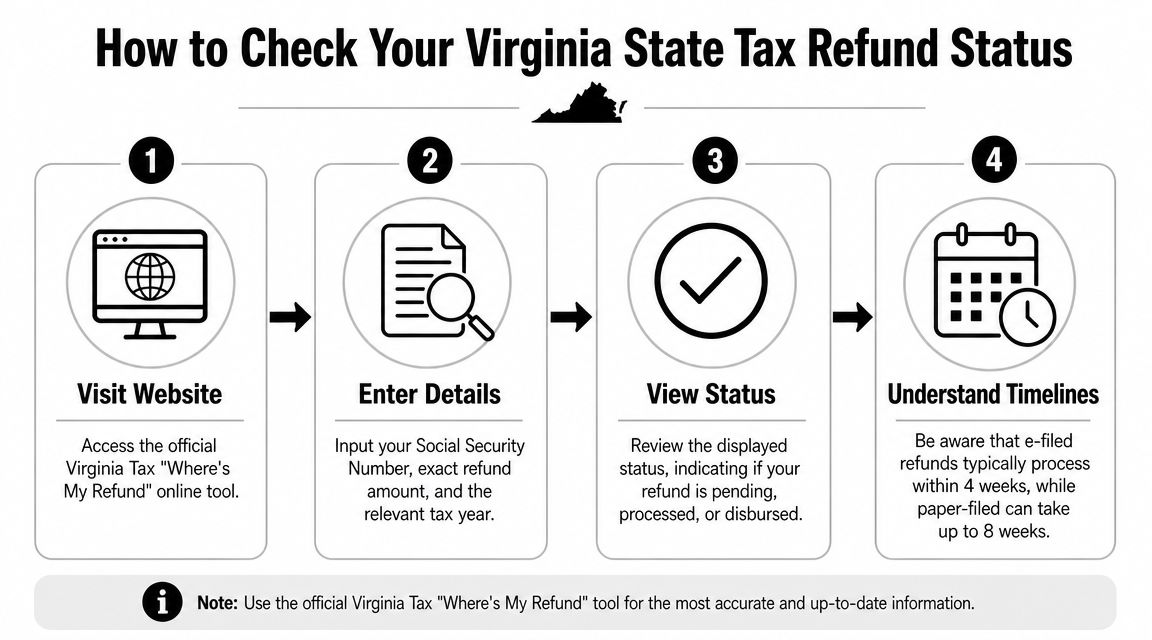
Virginia gives taxpayers two official ways to check refund status. You can use the online Where's My Refund tool or the automated refund system. Virginia Tax says both are available 24 hours a day, 7 days a week, and both provide the same status information in Virginia Tax's refund status system.
Before you check, gather the three items the system requires:
- Your Social Security number
- The tax year
- Your expected refund amount to the nearest dollar
That last item matters more than people expect. If you guess, round incorrectly, or use a different figure than what was filed, the system may not validate your entry.
The cleanest way to do it
Use this order:
Pull your filed Virginia return first.
Don't rely on memory. You need the refund amount exactly as filed.Use the official portal or automated line.
Third-party summaries can be useful for background, but the official Virginia system is what matters for live status.Match the tax year carefully.
Taxpayers with multi-year filing issues often enter the wrong year and conclude the state has no record.Save what you see.
Take a screenshot, print the page, or note the date and status language. That creates a record if the issue escalates.
How to read the status
The state's tool gives status information, but the key question is what the wording means operationally.
| Status language | What it usually means |
|---|---|
| Processing | The return is still in the system and hasn't reached the final payment stage |
| Approved | The refund has cleared the review stage and is moving toward issuance |
| Sent | The refund has been issued, so the next question is delivery, not processing |
If the tool shows activity, that's usually better than silence. It means the return is in the pipeline rather than missing entirely.
When status checks stop helping
A status check is useful for timing. It's less useful when the underlying issue is a debt, identity mismatch, or document problem that requires human follow-up. If the same status sits unchanged for too long, don't keep checking the same screen and expect a different answer. Move to diagnosis.
Common Reasons Your VA Refund Is Delayed
A delay isn't the same thing as an offset. That distinction matters because the next step is different.
Some delays are routine. Virginia Tax states that e-filed returns are typically processed in up to 4 weeks, while paper-filed returns can take up to 10 weeks, and certified mail adds an additional 3 weeks according to Virginia Tax's refund timing guidance. In practice, that means some taxpayers create their own delay by choosing paper filing for a return that could have been e-filed.
The filing method problem
If you want the shortest path to a refund, e-filing usually wins. Paper returns move through physical handling, intake, and manual routing. Certified mail gives you mailing proof, which can be valuable in some disputes, but it also adds more time to the process.
That trade-off is worth understanding. Proof of mailing helps when you're preserving a legal position. It doesn't help if your immediate goal is speed.
Other delay patterns I watch for
Not every delay comes from the filing method. These issues also slow things down:
Simple return mistakes
A mismatch in identifying information, refund amount, or supporting details can stall processing.Manual review flags
Some returns are reviewed more closely because something in the filing requires confirmation.First-time or unusual filing history
A taxpayer returning after several years, cleaning up old filings, or changing filing patterns may see more scrutiny.Incomplete records on the taxpayer's side
Sometimes the return is moving, but the taxpayer no longer has the filed copy, the exact refund amount, or the notice needed to confirm what happened.
For a broader look at how timing problems can build, these notes on tax refund delays are a useful companion.
Refund delay vs refund offset
The table below helps separate a routine processing problem from a more serious interception.
| Indicator | Likely a Processing Delay | Likely a Refund Offset |
|---|---|---|
| Status still changing | Yes. Movement usually means the return is still being handled. | Less likely. Offsets often become clear through notices or unexpected reduced payment. |
| You filed on paper | Common explanation | Possible, but filing method alone doesn't cause an offset |
| You know you owe an agency | Maybe unrelated | Strong warning sign |
| You receive a notice naming another debt | No | Yes |
| Refund amount is lower than expected | Sometimes because of adjustments | Common in offset situations |
| No debt history and no notice | More likely delay | Less likely, though not impossible |
Don't call every late refund an offset. Most slow refunds are still just slow refunds.
If your facts line up more with the right-hand column, stop treating it like a calendar issue. Start treating it like a collections issue.
Understanding and Disputing a Virginia Tax Refund Offset
A refund offset means the government intercepted your refund and applied it to a debt. From the taxpayer's perspective, it often looks like the refund vanished. From the agency's perspective, the refund became a payment source.
That's why this issue feels different from a routine delay. A delay asks, “When will they send it?” An offset asks, “Who took it, why, and can I challenge it?”
What to do first
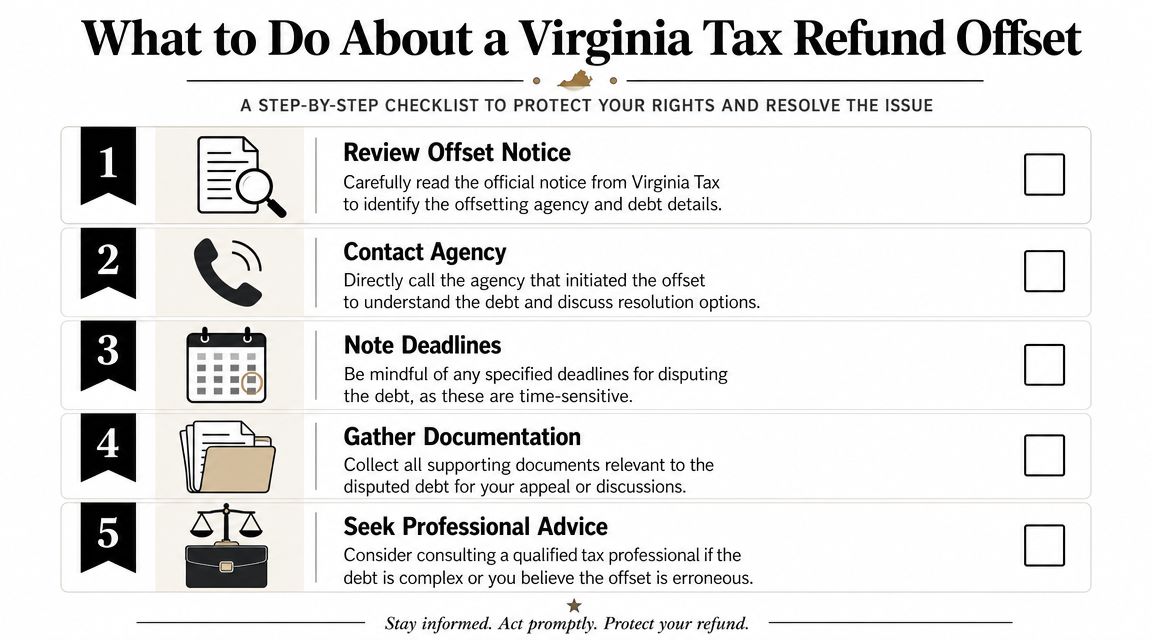
When a state tax refund va problem turns into a suspected offset, move in this order:
Read every notice carefully
The notice usually tells you whether the refund was applied elsewhere and which agency claimed it.Identify the actual creditor agency
Virginia Tax may process the offset, but the underlying dispute may belong to another agency. If you argue with the wrong office, you lose time.Write down every deadline
Offset disputes are deadline-sensitive. A good factual argument can still fail if raised too late.Get the account history
Ask for enough detail to understand whether this is an unpaid tax, child support issue, court-related debt, or another obligation.Build the dispute around documents, not memory
Payment proof, prior notices, account transcripts, court orders, and filing records carry weight. Verbal explanations don't.
What works in real disputes
The best early move is targeted contact with the agency that claimed the money. Don't start with a general complaint that “my refund is missing.” Start with a precise statement: you received notice of an offset, you want the debt identified, and you want the basis for the claim.
If you want a plain-language outside overview, Allied Tax Advisors' insights on refund offsets give a helpful summary of how offsets operate and why they catch taxpayers off guard.
What usually fails
These approaches tend to go nowhere:
Arguing with the refund unit about the debt itself
The refund unit may not control the underlying claim.Calling without the notice in front of you
That turns a focused inquiry into guesswork.Mixing multiple tax years into one conversation
Keep each year and each debt separate unless the agency confirms they're linked.Assuming an old debt is automatically valid
Some are. Some aren't. Verification matters.
If the offset is tied to a wider collections problem, wage action, or state enforcement pressure, this guide on how to stop state tax garnishment can help frame the next steps.
A refund offset is often the first visible symptom of a larger collections file. Treat it as a warning light, not a one-off annoyance.
For advisors handling a client matter
If you're a CPA, EA, family lawyer, lender, or financial advisor trying to clear a file, the fastest path is usually to isolate three issues: who claimed the refund, whether the debt is correct, and whether the offset affects a pending transaction. That triage keeps the matter from expanding into a general tax cleanup before the immediate obstacle is understood.
Gathering Your Documents for a Refund Inquiry or Dispute
Before you call Virginia Tax or another agency, get organized. This is the difference between a productive call and a frustrating one.
When taxpayers contact an agency without the filed return, notice, or payment history, the conversation usually ends with “send us more information” or “call back when you have the letter.” That's avoidable.
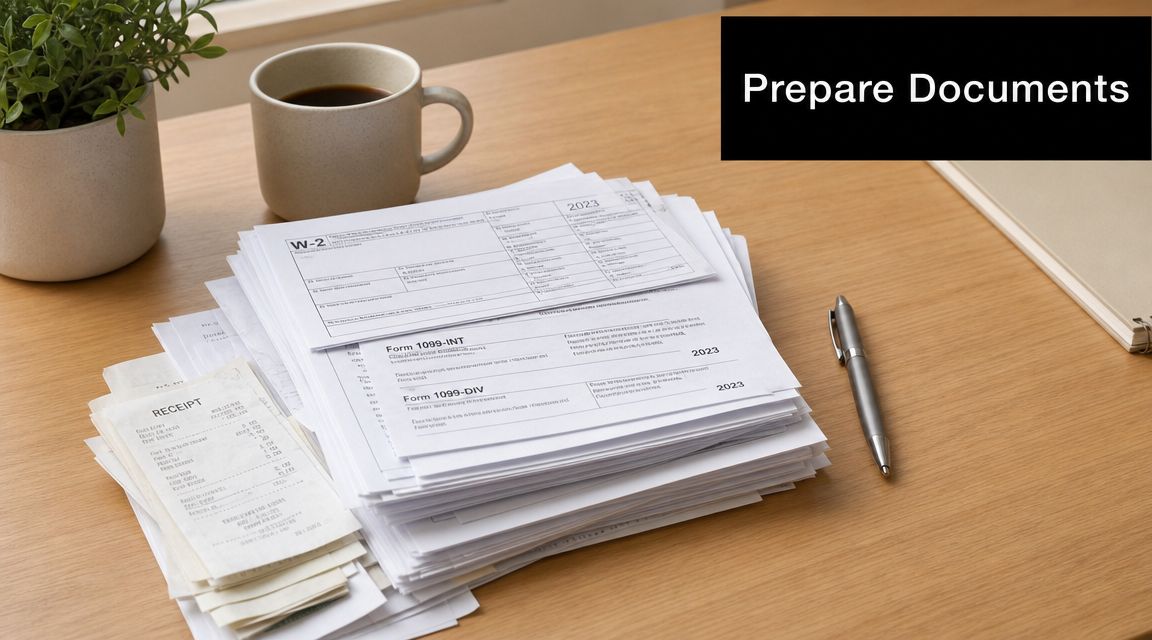
The core file to gather
Start with the essentials:
Filed return copy
Have the exact Virginia return that generated the refund question.All notices received
Include refund notices, offset notices, balance due letters, and any agency correspondence.Proof of identity
Keep your identifying information consistent with the return and notice.Payment support
Bank records, canceled checks, confirmation pages, or other proof that a debt was paid or partially paid.
Documents that matter in offset cases
These become important when the refund was intercepted:
- Account statements from the claiming agency
- Court orders or support orders, if the debt involves family or court matters
- Prior tax resolution paperwork
- Authorization forms, if a professional is calling for you
How to package it
Don't hand an agency a pile of unsorted PDFs. Use a simple folder structure by year and issue. One folder for the return. One for notices. One for payment proof. One for debt-specific documents.
For taxpayers who need help cleaning up receipts and support records before speaking with an agency, digital receipt organization strategies can make the file easier to search and easier to share.
The taxpayer with the cleanest file usually controls the conversation.
A practical checklist before you call
| Item | Why it matters |
|---|---|
| Return copy | Confirms the refund amount and filing details |
| Notice letter | Identifies the issue and any deadlines |
| Payment proof | Supports disputes about already-paid balances |
| Debt records | Shows whether the offsetting agency is correct |
| Call notes page | Lets you track names, dates, and promises made |
If you're advising a client, ask for all of this before the first call, not after it.
When to Call a Tax Professional for Your Refund Issue
Some refund problems are administrative. Others are legal. The trick is knowing when the line has been crossed.
If you're within the ordinary processing window, you probably don't need outside help yet. If the refund was offset for a debt you don't recognize, tied to multiple years, or connected to broader collection activity, that's a different situation.

Red flags that justify professional help
These are the moments when DIY often stops working:
The offset notice doesn't make sense
You don't recognize the debt, the year looks wrong, or the agency information is incomplete.A spouse's issue affected your refund
Shared filings can create complicated allocation problems.The refund issue is part of a larger compliance mess
Unfiled returns, old balances, business tax issues, or active collection pressure change the strategy.A transaction depends on resolution
Mortgage underwriting, business financing, divorce settlement work, and real estate closings often don't wait patiently for agency confusion to clear.
The deadline many taxpayers miss
Virginia taxpayers may claim a refund only if they file within three years of the original due date of the return, and if a taxpayer is due a refund, Virginia imposes no penalty for filing after the due date, but the right to the refund expires after that three-year window, as explained in the City of Williamsburg's Virginia filing FAQ.
That rule traps people every year. They assume late filing is harmless because there's no penalty when they're due money. But no penalty doesn't mean no risk. Missing the refund claim deadline can forfeit the refund entirely.
When legal strategy matters
A tax professional becomes most valuable when the refund problem is only one piece of the file. That's especially true if someone needs to preserve rights, sort out old years, deal with a mistaken debt, or present the issue in a way an agency will act on. For a plain explanation of why representation can change the outcome in tax disputes, see the benefits of hiring a tax attorney.
If time limits, offsets, and collections are all showing up in the same matter, the cost of waiting is often higher than the cost of getting help.
If you need help sorting out a Virginia refund delay, disputing an offset, or protecting a refund claim before the deadline runs out, Attorney Stephen A Weisberg offers a practical, case-specific approach. He works with individuals, business owners, and advisors dealing with IRS and state tax problems, and he starts with a free Tax Debt Analysis to determine whether he can help and what path makes sense before charging for resolution work.