State Tax Lien Release: How to Clear Your Debt
Learn how to obtain a state tax lien release through payment, subordination, or partial release. Practical steps, forms, and tips from a tax attorney.
In this article
- Why State Tax Liens Block Transactions and What You Can Do
- The lien is a transaction problem before it is a collection problem
- Getting Your Payoff Figure and Making the Right Payment
- Pay the right amount in the right form
- Understanding Release, Partial Release, Discharge, and Subordination
- Full release clears the entire lien
- Partial release frees one property, not the whole debt
- Discharge and subordination solve different closing problems
- Assembling the Documentation Package for Non-Full-Payment Releases
- Treat the submission like a closing file
- What usually gets these requests denied or delayed
- Negotiating with State Agencies and Coordinating Third Parties
- Coordinate the closing team before you ask the state for a favor
- Keep your communication disciplined
- Your Action Plan for Clearing a State Tax Lien
- Pick the right path for your situation
- When professional help is worth it
You usually find out about a state tax lien at the worst possible moment. The title company calls, the refinance stalls, or the buyer's attorney says the deal can't close until the lien is dealt with. At that point, the question isn't just “How do I pay this?” It's “What kind of release do I need to save the transaction?”
A state tax lien release is not one fixed outcome. Sometimes the state removes the lien completely after full payment. Sometimes it frees just one property, agrees to subordinate to a new lender, or issues a discharge tied to a sale. Missing that distinction is where people lose closings, overpay, or waste weeks chasing the wrong form.
Why State Tax Liens Block Transactions and What You Can Do
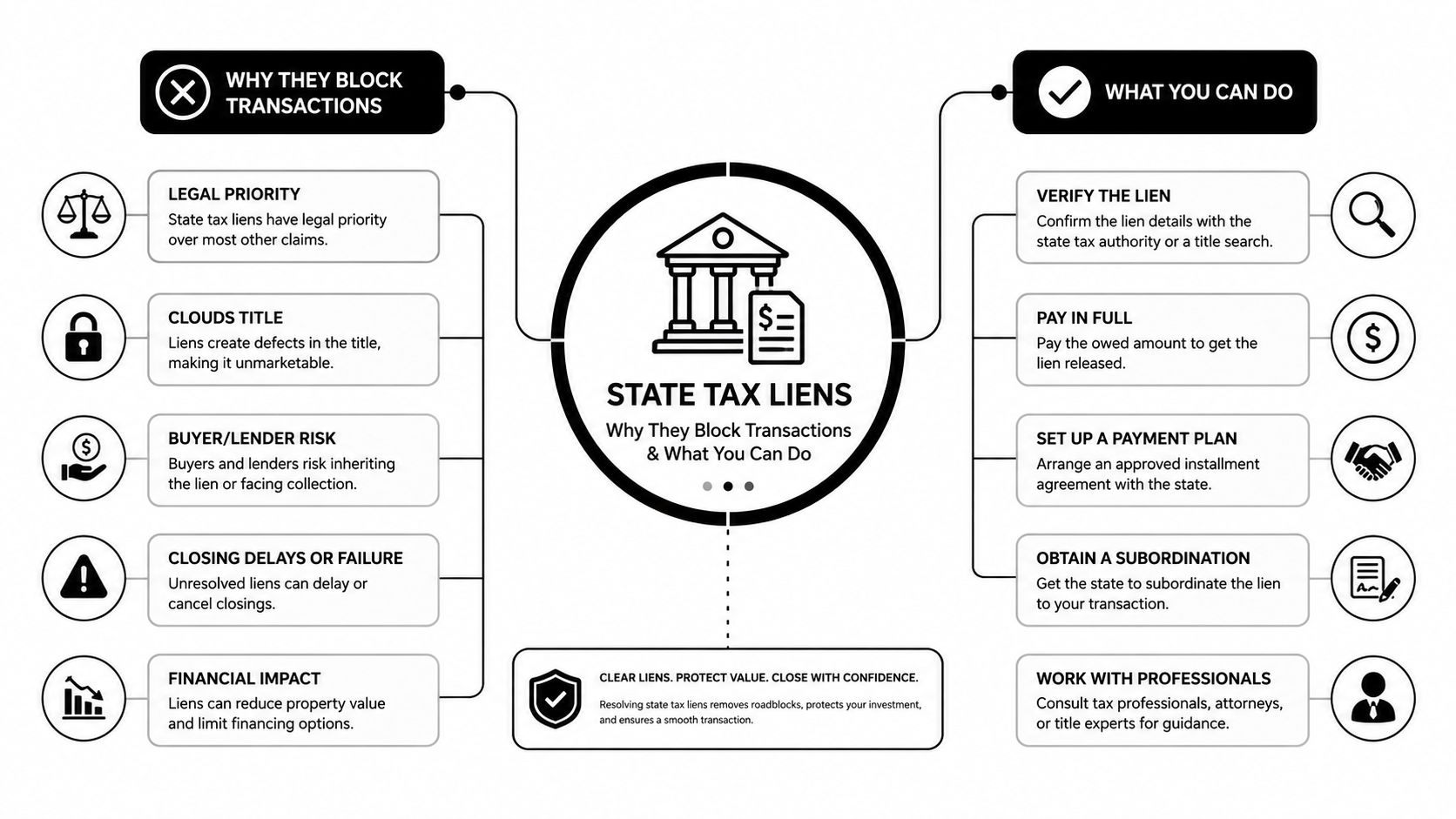
A homeowner usually learns about a state tax lien only after a lender or title company flags it during underwriting. The taxpayer may have treated it as a collection problem that could wait until cash was available. Closing professionals see something else, a recorded claim that clouds title and can stop a sale or refinance until it is resolved.
That is the practical force of a state tax lien. It does not stay in a file. It follows the property into the transaction, and title teams treat it as a barrier until the state gives them a release, discharge, or another form of written consent that fits the deal. Illinois describes its registry as an online statewide system for notices of tax liens filed or released, which shows how states now track both filing and release in one place rather than through scattered paper records (Illinois Tax Lien Registry).
The lien is a transaction problem before it is a collection problem
The Illinois Department of Revenue reported that it files and releases more than 39,000 liens each year across 102 counties, and estimated those filings and releases cost about $700,000 annually in fees and labor before the registry moved online (Illinois Bulletin FY 2018-06). That is a reminder that state lien systems are administrative machinery, not just enforcement tools.
Practical rule: if a transaction is pending, treat the lien as a closing issue from day one. Waiting until the week before settlement is how deals fall apart.
That distinction matters because “release” is not one thing. In state practice, it can mean full release, partial release, discharge, or subordination, and those remedies do different jobs. If you start with the wrong one, you can pay the wrong amount and still fail to clear title.
For a plain-English primer on what a state tax lien is, this overview of state tax liens helps put the moving pieces in context. The goal shifts from reducing debt to removing the transaction barrier in the form the state and the closing parties need. If you are comparing financing options while a lien is still on the record, you can browse tax lien loan resources.
Getting Your Payoff Figure and Making the Right Payment
A lien release starts with the payoff number, and that number has to come from the state collection office, not from guesswork. Interest, penalties, and administrative fees keep moving, so the figure that was accurate yesterday can be off today. Maryland's guidance is practical on this point, taxpayers should contact the collection office for the current payoff amount, and immediate release generally requires a certified check or money order, while ordinary payments must clear before the state issues a release (Maryland Comptroller guidance).
Pay the right amount in the right form
The cleanest path to release is full payment of the liened debt, including every amount the state treats as part of the balance. The release process usually turns on two separate questions, how much is owed, and whether the state has posted the money. For taxpayers trying to verify the numbers before they call the state, this step-by-step tax liability guide helps break the balance request into the pieces that usually matter.
That posting step causes many closing delays. A check can be mailed, delivered, and logged by the taxpayer's team, yet the lien still stays in place until the state applies the payment internally. If a sale or refinance is near, treat “sent” as an interim step, not proof that the lien has been cleared.
The most common mistakes are predictable:
- Wrong tax year: A payment applied to the wrong year will not free the lien tied to the year that matters for the closing.
- Missing interest or fees: If the state's payoff includes more than principal, underpaying leaves the lien active.
- Unfiled returns: Some states will not move forward until the missing returns are filed, or the taxpayer shows there was no filing requirement.
- Slow-clearing payment method: If the state requires a faster clearing instrument, a slower method can delay release even after the funds are on their way.
For taxpayers who need a broader financing option while they wait on the state's posting process, you can browse tax lien loan resources and compare those options against the timing of the release. That comparison matters in a transaction, because the right move is not always the cheapest payment method, it is the one that gets the lien off title in time.
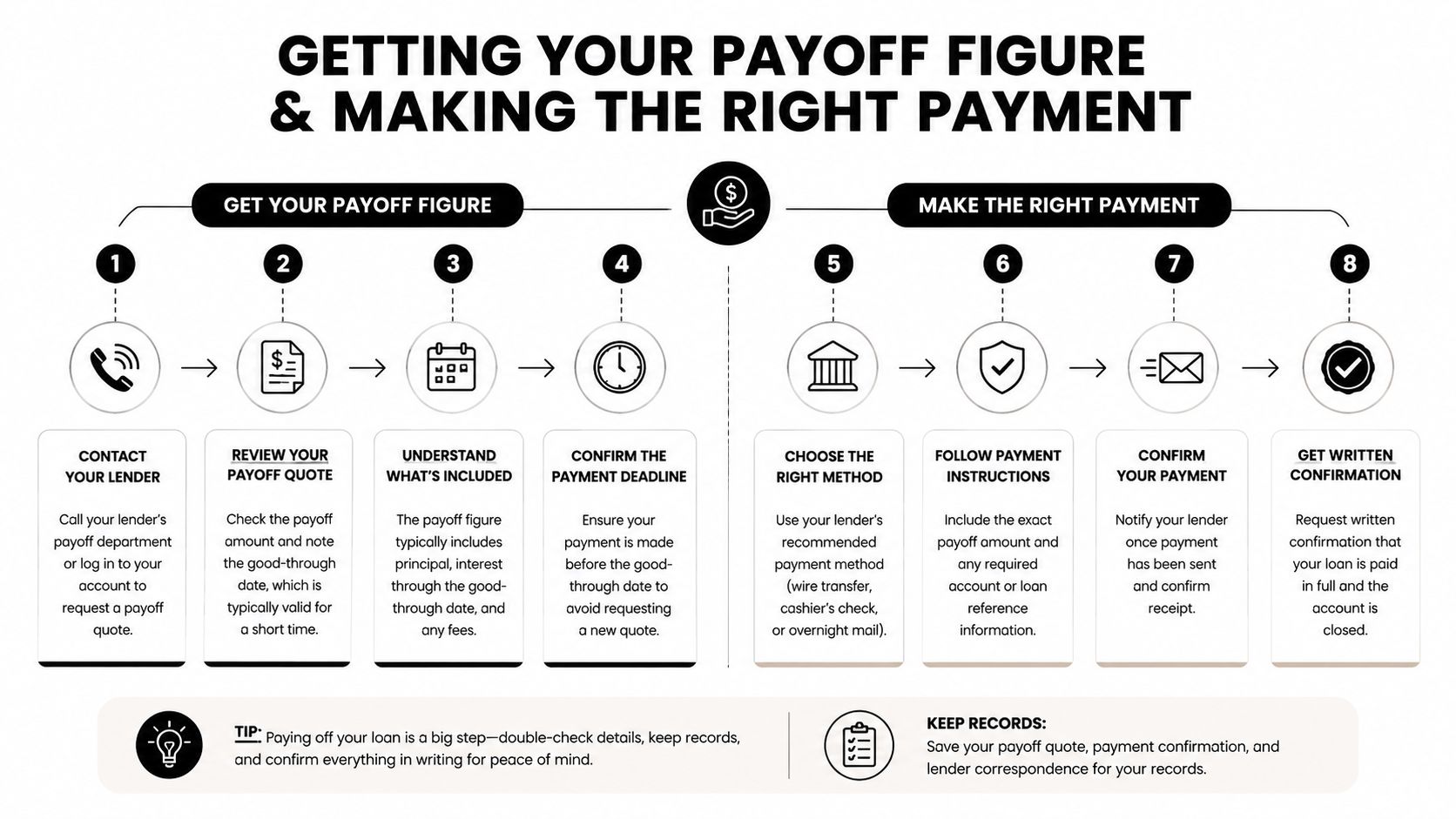
If the state says the lien will not release until payment posts, build the closing schedule around that rule. Funds in transit are not the same thing as a released lien, and title companies usually care about the posted status, not the mailing date.
Understanding Release, Partial Release, Discharge, and Subordination
A closing can stall because everyone uses the word “release” too loosely. In state tax lien work, the remedy has to match the transaction. Full payoff, a sale of one parcel, a refinance, or a property that no longer has value all point to different tools, and Georgia's lien guidance makes that distinction plain (Georgia liens guidance).
Full release clears the entire lien
A full release removes the lien from the record completely. That is the cleanest outcome, but it usually follows full payment or some other state-accepted satisfaction of the debt. If the lien is no longer enforceable, the state may release it on that basis as well, which is different from paying the balance in full (Georgia liens guidance).
Partial release frees one property, not the whole debt
A partial release is narrower. It takes one asset out from under the lien while leaving the rest of the debt in place. States use that tool when the property being sold or refinanced does not need to remain tied to the lien, or when the state's interest has already been satisfied as to that specific property.
That matters in a transaction. A seller may have enough equity in one parcel to close, but still owe on the broader tax obligation. A partial release can let the deal proceed without pretending the entire liability has disappeared.
Discharge and subordination solve different closing problems
A discharge removes the lien from a particular property so the sale can close. A subordination leaves the lien in place but lets another lender move ahead of the state. Georgia uses separate forms for those requests, Form CD-14135 for a partial release of property from state tax execution and Form CD-14134 for subordination (Georgia partial release and subordination).
Practical distinction: if a buyer needs clear title, the request has to produce a discharge or partial release. If a refinance lender only needs first priority, subordination may solve the closing problem without forcing a full payoff.
That difference drives a lot of bad filings. Taxpayers ask for the wrong remedy, title companies get the wrong paperwork, and the state reviews a request that does not match the deal. A discharge resolves title on a specific asset. Subordination preserves the lien but changes priority. Those are not interchangeable.
The timing issue matters too. California's guidance explains that a lien can expire 10 years from recording unless extended, and it separately addresses release, subordination, and requests sent by overnight service (California lien guidance). A lien that looks old may still be active if the state extended it, so do not rely on age alone.
For a broader look at removal options, this guide to removing a tax lien is a useful companion. The practical question is not just whether the debt can be paid. It is whether the lien can be cleared, narrowed, or pushed out of the way fast enough for the closing to happen. If a filing package has to be assembled, reviewed, and sent through fax services before the state will act, build that delay into the schedule rather than discovering it on the eve of closing.
Assembling the Documentation Package for Non-Full-Payment Releases
When the state will not accept full payment, the file has to prove the transaction makes sense on paper. That is true for partial releases, discharges, and subordinations. New York's checklist is a useful model for what agencies want when the request is tied to a closing rather than a routine payoff. It calls for the sale circumstances, the amount offered to the state, a 10-year title search, payoff letters or discharge letters for senior lienholders, a current appraisal with comparisons, and a signed contract for sale, along with the other supporting materials the agency expects for a release or subordination request (New York release and subordination package requirements).
Treat the submission like a closing file
The state is reviewing the full capital stack, not just the tax debt. If there is equity in the property, the agency wants to know where it sits relative to other liens. If there is a pending sale, it wants the closing economics. If there is a refinance, it wants to know whether the new lender is taking priority and why.
That is why incomplete title evidence causes so many requests to stall. A missing senior-lien payoff letter, an outdated appraisal, or a vague contract summary leaves the reviewer with an incomplete picture. New York's demands are strict because the state is deciding whether to give up, reduce, or reorder its interest in real property.
What usually gets these requests denied or delayed
- Incomplete title history: A short title run does not show enough history for a state to assess priority.
- Missing senior-lien documents: Without payoff or discharge letters, the state cannot tell what remains ahead of it.
- Weak transaction disclosure: The agency needs to see the sale terms or refinance structure, not just a hardship letter.
- No clear closing date: A package without a deadline is harder to route and harder to prioritize.
A clean submission is easier to review because it answers the reviewer's next question before they ask it. If you are still gathering signatures, a document workflow with fax services can help you move signed forms and supporting pages without waiting for every piece to come back by mail.
Submit the package as if the state were your closing attorney. If the file would not pass a title review, it probably will not persuade a tax reviewer either.
The practical standard is to build one organized closing file, then submit it complete. That does not guarantee approval, but it cuts down the back-and-forth that can push a closing off schedule.
Negotiating with State Agencies and Coordinating Third Parties
A state tax lien release request rarely lives in a vacuum. The agency may be looking at a payoff, a partial release, a discharge, or a subordination request at the same time, while a title officer, lender, and closing agent are each waiting on a different piece of paper. The file moves faster when everyone sees the same transaction structure and the same deadline.
The negotiation piece is usually less about persuasion than precision. A complete package, a specific closing date, and a clear explanation of what happens if the lien action does not arrive on time give the reviewer a reason to prioritize the file. Caseworkers respond better to a transaction they can route than to a vague request to “clear things up.”
Coordinate the closing team before you ask the state for a favor
Title companies need the state's action in writing. Lenders may need subordination before they fund. Buyers want certainty that the property can transfer. Those parties often have different tolerance levels for delay, and those timing demands can collide.
That is why the request should be coordinated before it goes out. If the title company needs a recorded release, say so plainly. If the lender wants subordination instead of payoff, include the lender's term sheet or closing instructions with the submission. If the matter is time-sensitive, send it by overnight delivery and keep proof of every submission and response.
The state is not the only bottleneck. A closing can stall because one third party is waiting for a form the others assumed had already been sent.
Keep your communication disciplined
One clean file beats five scattered phone calls. Use the same payoff number, the same property description, and the same closing date in every communication. When the agency asks for more information, answer quickly and, if possible, put the response in writing. That paper trail matters if the file stalls and a supervisor has to review it later.
I have seen taxpayers focus too much on whether a caseworker “got” the urgency. What helps is completeness and consistency. The state cannot release what it does not have authority to release, and it will not prioritize a file it cannot evaluate without chasing missing details.
If the lien issue overlaps with garnishment or other collection pressure, this resource on stopping state tax garnishment shows how the release discussion fits into the larger collection picture. The same rule applies across the board. The more organized the request, the less room the agency has to slow the file.
Your Action Plan for Clearing a State Tax Lien
A lien release is a closing problem before it is a debt problem. If the deal cannot close without clear title, the question is not only whether the tax is paid. It is whether the state will issue the right document, on the right property, fast enough for the transaction to survive.
The next move depends on the lane you are in. If you can pay in full, call the collection office and get the current payoff figure, then confirm that the payment method the state wants will post in time for your closing date. If you only need the lien removed from one property, ask whether you need a partial release, discharge, or subordination before you send in a request.
Pick the right path for your situation
If you are paying in full, focus on the exact balance, posting time, and any missing filing issues that could keep the account open after payment. If you are selling property, focus on the closing file, title history, and payoff letters from any senior lienholders. If you are refinancing, get the lender's subordination requirement in writing before you approach the state.
If the lien is old, confirm whether it has expired or been extended before you rely on timing alone. Georgia notes that expired liens are released when they are no longer enforceable, and California has its own rules on when a lien expires unless it is extended, so do not assume the same result across states.
When professional help is worth it
A straightforward payoff can sometimes be handled directly by the taxpayer. A transaction with title defects, multiple lienholders, a pending sale, or a lender asking for priority changes the equation quickly. In that setting, legal representation can save time because the issue is not just payment, it is getting the state, title company, lender, and buyer to accept the same file.
If you are trying to stop a collections spiral while you work toward a release, the same planning mindset applies to a lien file. A lawyer can coordinate the release request with the broader collection strategy and the closing team. A tax attorney can also help when the state wants a package that has to be assembled under pressure, not after the deal has already started slipping.
For taxpayers and business owners who need representation, Tax Attorney Stephen A Weisberg works on state tax debt, liens, and related collection problems through Tax Attorney Stephen A Weisberg. If your file is more than a straightforward payoff, start by getting the payoff figure, then build the release path around the transaction you are trying to close.
If the lien issue overlaps with garnishment or other collection pressure, this resource on stopping state tax garnishment shows how the release discussion fits into the larger collection picture. The same rule applies across the board. A clean, organized request gives the agency less room to slow the file.


