Printable Mileage Log: A Complete IRS-Ready Guide
Free printable mileage log template and step-by-step guide. Learn required fields, business vs personal trips, IRS substantiation rules, and audit-ready tips.
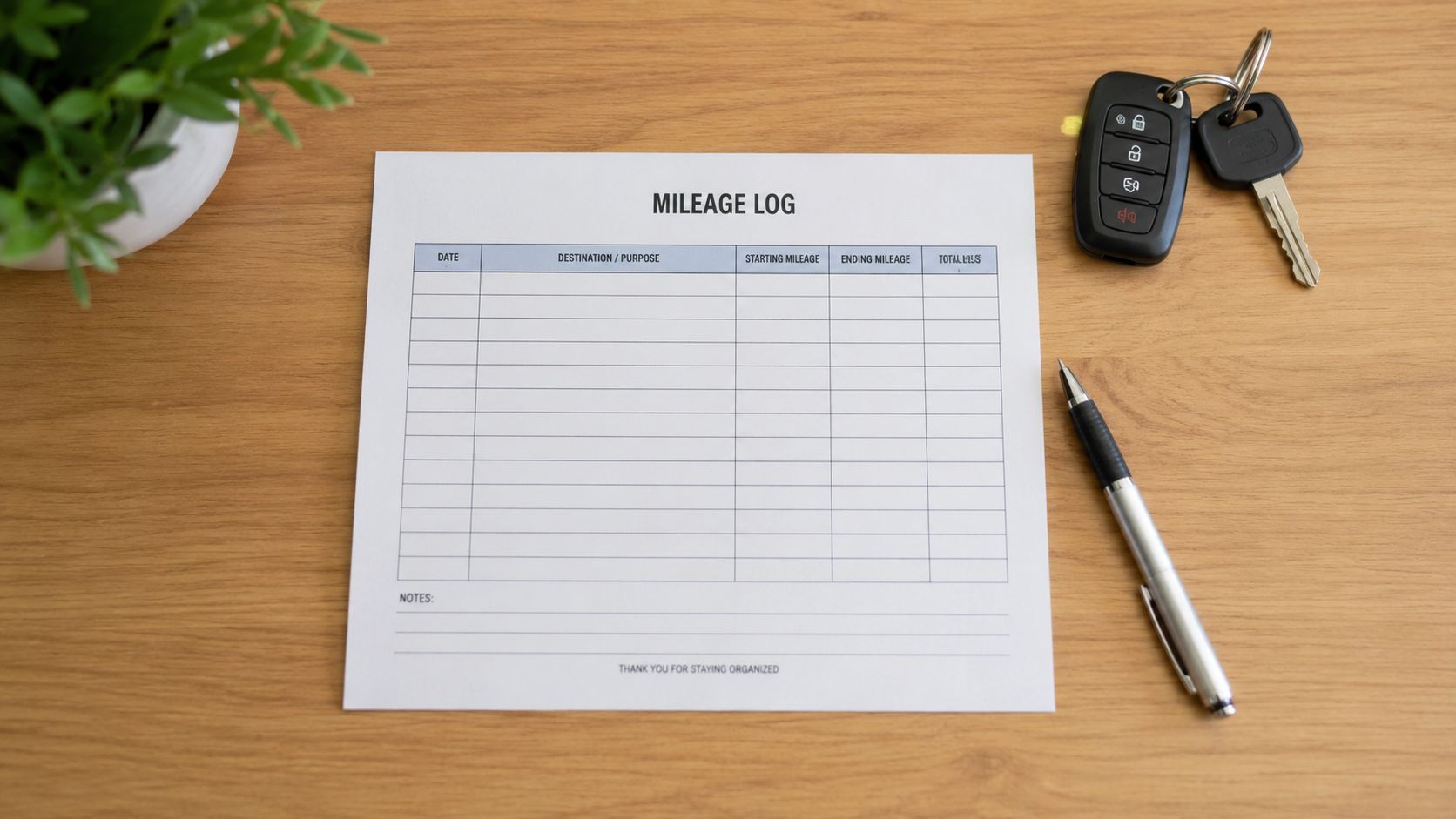
In this article
- Why a Printable Mileage Log Still Matters in 2026
- The Seven Fields Every Log Must Capture
- Start with the core trip facts
- Add the identifiers that make the log traceable
- Separating Business Trips from Personal Drives
- Use a classification rule and stick to it
- Calculating Your Deductible Mileage Step by Step
- Use the log to build the deduction base
- Compare the two methods before filing
- IRS Substantiation Rules and Retention Windows
- Archive paper and digital records together
- Common Mistakes That Sink Mileage Deductions
- The patterns that trigger problems
- When to Call a Tax Attorney Instead of Filing Solo
You're staring at a stack of receipts, an overfilled glove box, and six months of client visits you half remember. Tax time has a way of turning a business vehicle into an audit problem, especially when the only thing separating a deductible trip from a personal one is your memory. A printable mileage log is the cleanest low-cost way to keep that mess from becoming a disallowed deduction, but only if it is built for defensibility, not just convenience.
Why a Printable Mileage Log Still Matters in 2026
The client I worry about most is the one who swears they'll “reconstruct it later.” That usually means a sole proprietor who drove all year, never kept a real system, and now has to piece together client sites, supply runs, and school pickups from calendars and coffee-stained receipts. That's exactly where a printable mileage log earns its keep, because the IRS cares about contemporaneous records, not your best effort in March.
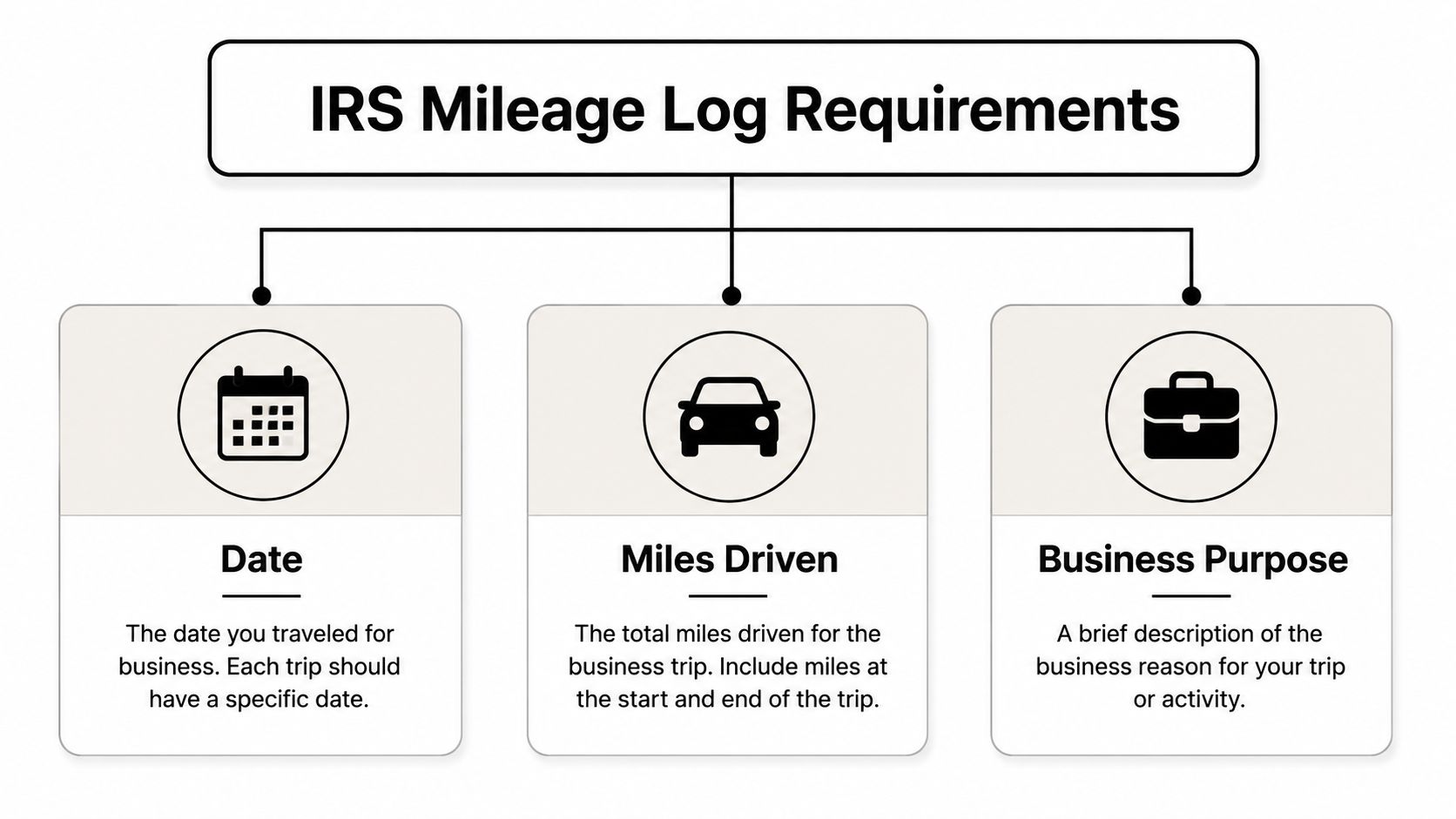
The IRS expects each business trip record to show the date, starting and ending points, business purpose, and miles driven, and it wants those entries made immediately before and after the trip when possible so the record stays accurate. A printable log is one way to preserve that evidence. Paper, spreadsheet, or app all work if the record is complete and timely, which is why format is secondary to substantiation. For a plain-English reminder of how mileage capture supports deduction claims, the guide on maximise your mileage claims is worth reading.
Practical rule: if you can't explain the trip to an auditor without improvising, the log entry isn't good enough.
A printable log stays relevant because it gives small businesses a low-cost archive that can be printed, stored, and handed over without a software login. That matters for single-member LLCs, sole proprietors, and small fleet operators who need a dependable paper trail more than a fancy dashboard. The same logic applies if you want a basic refresher on IRS paper-filing friction, which is discussed in this note on the IRS zero-paper initiative and paper filing delays.
The Seven Fields Every Log Must Capture
A defensible log is built on structure. If you only track “miles” and “meeting,” you're asking the examiner to do your cleanup for you, and they won't. A solid printable mileage log should capture enough detail to make every trip reconstructable without guesswork.
Start with the core trip facts
The first three fields are the baseline: date, origin and destination, and business purpose. Those are the facts the IRS expects, and they are the first things missing when a log falls apart. If the purpose entry is vague, the trip starts looking personal even when it wasn't.
The next layer is the math support. Record odometer start, odometer end, and total miles for each trip. This is how you prevent a gap between what the driver remembers and what the vehicle showed. Templates that force these fields reduce disputes because the numbers reconcile trip by trip instead of only at year-end.
Add the identifiers that make the log traceable
The seventh field is driver name. After that, I want vehicle ID or registration and, where available, the annual opening and closing odometer readings at the top of the form. Those entries matter because they tie one vehicle to one tax record and make the annual total easier to defend.
A field set like this also helps when more than one person drives the same vehicle. If the log doesn't identify who was driving, the record gets muddy fast. That is why template guidance often recommends putting the vehicle's registration or asset ID at the top and keeping supporting documentation, like calendars or invoices, alongside the log. If you want another clean example of how fields are organized in practice, the template guidance at how to track business expenses is useful context.
A mileage log is strongest when someone else can read it six months later and know exactly what happened, without calling the driver.
Separating Business Trips from Personal Drives
Bad logs usually die because the taxpayer mixed business and personal driving without a clean classification system, then tried to sort it out at filing time. That creates a credibility problem because the deductible business-use ratio depends on accurate separation.
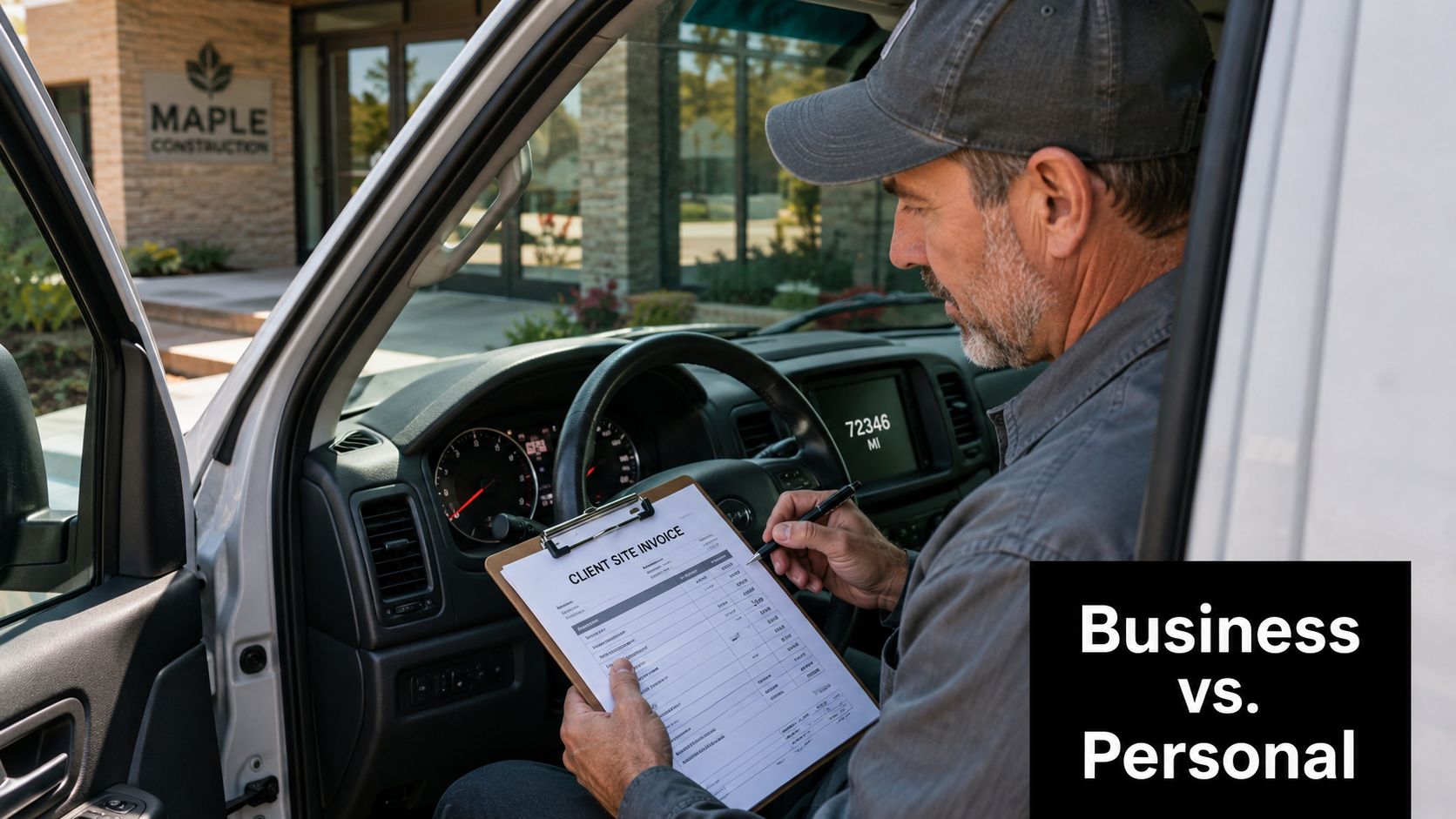
A contractor's day makes the issue obvious. The drive to a client site is business. The stop at the hardware store for job materials is still business if it supports the job. The drive home may be personal, depending on the facts. The detour to the gym is personal. If the commute is ordinary commuting, I don't want it in the business column just because the owner took phone calls in the car.
The mistake I see most often is a driver treating every trip connected to the workday as deductible. That is how a paper log becomes an audit liability. A stretched business-use percentage invites questions because it suggests the log is reflecting desire, not reality.
Use a classification rule and stick to it
Write one rule for the whole year and apply it every time. For example, business, personal, or mixed, with mixed trips broken into separate entries when needed. That discipline matters more than creativity.
- Client visits: classify as business when the trip is directly tied to a job, appointment, or service call.
- Supply runs: classify as business when the destination supports active operations.
- Commuting: treat with caution, because ordinary commuting is not a business trip.
- Side trips: split them out, so the personal segment doesn't contaminate the whole entry.
The big issue is consistency. If a log shows one standard in January and another in November, it looks reconstructed. An auditor doesn't need perfection, but they do want a coherent pattern.
Calculating Your Deductible Mileage Step by Step
A mileage log is only half the job. The other half is turning clean entries into a number that can survive filing. For business vehicles, taxpayers generally choose between the standard mileage rate and the actual expense method. The right choice depends on record quality, vehicle costs, and how much documentation you're willing to maintain.
Use the log to build the deduction base
Start with total business miles from the log. That annual total is the base for the deduction under the standard mileage method. If the log is incomplete, the total is suspect, and the deduction is weak even if the vehicle really was used for work.
For 2026, the standard mileage rate is published by the IRS and can be used to convert business miles into a deduction figure. The rate guidance in the template resources notes a mid-year shift in 2026, with 72.5 cents per mile for the first half of the year and 76 cents per mile from July 1 onward. If you use that method, the log has to show enough detail to support the business mileage total across the year. For current rate references and template mechanics, see the 2026 mileage template guidance from Driversnote.
Compare the two methods before filing
| Factor | Standard Mileage Rate | Actual Expense Method |
|---|---|---|
| Record burden | Lower, if the log is strong | Higher, because receipts and allocation support matter more |
| Tracking focus | Business miles and trip detail | Fuel, repairs, insurance, depreciation, and other vehicle costs |
| Audit posture | Strong when the log is contemporaneous | Strong when expense support is complete and consistent |
| Best use case | Drivers with clean mileage records | Taxpayers with substantial vehicle costs and better receipt support |
My advice is blunt. If your mileage log is clean but your expense records are a mess, the standard mileage route is usually easier to defend. If you're trying to claim vehicle costs under the actual-expense method, you need stronger bookkeeping and more backup. That's not a theory, it's what happens when the file lands on an examiner's desk.
IRS Substantiation Rules and Retention Windows
The legal backbone is simple. The IRS expects contemporaneous records, meaning the log should be made at or near the time of travel. A reconstructed log prepared long after the trips happened is weaker because it relies on memory instead of direct evidence. That doesn't make it useless, but it does make it fragile.
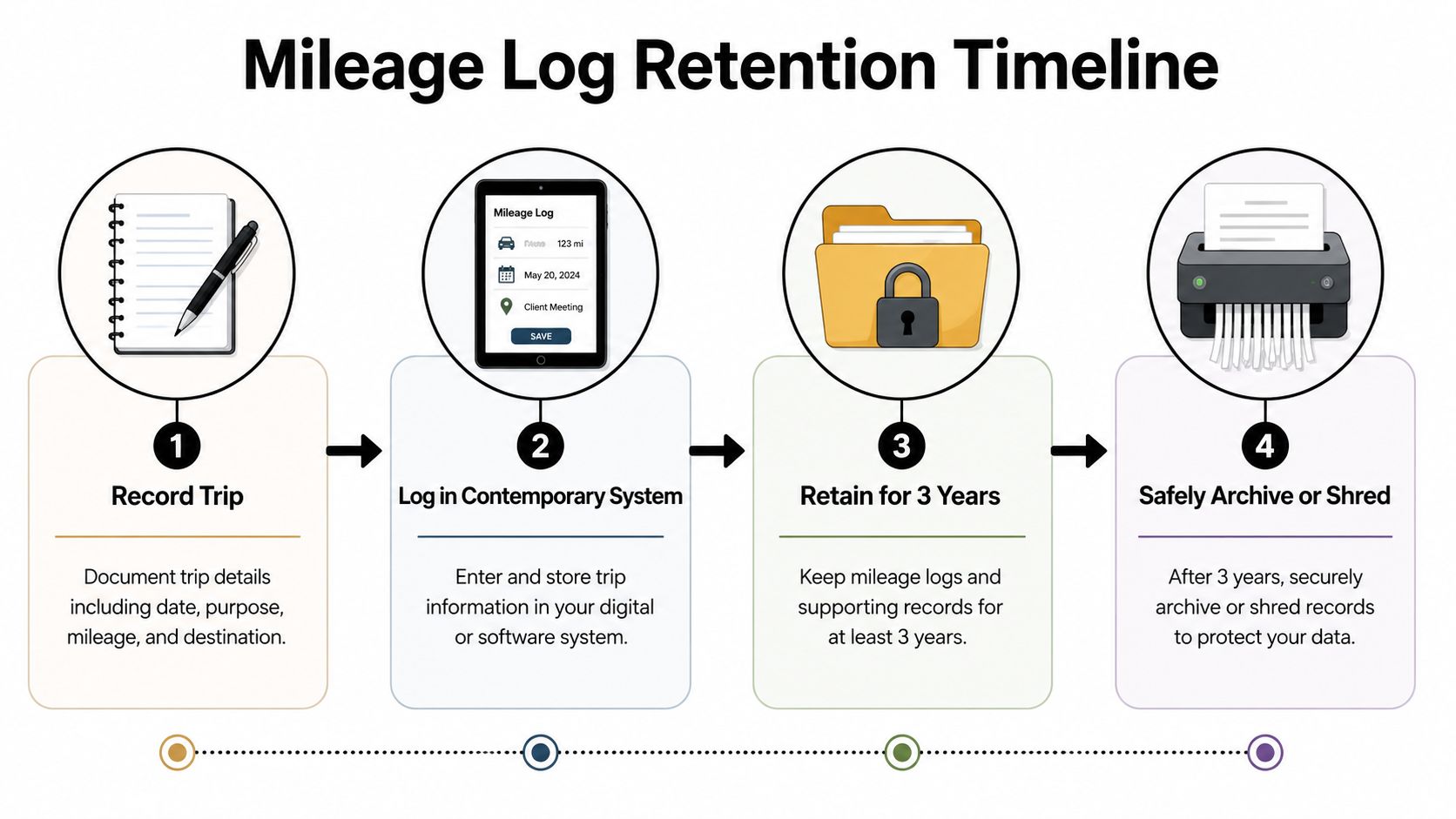
The standard retention window most templates point to is at least three years, because the IRS can ask for records retrospectively within that period. That aligns the mileage log with broader tax recordkeeping expectations and gives taxpayers a practical archive timeline. For the limitations framework that sits behind that window, the explanation in the IRS statute of limitations note is worth keeping on file.
Archive paper and digital records together
The strongest record is usually not one source, it's a system. Keep the printed log, but also keep the support that explains why a trip happened, such as calendars, meeting notes, invoices, route explanations, odometer photos, or expense receipts. If the paper copy and the digital trail tell the same story, the file is much harder to attack.
The test is evidentiary weight. A paper template with neat handwriting is not enough if the entries are vague or inconsistent. On the other hand, a printable log backed by independent records can be very credible even when the driver missed a day or two. That is why the format itself is never the main issue, the quality of the evidence is.
Rule of thumb: keep the log where you keep the proof, not on a different planet.
Common Mistakes That Sink Mileage Deductions
The failures I see are repetitive because taxpayers copy bad habits from bad templates. They don't usually lose mileage deductions because they forgot the concept. They lose them because the record looks like it was assembled for the return instead of maintained during the year.
The patterns that trigger problems
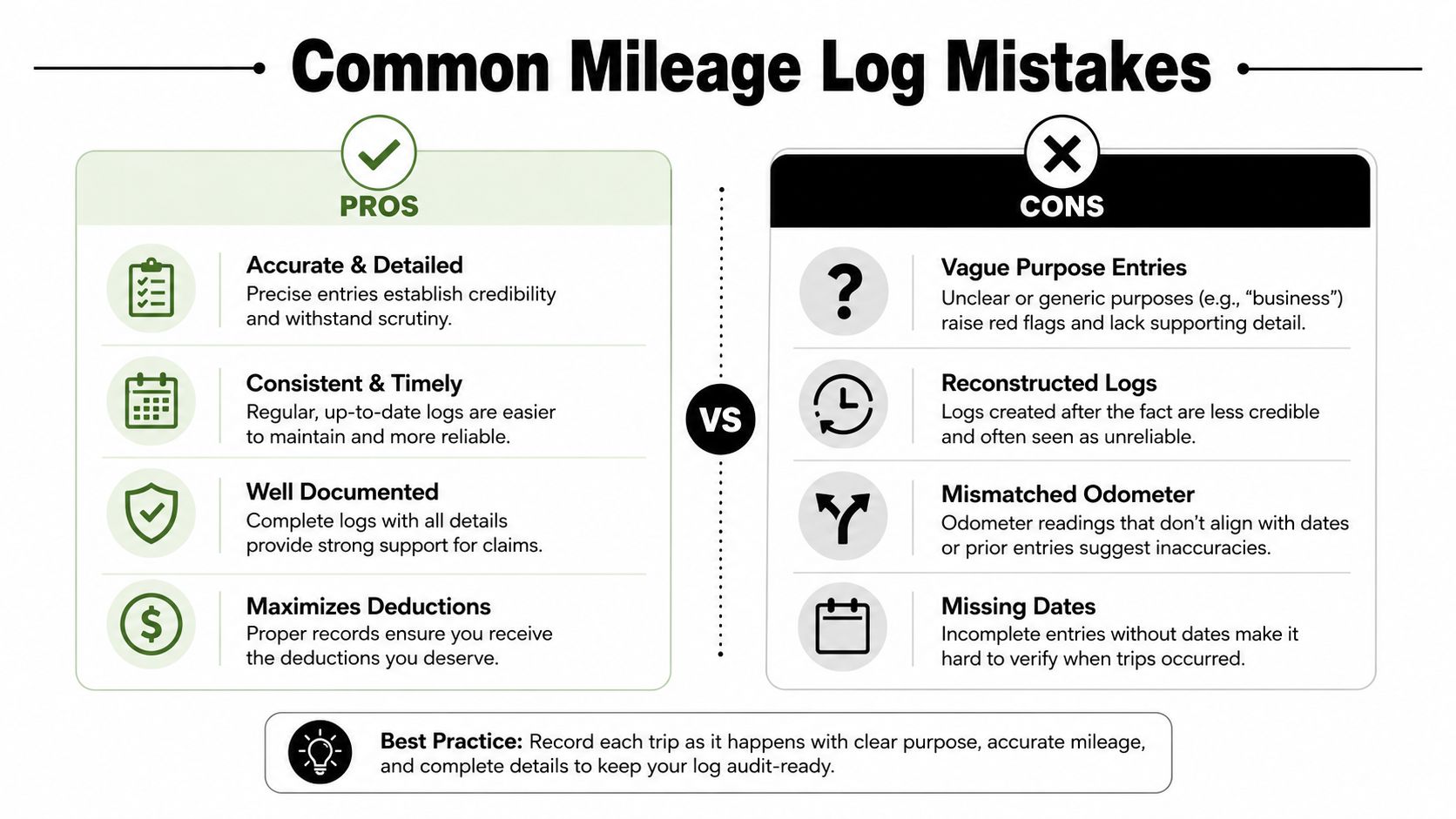
- Vague purpose entries: “Meeting” or “errands” doesn't tell an examiner enough. Write the client name, job site, vendor, or errand detail.
- Reconstructed logs: If the form was rebuilt at tax time, it looks like memory work, not contemporaneous recordkeeping.
- Mismatched odometer totals: If the trip totals don't reconcile to annual readings, the file loses credibility fast.
- Missing dates: Without dates, the trip can't be placed in context, which weakens the whole deduction claim.
- No personal-use allocation: If business and personal trips are blended together, the deduction becomes vulnerable.
The fix is not complicated, but it requires discipline. Enter trips when they happen, keep the descriptions specific, and reconcile the annual vehicle total against the log before year-end. If the log doesn't tie to the vehicle's real mileage, don't pretend it does.
The audit consequence is usually simple. The IRS asks for backup, and if the record is too loose, the deduction gets reduced or disallowed. That is exactly why a printable mileage log should be treated as evidence, not stationery.
When to Call a Tax Attorney Instead of Filing Solo
If your paper log and app exports don't match, stop trying to paper over the gap. If prior-year mileage claims were inconsistent, stop assuming this year will fix itself. And if the business has payroll tax issues or potential Trust Fund Recovery Penalty exposure, the mileage problem is no longer the main issue, it's a symptom of a bigger file that needs legal attention.
For businesses that also need reliable bookkeeping services, the smartest move is to get the records cleaned up before the return is filed, not after the notice arrives. That is especially true for sole proprietors, S-corp owners, and the professionals who refer them when tax issues spill into accounting problems. If you're trying to decide whether you need counsel, the guide on how to find a good tax attorney is the right place to start.
A printable mileage log is a good tool. It is not a shield when the rest of the file is shaky. If your records are unreconciled, your audit exposure is real, and you want a clean read on whether the issue is fixable, get a professional review before you file.
A CTA for Tax Attorney Stephen A Weisberg. If your printable mileage log is incomplete, your records don't reconcile, or you're already dealing with IRS pressure, request a free Tax Debt Analysis now so you can find out whether your case needs legal representation before the problem gets worse.


