How to Set Up a Payment Plan for State Taxes
Learn how to set up a payment plan for state taxes, who qualifies, what it costs, and how to avoid default. A practical, attorney-backed walkthrough.
In this article
- Why a State Tax Payment Plan Is Not One-Size-Fits-All
- Eligibility Rules and Dollar Thresholds Across States
- Getting Your Accounts in Order Before You Apply
- How to Apply Online, by Phone, or by Mail
- Calculating Your Payment, Penalties, and Interest
- Alternatives Worth Considering Before You Commit
- Red Flags That Void Your Plan and How to Recover
You're staring at a state notice, the balance is too big to clear in one shot, and the clock is already ticking. That's usually when people start searching for a payment plan for state taxes and assume the answer is simple. It isn't. The right move depends on what kind of tax you owe, which state issued the bill, and whether your account is clean enough to survive the application.
A sole proprietor with a rough quarter might be dealing with personal income tax debt. A retailer could be fighting sales tax. A payroll-heavy business might be exposed to trust fund collection pressure. A homeowner behind on property tax is in a different system entirely, usually dealing with county rules rather than the state Department of Revenue. Treat those as the same problem and you'll get bad advice fast.
Why a State Tax Payment Plan Is Not One-Size-Fits-All
A small business owner gets a notice on Friday afternoon, opens it at the kitchen table, and sees a balance she can't pay in full. Her first instinct is the same one many have, find a payment plan and get some breathing room. That instinct is right, but the generic advice she'll find online is usually wrong.
The phrase payment plan for state taxes hides four separate problems. Individual income tax is one. Business income tax is another. Payroll tax debt, including trust fund exposure, is a different animal because the state can pursue collection aggressively and the personal risk can spill over onto owners or responsible people. Sales and use tax is often treated as a compliance issue rather than a simple debt workout, which means the state may care as much about filing and permit status as about payment timing.
Practical rule: don't apply until you know exactly what tax bucket the notice belongs to. The state often treats a missed income tax balance very differently from a missed sales tax return.
Property tax is its own lane. In many places, that's handled by counties, not the state DOR, so a state payment plan article won't solve it. If the notice came from a county treasurer or assessor, stop using state-tax guidance and switch to county-level rules instead.
Here's the collection reality taxpayers miss. A state can usually push on wages, bank accounts, liens, or business permits depending on the debt type and the state's enforcement posture. That's why a payment plan isn't just a convenience, it's often the difference between controlled repayment and forced collection. If you want a primer on the collection side, read what a state tax levy actually does before you sign anything.
| Debt type | Common collection tools | Typical plan term |
|---|---|---|
| Individual income tax | Wage garnishment, bank levy, lien | Varies by state and balance |
| Business income tax | Liens, levies, forced collection notices | Varies by state and compliance status |
| Payroll tax | Aggressive collection, business levies, personal exposure | Often stricter than income tax |
| Sales and use tax | Permit pressure, liens, levies, compliance holds | Often tied to filing compliance |
| Property tax | County collection tools, foreclosure risk in some cases | County-specific, not state-wide |
The right response starts with the debt label on the notice. Everything else comes after that.
Eligibility Rules and Dollar Thresholds Across States
The biggest mistake taxpayers make is assuming that if they owe money, the state will automatically let them stretch it out. States don't work that way. They gate access with account status, dollar thresholds, and filing compliance, and those rules can be surprisingly narrow.
Indiana is a good example of how specific states get. Its rules say the tax due generally has to be more than $100 for individuals or more than $500 for businesses before a payment plan can be established, and repayment length depends on the balance size, up to 12 months for balances of $101 to $1,000, up to 24 months for $1,001 to $5,000, and up to 36 months for balances of $5,001 and above. Hawaii uses a different screening test, online payment plans are available only if the unpaid balance is more than $100, the taxpayer has no active payment plan, and the taxpayer is not in bankruptcy or in private collection. These are not small details, they're the gatekeepers that decide whether the application even opens. See Indiana's published rules in the state's payment plan guidance.
The federal benchmark is looser. The IRS allows a short-term payment plan if you owe less than $100,000 in combined tax, penalties, and interest, and it also offers longer installment agreements through online, mail, or phone channels for individuals and businesses. That contrast matters because taxpayers often assume a state will mirror federal flexibility. Most states don't.
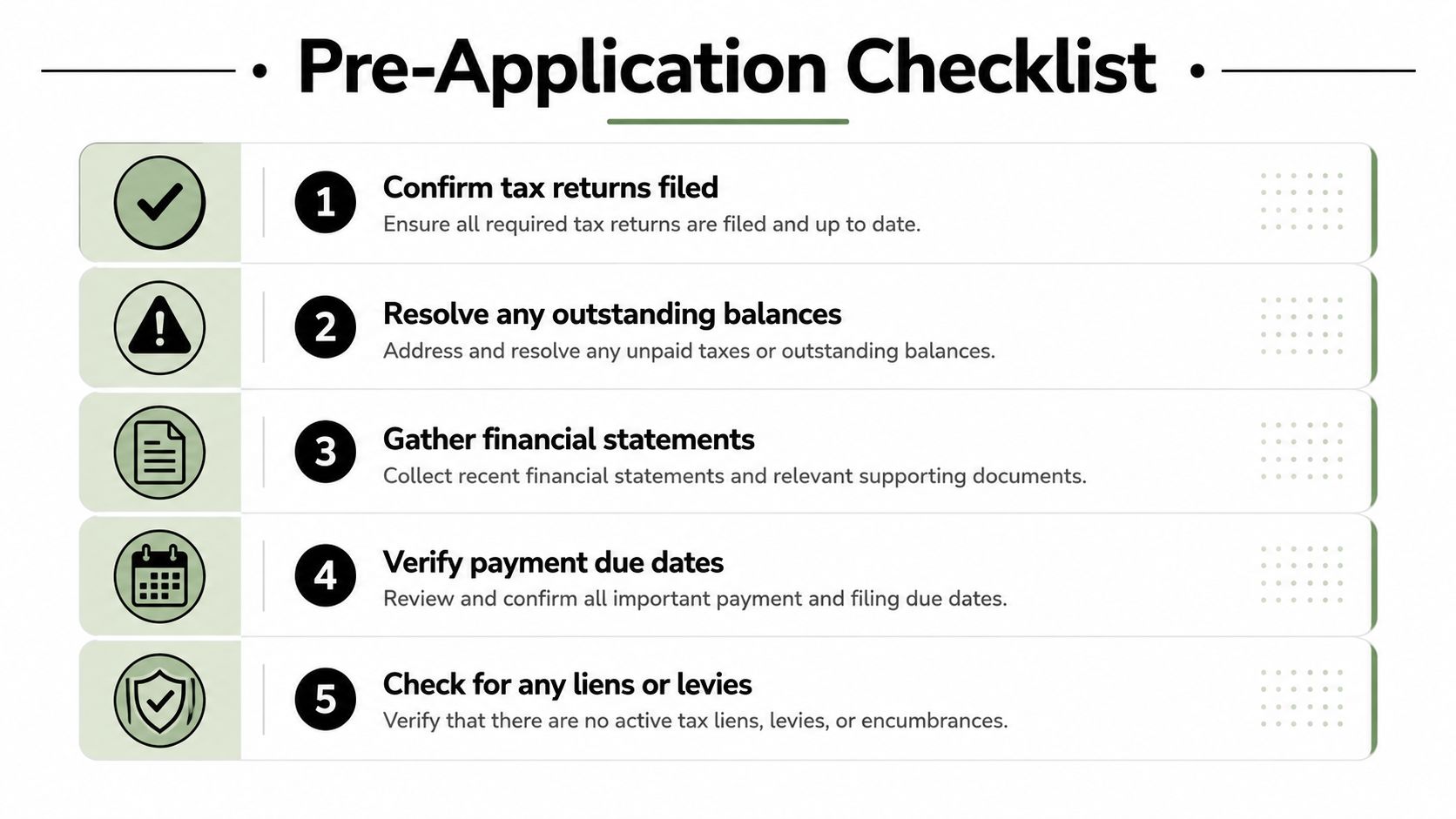
A fast way to self-screen is simple. First, identify the debt type. Then verify that all required returns are filed. Next, check whether you already have an active agreement or a bankruptcy case. If the account isn't clean, you're usually not ready to apply yet.
If the state portal asks for a filing period you haven't filed, stop and fix that first. Unfiled returns are one of the fastest ways to get a plan rejected or left incomplete.
For a practical example of how state tax liability becomes a collections problem, this Michigan back-tax discussion shows how quickly the issue can move from “I owe money” to “I need a real resolution strategy.”
Getting Your Accounts in Order Before You Apply
A payment plan application looks easy right up until the state starts checking the account behind it. Most denials come from preventable messes, not from the size of the debt itself. If you clean up the account first, the process gets much easier.
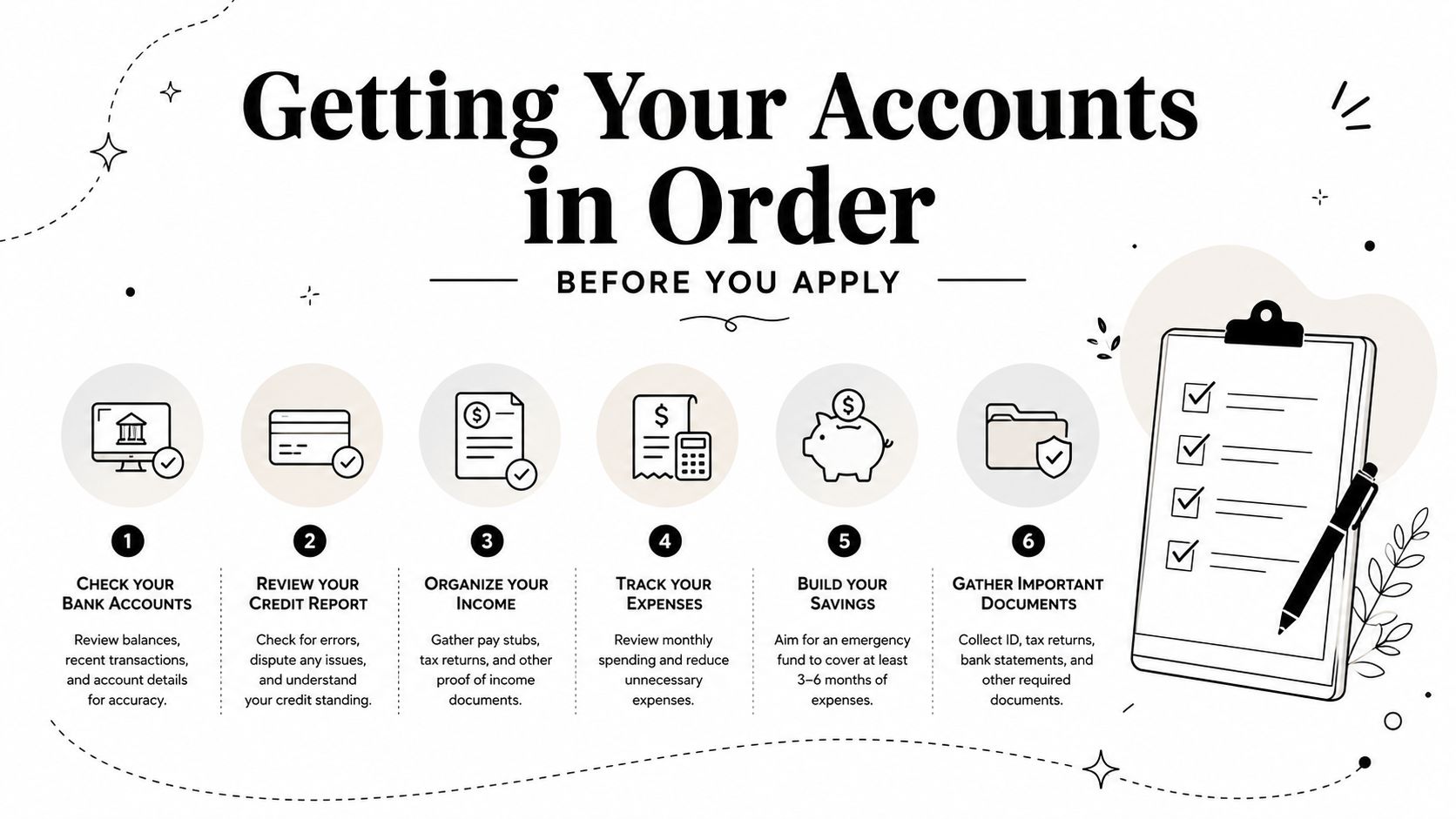
Pull the return history before you touch the portal. States like Colorado make clear that the taxpayer has to abide by the agreement terms or the department can cancel the plan, and that means a missing filing can wreck the deal before the first debit even hits. A clean filing record matters more than some might assume. If you need a quick way to verify the balance itself, use how to check if you owe back taxes and confirm the account before you start negotiating.
Then check the bank account you plan to use. Auto-debit sounds convenient, and it is, but only if the routing and account numbers are current and the balance can absorb the withdrawal. Move banks without updating the state and you've manufactured a default for no reason.
You also need to know whether a short-term or long-term plan fits the debt. Indiana's published terms show how sharply repayment length can change with the balance, while Hawaii limits online access behind its own threshold and status rules. That's the point, the term isn't just a comfort decision, it's often dictated by the state's own screen. The federal IRS framework is broader, but that doesn't help much if your state portal won't accept the case.
Best practice: don't guess your way through the setup. Match the balance, the filing status, and the bank data before you submit, or you'll spend the next month cleaning up a rejected request.
A lien check matters too. If the state has already filed against the account or started active collection, the plan may still be possible, but the path changes and so does the urgency. A clean application beats a clever one every time.
How to Apply Online, by Phone, or by Mail
Once the account is ready, the application itself is usually straightforward. The primary choice is channel, because the channel tells you how much control you'll have over the terms and how much human review the state will apply.
Online is the cleanest path for straightforward cases. Georgia lets taxpayers request a payment plan through the Georgia Tax Center, and Georgia also accepts Form GA-9465 by mail for cases that don't fit the portal. Hawaii's online system is similarly built for smaller, cleaner cases that meet the account-status screen. If the debt is simple and the filing history is current, start online.
Phone works better when the facts are more complicated. That's where you can explain why the proposed monthly amount makes sense, ask whether a lien release is possible, and confirm what happens after the approval. I've seen too many people skip the phone because they assume it's old-fashioned. It isn't, it's often the only way to get a real answer on a nonstandard balance.
Mail is the fallback when the state wants paperwork, manual review, or a specific form. Georgia's Form GA-9465 is the obvious example from the state materials, but plenty of states route unusual situations into paper review rather than an instant digital acceptance. If the portal kicks you out, don't force it, use the channel the state provided.
Before you call, keep the script tight:
- Identify yourself clearly. State your name, tax ID reference if requested, and the tax period.
- State the balance and proposed monthly payment. Don't ramble about the history.
- Ask about the next step. Confirm whether the case is approved, pending review, or needs more documents.
- Ask about lien status. If there's already a lien or a levy threat, you need that answer before hanging up.
- Write down the confirmation number. If the rep gives one, save it immediately.
If you want a broader look at workflow-driven installment setup, browse Resolut payment plans for a technology-oriented view of how payment plan administration gets organized.
For mail cases, Form 9465 instructions are a useful reference point even when the state has its own version of the form. The principle is the same, match the requested payment amount to what you can sustain, not what sounds good on paper.
Calculating Your Payment, Penalties, and Interest
A payment plan buys time, and the state charges for that time. That is the part taxpayers regret later, because they agree to a monthly figure before they have priced the full cost of carrying the debt.
The state usually keeps penalties and interest running until the balance is paid in full, while the installment agreement only eases collection pressure. If your income swings with overtime, seasonal work, or uneven hours, build the plan around your worst month, not your best one. If you need a plain-English explainer on why paychecks feel different when hours change, overtime taxes on your paycheck is worth a quick look before you decide how much room you have in the budget.
The monthly payment has to do three jobs at once. It needs to chip away at the principal, absorb the ongoing accrual, and stay low enough that you will not miss it and default. That is why an attractive payment can still be a bad deal. You get relief on day one and a thin payoff curve months later.
A state plan also does not erase penalties by itself. Some states allow penalty abatement in limited situations, but the payment plan is a separate tool. It usually leaves the penalties in place unless the state grants separate relief.
Rule of thumb: if you can borrow at a lower cost outside the tax system and pay the state faster, do that. The tax plan addresses cash-flow problems, but time is not free.
I am not going to invent a fake worked example here, because the interest rate, penalty rate, and collection math vary by state and period. The decision logic is what matters. If the monthly payment already feels stretched, ask whether another source of funds would cost less than carrying the state balance for a long period. Sometimes it will. Sometimes it will not. Run the numbers before you commit.
Alternatives Worth Considering Before You Commit
An installment agreement is the default move, not always the smartest one. If you're already under collection pressure, you need to compare the payment plan with the other exits on the table, not just accept the first portal option that appears.
An offer in compromise can settle for less than you owe, but states do not hand those out casually. When they do exist, the taxpayer usually has to show genuine inability to pay the full amount through normal collection or an installment agreement. If the state thinks you can pay over time, it will usually steer you back to the payment plan instead of writing down the balance.
A partial-pay installment agreement is another tool. That's the structure where you pay what you can each month even though the balance won't be fully paid before the collection period ends. It can make sense when the math says full payoff is unrealistic, but it only works if the state accepts the structure and you understand that the debt doesn't vanish just because the monthly payment feels manageable.
A temporary hardship extension or delay can beat a long payment plan when the problem is short-lived. If the cash crunch is tied to one bad quarter, a delayed payment might be smarter than locking yourself into years of monthly withdrawals. Use the shortest tool that solves the actual problem.
For taxpayers dealing with more than one option, the decision comes down to three questions:
- Can you fully pay soon? If yes, a short delay is usually better than a long plan.
- Can you sustain a monthly debit without tripping over future filings? If not, the plan can become a default machine.
- Does the state have an alternative like compromise or partial pay? If yes, compare the long-term cost before signing.
The hidden cost of a payment plan is that the balance keeps aging while you pay it. That's why people who could have used a shorter hardship solution often end up overpaying by waiting too long to ask the better question.
Red Flags That Void Your Plan and How to Recover
A state payment plan is fragile. Approval does not close the file. The plan lives or dies on what happens after the state says yes, and that is where many taxpayers blow it.
The first red flag is a missed monthly payment. If the withdrawal fails, the state can treat that as a default trigger, especially in systems that depend on electronic consent and automatic debits. The second is a new tax delinquency. Keep filing late or create a fresh liability while the plan is active, and you are telling the state the original agreement did not solve the problem. The third is an unfiled return for any later period. That is one of the fastest ways to lose good standing.
Bankruptcy changes the rules. If the filing includes the state, collection activity can shift, pause, or change the plan's operation depending on the case. Another failure point is one taxpayers overlook, changing bank accounts or routing data without updating the withdrawal authorization. That is not a harmless administrative mistake. It can look like a missed payment and trigger cancellation.
The four most common red flags are missed payments, new balances, unfiled returns, and bad banking data. The fifth is bankruptcy, which can disrupt the plan entirely if it is not handled correctly.
Recovery starts with speed, not excuses. If the plan defaults, call immediately, file whatever is missing, and document the bank error or cash-flow event if that is what happened. States that use monthly debits want proof that the failure was temporary and corrected, not a sign that you have stopped cooperating.
The worst move is waiting for the state to figure it out. It will not. It will move deeper into collection.
There are clear points where a do-it-yourself plan stops making sense. Payroll tax trust fund exposure, an already-filed lien, a levy in the mail, multiple states, or a balance too large for the online portal are all reasons to bring in counsel. That is where an attorney can negotiate outside the standard portal terms, request penalty abatement if the facts support it, deal with liens, and communicate under a power of attorney so notices stop going straight to the taxpayer.
Tax Attorney Stephen A. Weisberg offers a free Tax Debt Analysis through Tax Attorney Stephen A Weisberg, which is useful when you need a straight answer on whether a state payment plan is available or whether a different resolution path makes more sense. If you are staring at a state notice right now, do not guess. Get the account reviewed, then decide whether to apply, negotiate, or switch strategies.


