IRS Notice LT16: What It Means and What to Do
Received IRS Notice LT16? Learn what this collection notice means, the 10-day deadline, your resolution options, and when
In this article
- Understanding IRS Notice LT16 and Its Purpose
- What the notice is telling you
- Where LT16 Fits in the IRS Collection Workflow
- Why the timing matters
- Anatomy of the IRS Notice LT16 Document
- Start with the identifying information
- Find the response instructions
- Required Taxpayer Actions and the 10-Day Deadline
- Follow this order
- Contact the IRS with a defined objective
- Evaluating IRS Payment Options and Resolution Programs
- Match the option to the facts
- Consequences of Ignoring the Collection Notice
- Enforcement becomes more difficult to control
- When to Seek Professional Tax Representation
- Strong reasons to get advice
- What effective representation involves
- Related IRS Notices and Cross-References
- How to triage multiple letters
- Quick Reference Guide for LT16 Recipients
- Immediate checklist
- Documents to gather
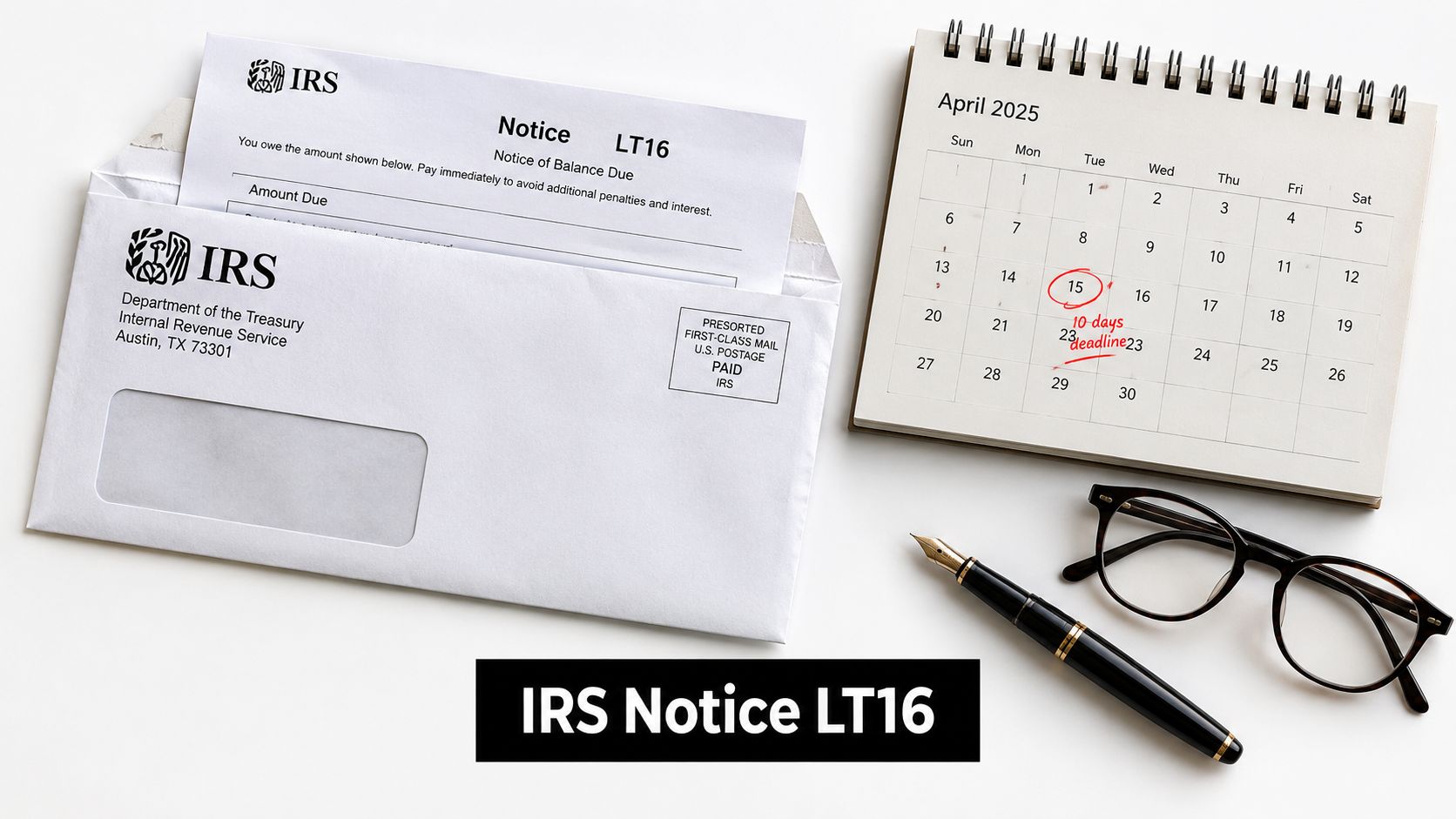
IRS Notice LT16 is an urgent collection notice demanding payment or contact within 10 days to avoid enforcement actions such as liens or levies. If you can't pay the full amount, use that same window to contact the IRS and discuss a workable resolution.
You open the envelope after a long day and see the words “Notice LT16.” The balance may be unfamiliar, the listed tax period may be old, or the letter may say the IRS has no record of a return you thought was filed. The worst response is to put it aside until you have more time.
An LT16 isn't a routine informational letter. It signals that the IRS is actively addressing an unpaid balance, an unfiled return, or both. You need to establish what the notice concerns, verify the IRS records against your own, and choose a resolution path before the account moves further into collection activity.
Understanding IRS Notice LT16 and Its Purpose
The IRS uses Notice LT16 when its records show either unpaid tax balances or unfiled returns. The notice tells you what the IRS believes remains unresolved and directs you toward payment or contact. The IRS's official LT16 guidance says taxpayers should generally pay the amount due within 10 days. It also warns that failing to respond can lead to enforcement actions such as liens or levies.
That makes LT16 materially different from a letter that merely explains an account or confirms that the IRS received a filing. A collection notice requires a decision. You either pay, correct the account, file what's missing, or engage the IRS about a resolution that reflects your actual financial circumstances.
What the notice is telling you
Read the letter as an account summary and an instruction sheet. It should help you identify the tax period involved, the amount the IRS is seeking, whether a return is missing, and how to contact the relevant IRS unit. Don't assume the balance is correct just because it appears on official stationery. Compare it with your filed returns, payment records, and prior correspondence.
The notice may reflect one problem or two separate problems. You could have an unpaid balance for one period and an unfiled return for another. Those issues require different responses, and treating the letter as nothing more than a bill can leave a filing problem unresolved.
Practical rule: Confirm the tax periods and the exact issue before discussing payment terms. A resolution built on incomplete information can fail to address the account.
If you need help interpreting the letter, start with a focused explanation of IRS letters and notices. The immediate objective isn't to panic or make an unplanned payment. It's to understand what the IRS is asking you to fix and respond within the stated window.
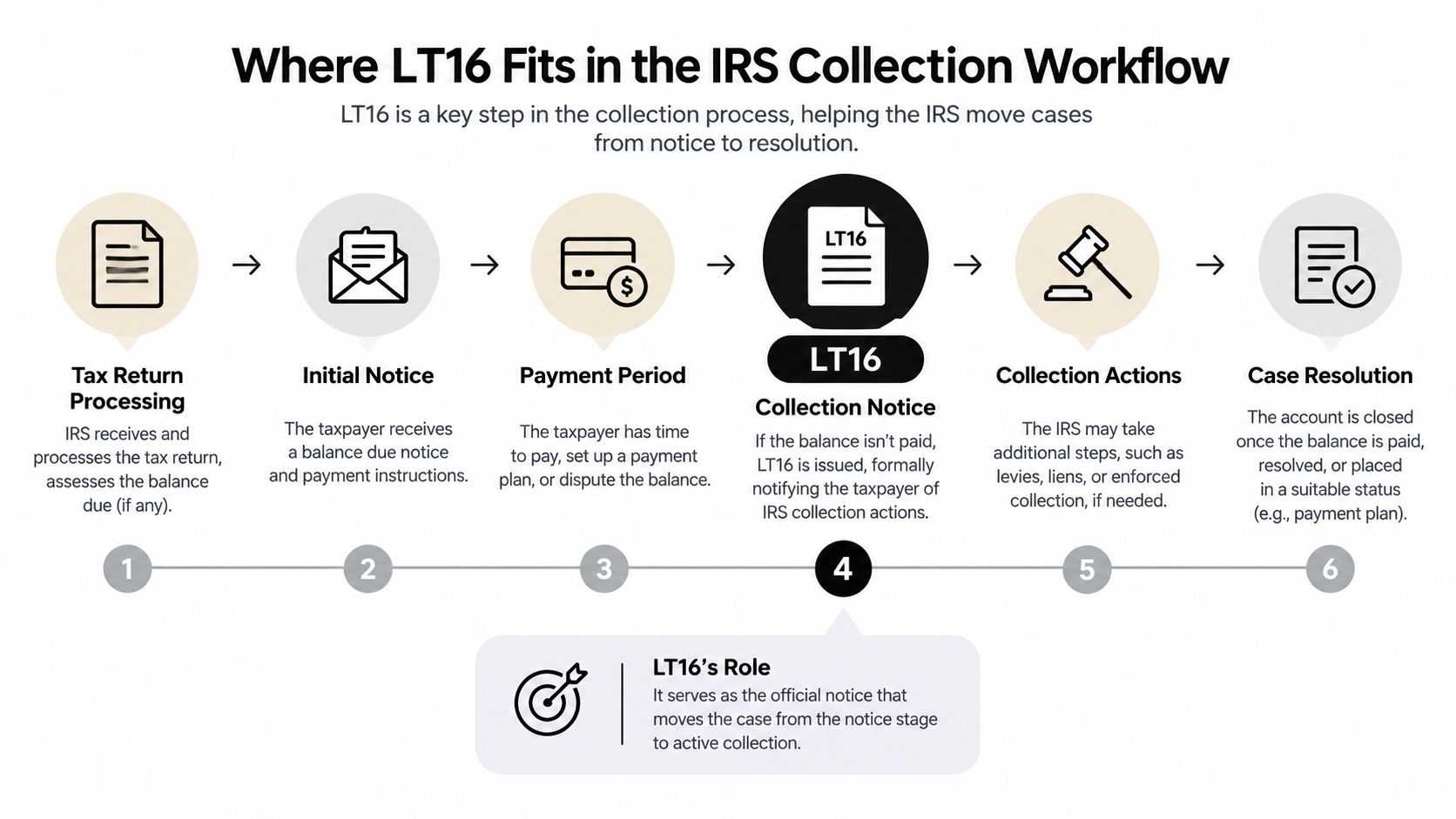
Where LT16 Fits in the IRS Collection Workflow
LT16 is best understood as an early but serious escalation signal. It isn't the same as a final enforcement action, but it tells you that the IRS expects direct action rather than passive waiting. The notice typically directs the taxpayer to pay in full or call to discuss payment options when full payment isn't possible.
The collection process can involve several types of IRS correspondence. A taxpayer may have received earlier billing or reminder notices, or the LT16 may arrive while the IRS is addressing an unfiled return. The precise history matters, so don't rely on a generic online sequence to determine your position. Review every notice in your file and compare the listed periods.
Why the timing matters
The strategic value of LT16 is the opportunity to engage before the IRS has to use more forceful collection tools. A voluntary conversation gives you a chance to clarify an incorrect balance, submit a missing return, pay what you can, or present financial information supporting a payment arrangement or another resolution.
The IRS's LT16 materials indicate that taxpayers who can't pay in full should call to discuss payment options and be prepared to provide monthly income and expense information. That instruction is important. Calling without knowing your budget can lead to an arrangement you can't maintain, while refusing to provide financial information can prevent the IRS from evaluating a realistic alternative.
Use this stage to build a documented plan:
- Verify the account: Match the notice to your returns, payments, and tax periods.
- Address filing gaps: Determine whether any return listed as missing must be filed.
- Assess affordability: Calculate what you can pay without creating a new delinquency.
- Respond deliberately: Contact the IRS or authorize a qualified representative to do so.
LT16 is not a reason to wait for a worse letter. It's the point at which informed engagement can prevent the account from becoming harder and more expensive to resolve.
Anatomy of the IRS Notice LT16 Document
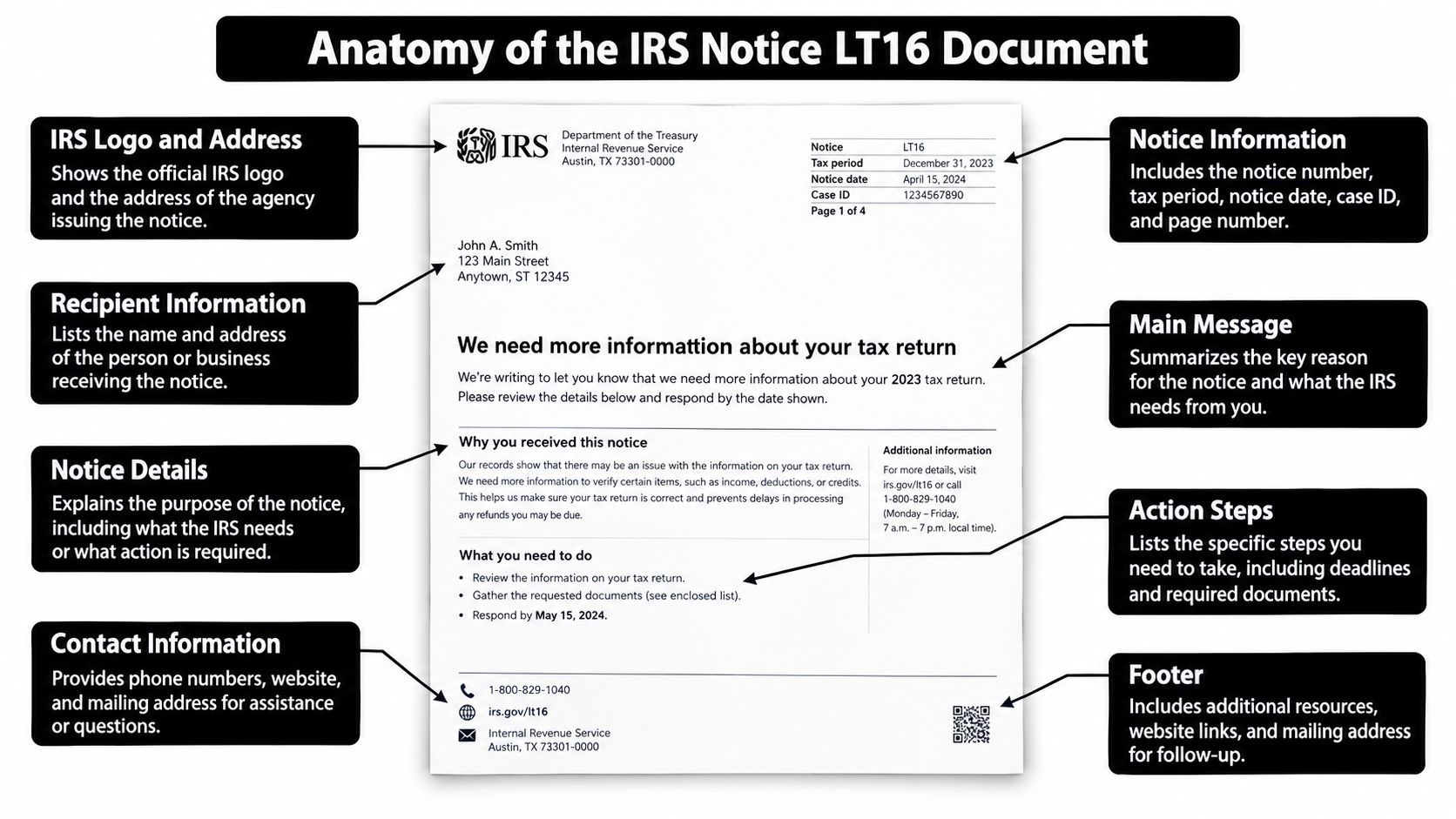
Treat the physical notice as a working document. Before you call, mark the parts that identify the account and the action the IRS expects. You'll need those details during any conversation with the IRS, tax attorney, enrolled agent, or accountant.
Start with the identifying information
Locate the notice number and the date printed on the letter. Confirm that your name and identifying information are accurate. Then find each tax period and tax form referenced. Don't assume the balance applies only to the most recent year you remember having an issue.
Next, find the amount the IRS says is due and review any breakdown provided for tax, penalties, and interest. The total is the figure the IRS is currently using, but the underlying components still matter. A payment may have been applied to the wrong period, a return may not have posted, or the IRS may be relying on records that don't reflect your complete filing history.
Find the response instructions
The notice should identify the contact method, telephone information, and mailing instructions relevant to the case. Use the details printed on your own letter. Don't substitute a number found in an online forum or send sensitive records to an address that isn't listed in the notice or confirmed through an official IRS channel.
Look for the payment instructions and any response slip or detachable portion. Keep the entire notice, including pages that appear repetitive. Scan it and store the original with your tax records. If someone else will assist you, provide a complete copy rather than only the page showing the balance.
Finally, write down the specific questions the document raises:
- Balance question: Why does the IRS show this amount?
- Filing question: Which return does the IRS say is missing?
- Payment question: Has a prior payment been credited correctly?
- Resolution question: What information must you provide to discuss alternatives?
A careful reading prevents a common mistake, responding to the amount while ignoring the filing or account error that caused the collection problem.
Required Taxpayer Actions and the 10-Day Deadline
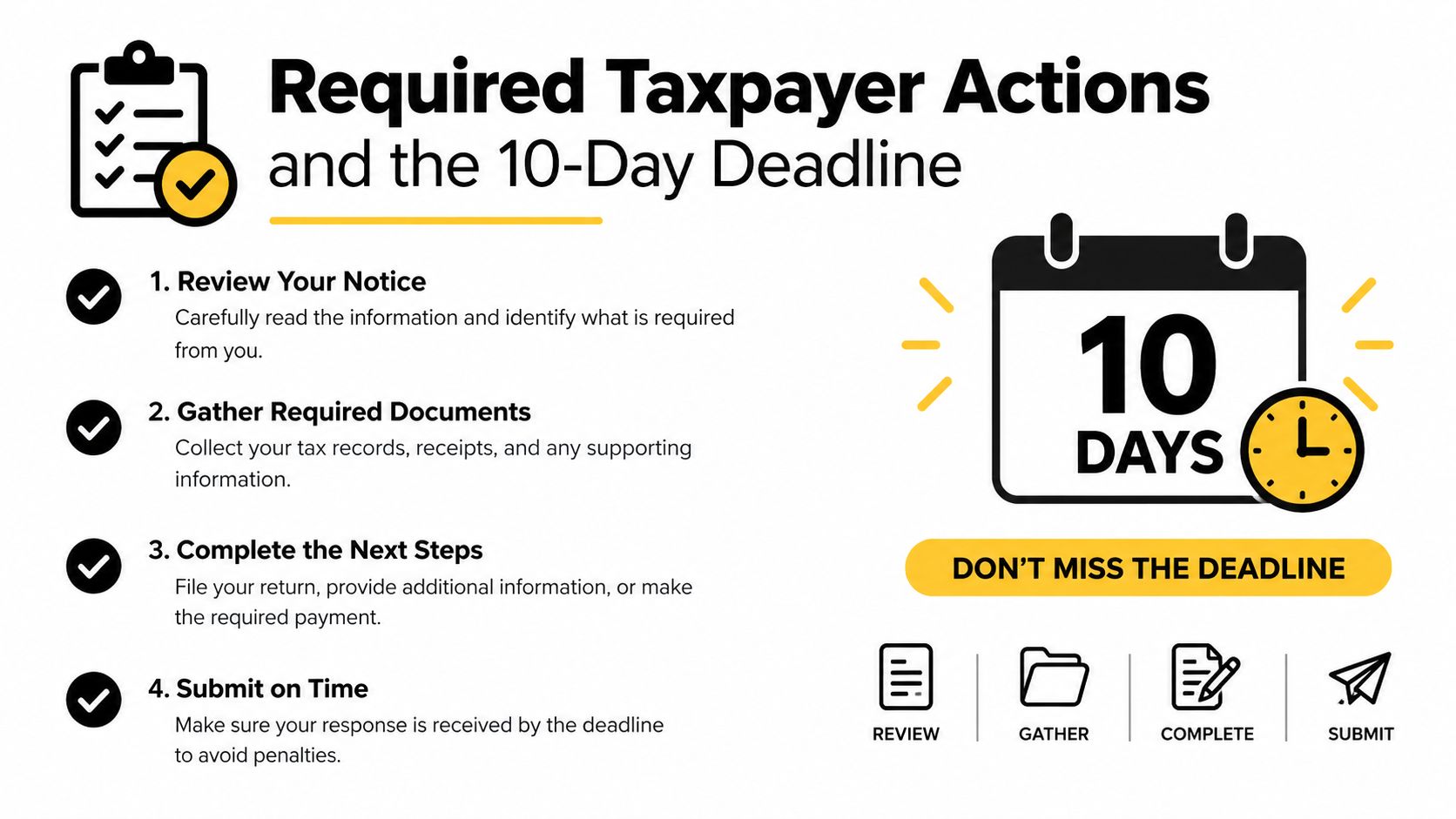
The 10-day response window requires immediate organization. It doesn't mean you should send money blindly. It means you should begin verification and contact promptly, even if the account needs further investigation.
Follow this order
First, preserve the evidence. Make a complete copy of the notice and note the date you received it. Gather prior IRS letters, filed returns for the periods listed, payment confirmations, bank records, and correspondence with your tax preparer.
Second, reconcile the IRS position. Compare the notice with your own records. Check whether the return was filed, whether the IRS posted it, and whether payments were credited to the correct tax period. If the IRS balance appears wrong, prepare a concise explanation supported by documents.
Third, identify missing filings. If the notice lists an unfiled return, determine whether you were required to file it and obtain the records needed to prepare an accurate return. Don't assume that resolving the balance automatically resolves an unfiled-return issue.
Fourth, prepare your financial snapshot. The IRS says you may need to provide monthly income and expense information when discussing an installment agreement or another resolution. Assemble current income records, housing costs, utilities, insurance, transportation expenses, dependent-related costs, debt payments, and other necessary expenses. Use real figures, not an optimistic estimate designed to make the payment sound affordable.
Contact the IRS with a defined objective
Call using the contact information on the notice, or have an authorized representative handle the conversation. Go into the call with a specific objective: confirm the account, correct a record, arrange payment, or request review of an alternative. “I can't pay” is a starting point, not a resolution proposal.
Keep a written record of the date, the representative's name or identifying information, the issues discussed, and any requested documents. Ask what action the IRS expects next and how you should submit supporting records.
The guide to responding to IRS letters can help you organize the response, but don't let research delay contact. If the deadline has passed, respond anyway. Silence gives the IRS no reason to pause collection activity.
Evaluating IRS Payment Options and Resolution Programs
The right solution depends on the account facts and your ability to remain current. Don't choose a program because its name sounds familiar. Choose the option you can support with accurate records and maintain without creating another tax problem.
| Resolution Program | Best For | Key Requirement |
|---|---|---|
| Full payment | A taxpayer who can pay without undermining necessary expenses | Confirm the correct amount and apply payment to the right tax period |
| Payment arrangement | A taxpayer who can make consistent monthly payments | Provide a credible payment amount and required financial information |
| Partial payment arrangement | A taxpayer who can pay something but not the full balance under current circumstances | Complete financial disclosure and IRS review |
| Currently Not Collectible status | A taxpayer whose available income cannot cover necessary living expenses and the tax debt | Demonstrate financial hardship with supporting records |
| Offer in Compromise | A taxpayer whose financial circumstances may support settlement for less than the full liability | Meet filing and payment requirements and submit complete financial information |
Match the option to the facts
Full payment is straightforward when the funds are available. Don't drain money needed for basic living costs or current tax obligations merely to end the immediate pressure. A payment that creates a new delinquency isn't a sound resolution.
A payment arrangement may fit a taxpayer with reliable income and enough monthly cash flow to make the proposed payment. The amount must be realistic. If the IRS requests income and expense information, expect the figures to be examined rather than accepted without question.
Currently Not Collectible status is designed for hardship situations, not for taxpayers who prefer not to pay. It may provide temporary relief from active collection while the IRS reviews the account, but it doesn't erase the liability. Penalties and interest may continue, and the IRS can review the situation again.
An Offer in Compromise requires disciplined preparation. The IRS evaluates the taxpayer's financial picture and compliance, and submitting an offer doesn't guarantee acceptance. Don't pursue it based solely on advertising that promises a dramatic reduction.
For background on the broader IRS Fresh Start program, use a source that explains the available paths without treating one program as a universal answer. Your objective is not to submit the most aggressive request. It's to submit the option your records can justify.
Consequences of Ignoring the Collection Notice
Ignoring LT16 doesn't preserve your options. It leaves the IRS with the same unresolved account and no evidence that you're trying to correct it. The IRS states that it may continue collection efforts and add applicable penalties and interest when the taxpayer doesn't respond.
That matters because collection problems rarely improve through inaction. A balance can remain unpaid, a missing return can stay unfiled, and a taxpayer can lose valuable time to verify an error or develop a payment proposal. Waiting also makes it harder to explain why the account wasn't addressed when the notice first arrived.
Enforcement becomes more difficult to control
The LT16 isn't the action that takes money from a bank account or wages. It is an early warning that the account is moving in a serious direction. If you ignore it, the IRS may continue through its collection procedures and consider enforcement actions such as a federal tax lien or levy when the applicable requirements are met.
A lien and a levy are different. A lien is a claim against property securing the government's interest. A levy is an action to take property or funds. Both create practical problems, and neither is easier to handle after you've ignored the correspondence that preceded it.
The most effective time to negotiate a collection problem is before the IRS has to force the issue.
The IRS levy and garnishment guidance explains why taxpayers should treat an LT16 as a prompt for action rather than proof that enforcement has already occurred. You don't need fear tactics to understand the logic. Responding gives you a chance to present facts. Ignoring the notice leaves the IRS to act on the information already in its system.
When to Seek Professional Tax Representation
Not every LT16 requires an attorney. A taxpayer may be able to handle a straightforward account when the balance is understood, required returns are filed, records are organized, and a sustainable payment is available.
Professional representation becomes more valuable when the facts are tangled or the consequences of a wrong statement are substantial. A representative can review the account before you commit to a payment or make admissions that don't reflect the full situation.
Strong reasons to get advice
Seek help promptly if the notice involves:
- Several tax periods: Reconstructing the account requires more than reading the total balance.
- Unfiled returns: Filing decisions can change the liability and affect available collection options.
- Business payroll taxes: The business account and potential individual exposure must be reviewed separately.
- A disputed assessment: You may need to trace payments, filings, amended returns, or IRS calculations.
- A levy or lien concern: Timing and procedural rights can become decisive.
- Financial hardship: The IRS may require detailed income, expense, asset, and liability information.
- A joint return: Responsibility between spouses and relief possibilities require careful analysis.
What effective representation involves
A qualified attorney or enrolled agent should review the notice, account transcripts, filing status, payment history, current compliance, and financial records. The professional should then explain which options are realistic, what information the IRS will require, and what risks remain after an agreement or hardship determination.
Representation doesn't guarantee approval. It does change who prepares the response and who communicates with the IRS. That can be especially useful when you're stressed, unsure which records matter, or facing a business tax problem that affects more than one taxpayer.
Don't pay a large fee based only on a promise to “settle” the debt. Ask what work will be performed, who will perform it, what information must be provided, and whether the proposed strategy fits your actual account.
Related IRS Notices and Cross-References
An LT16 may be one item in a larger stack of IRS correspondence. Set every letter out in date order and identify the notice number, tax period, requested action, and response deadline. Don't assume the newest letter replaces the obligations described in an earlier one.
You may encounter labels such as CP14, CP501, CP504, and Letter 1058 or LT11. These labels identify different IRS communications, and their legal significance depends on the wording and instructions in the actual document. Read the entire notice, especially language concerning intent to levy, appeal rights, payment, and deadlines.
How to triage multiple letters
Start with any letter that mentions an immediate response date, a levy, a lien, or a hearing right. Then separate balance notices from letters concerning missing returns. A balance notice won't, by itself, tell you whether the IRS believes another return is unfiled.
If you have both LT16 and another collection notice, don't respond to one while ignoring the other. Compare the tax periods and amounts. A letter may concern a different period or a different type of tax, and a payment plan that addresses one account may not resolve every liability.
Keep an organized file with the newest notice on top, but preserve the entire history underneath. That history helps explain what the IRS has already requested and whether a prior response, payment, or filing was properly recorded.
Quick Reference Guide for LT16 Recipients
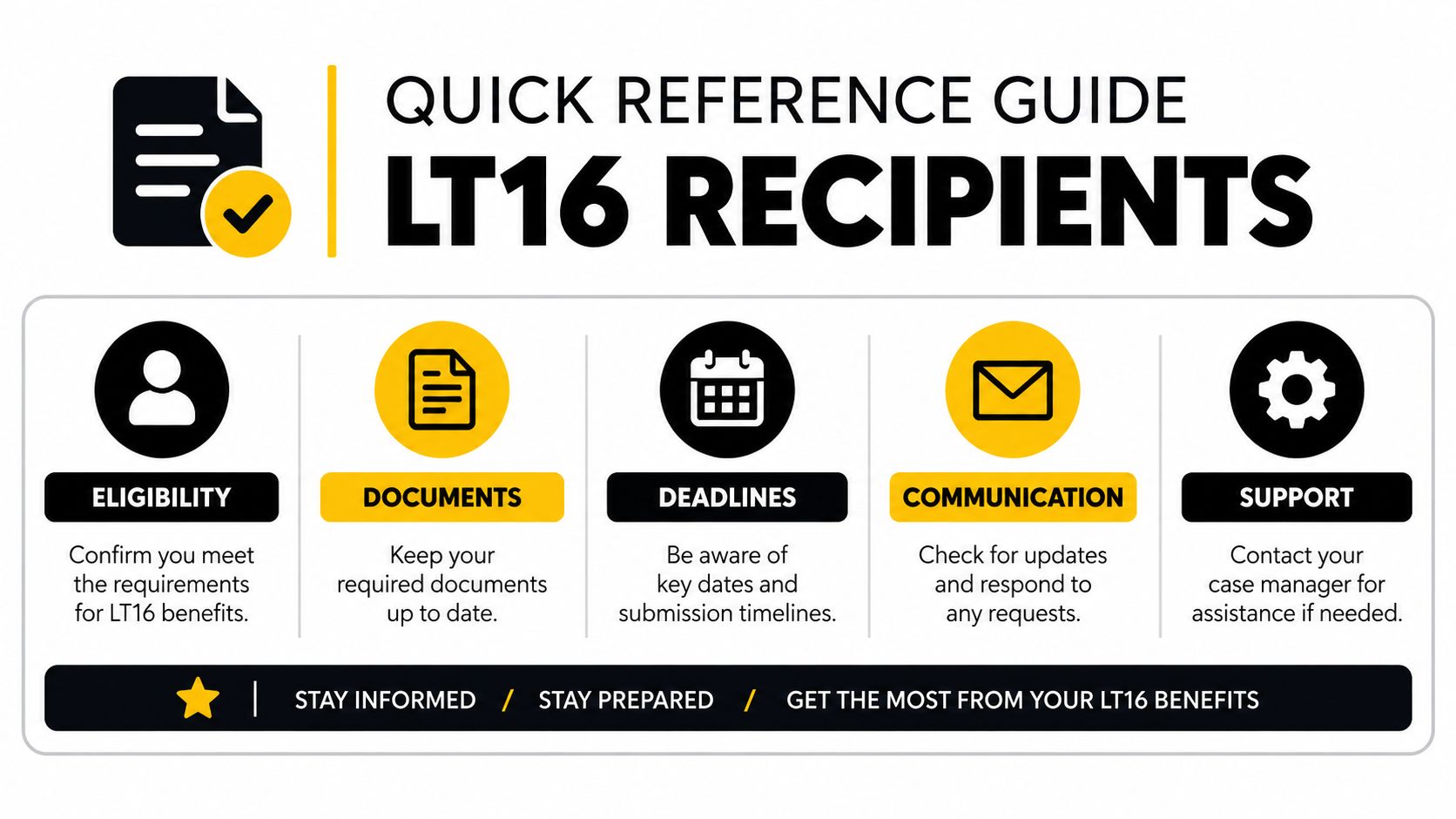
Act quickly, but act methodically. Your first task is to determine whether the LT16 concerns an unpaid balance, an unfiled return, or both. Your second task is to create a response record before the deadline.
Immediate checklist
- Secure the notice: Copy every page and preserve the original.
- Mark the tax periods: Write down each period, form, and amount identified.
- Check your records: Compare filed returns and payment confirmations with the IRS position.
- Prepare your finances: Gather monthly income and expense information before discussing an arrangement.
- Contact the IRS: Use the telephone number and submission instructions printed on your notice.
- Document the conversation: Record the date, representative information, requests, and next steps.
- Monitor the account: Keep checking for posted returns, payments, or written decisions.
Documents to gather
Have the LT16, relevant tax returns, payment evidence, bank records, income documentation, expense records, and prior IRS correspondence available. If a business is involved, include payroll filings, deposit records, financial statements, and records showing who controls the business's finances.
If the balance appears wrong, don't lead with a payment proposal. Lead with the evidence supporting the correction. If you can't pay, don't make a promise you can't keep. Present the financial information needed to evaluate a workable alternative.
The IRS notice is the controlling source for the contact method and submission instructions. Use the number and address printed on your letter, and keep proof of every payment and document submission. If you're unsure whether to handle the matter yourself, obtain a focused review before agreeing to terms.
Tax Attorney Stephen A Weisberg offers a Free Tax Debt Analysis to determine whether he can help and what resolution approach fits your IRS account. For an LT16 involving unpaid balances, unfiled returns, hardship, or business tax debt, gather your notice and records, then visit Tax Attorney Stephen A Weisberg to request an evaluation before the response window closes.


