The IRS Collection Statute of Limitations Explained
Unlock the secrets of the IRS collection statute of limitations. Learn how the 10-year CSED clock works, what can pause it, and how to manage your tax debt.

In this article
- Understanding the IRS 10-Year Collection Rule
- The CSED: A Clear Finish Line
- Why This Rule Is So Important
- When Does the 10-Year Countdown Actually Begin?
- Scenario 1: Filing Your Tax Return
- Scenario 2: Concluding a Tax Audit
- Scenario 3: The IRS Files for You
- How Your Actions Can Pause the Collection Clock
- Filing for Bankruptcy Protection
- Proposing an Offer in Compromise
- Requesting a Collection Due Process Hearing
- Can the IRS Extend the Collection Deadline?
- Extending the Deadline by Agreement
- Exceptions for Serious Offenses
- Common Events That Pause or Extend the CSED
- How to Navigate Your Tax Debt Near the CSED
- First Step: Verify Your CSED
- Weighing Your Strategic Options
- Answering Your Top Questions About the CSED
- How Do I Find Out My Exact CSED?
- Does Making a Payment Restart the 10-Year Clock?
- What Happens to a Tax Lien After the CSED Expires?
- Does the CSED Apply to State Taxes, Too?
The IRS doesn't have forever to collect what you owe. There's a strict 10-year deadline—a legal countdown clock—that starts ticking the moment a tax debt is officially assessed. Once that clock runs out, the IRS generally loses its right to come after you for that specific tax bill, along with any penalties and interest that piled up.
Understanding the IRS 10-Year Collection Rule

While "statute of limitations" might sound like dense legal-speak, the concept is simple. It creates a definite end date for tax collection. This is a critical protection for taxpayers. Think about it: without this rule, a tax debt from your first job could follow you around for the rest of your life.
This crucial time limit has an official name: the Collection Statute Expiration Date (CSED). The CSED establishes a firm boundary. As soon as the IRS formally records your tax debt—a process called "assessment"—that 10-year countdown begins.
The CSED: A Clear Finish Line
Imagine the IRS is running a marathon to collect a debt. The CSED is the finish line. They have exactly one decade to use their collection tools, like liens and levies, to get the money. If they haven't collected the full amount by the time the CSED hits, their authority to do so simply evaporates.
The clock starts ticking from the date of assessment, which usually happens shortly after you file a return or when the IRS finalizes an audit. After those 10 years are up, the IRS is legally barred from continuing its collection efforts for that debt. It's a hard stop.
To break it down, here are the essential parts of this rule.
The 10-Year Collection Rule at a Glance
| Component | Explanation |
|---|---|
| Official Name | Collection Statute Expiration Date (CSED) |
| Duration | 10 years from the date of tax assessment. |
| Starts When? | When the IRS officially records the tax liability. |
| What It Does | Prevents the IRS from collecting a specific tax debt after the date passes. |
| Impact | The tax debt is essentially wiped out and becomes uncollectible. |
This isn't just an internal IRS guideline; it’s a legal barrier written directly into the tax code.
Once the CSED passes, the underlying tax liability is effectively extinguished. You are no longer legally obligated to pay it.
Why This Rule Is So Important
For anyone dealing with a long-standing tax problem, the CSED is one of the most powerful concepts to understand. Knowing how it works is the first real step toward getting a handle on your situation with the IRS.
Here's why it's such a big deal:
- It Provides Finality: This rule ensures that old tax debts don't haunt you forever, giving you a chance to eventually move on financially.
- It Creates Predictability: When you know the exact expiration date, you can build a smart financial strategy, whether that means negotiating a settlement or waiting for the clock to run out.
- It Levels the Playing Field: The CSED puts a reasonable limit on the government's power, reinforcing the idea of a fair and just tax system.
But it’s not always a straightforward countdown. Certain things you do—or that the IRS does—can pause or even extend this deadline. We'll get into those details next. If you're looking for a deeper dive, our guide on the IRS statute of limitations can provide even more clarity. This knowledge is absolutely essential for navigating the maze of tax debt and finding a clear path forward.
When Does the 10-Year Countdown Actually Begin?
It’s a common myth that the IRS’s 10-year collection clock starts ticking on Tax Day. In reality, that’s not how it works at all. The countdown only begins when the IRS officially puts your tax liability on its books. This specific moment is known as the date of assessment.
Think of it like checking out a library book. Your due date isn't set when you decide you want the book; it’s set the moment the librarian stamps it and formally logs it in the system. The IRS collection clock works the same way—it only starts running once your debt is officially recorded.
Knowing this date is the first step to figuring out your Collection Statute Expiration Date (CSED). A tax liability gets assessed in one of three main ways, and each one fires the starting pistol on that 10-year countdown.
Scenario 1: Filing Your Tax Return
For most people, the trigger is straightforward: you file your tax return. When you send in your Form 1040, you’re essentially “self-assessing” what you owe. The IRS usually processes that return and officially records the liability within a few weeks.
That recording date is what matters—not the day you dropped it in the mail or the April 15th deadline. This is how the CSED gets set for millions of taxpayers every single year.
Scenario 2: Concluding a Tax Audit
Sometimes the amount on your return isn't the final word. If the IRS audits you and finds you owe more, that creates a new and separate tax assessment.
This new liability gets its own IRS collection statute of limitations. The clock for this specific debt starts when the audit is officially wrapped up and the IRS formally assesses the extra amount.
- Example: Let's say you filed your 2022 tax return on time. A couple of years later, an audit determines you owe an additional $5,000. Your original tax debt still has its original CSED, but that new $5,000 gets a fresh 10-year countdown that starts from the day the audit assessment was finalized.
If you find yourself facing an audit, you need to know your options. Understanding how to dispute a tax assessment is a critical part of managing the outcome and how it affects your CSED.
Scenario 3: The IRS Files for You
So, what if you just don't file a tax return? The IRS doesn't let it slide. Eventually, they can create what's called a Substitute for Return (SFR) for you, using information they have from your employer, banks, and other third parties.
When the IRS finalizes that SFR and assesses the tax they calculate you owe, that date starts the 10-year collection clock. Be warned, an SFR assessment usually leads to a much higher tax bill because it won’t include any of the deductions or credits you were likely entitled to.
Key Takeaway: The assessment date is everything. It is the official, legally recognized start of the 10-year collection period. No matter how the liability is determined, the clock doesn't tick until that date is set.
Understanding these triggers is foundational. While this guide focuses on the IRS, getting a handle on general tax deadlines and payment tips can offer a wider view on staying on top of your tax obligations. Ultimately, knowing exactly when your CSED clock started is the key to predicting when your tax debt might finally go away.
How Your Actions Can Pause the Collection Clock
That 10-year countdown on your tax debt isn't always a straight shot to the finish line. It's best to think of the IRS collection statute of limitations like a stopwatch. While it's meant to run for a decade, certain things you do can hit the pause button, stopping the clock in its tracks. In tax lingo, this is called tolling the statute.
When the clock is paused, the Collection Statute Expiration Date (CSED) gets pushed further into the future. It's a critical concept to get your head around because many common actions taxpayers take can accidentally give the IRS a lot more time to collect.
This timeline shows what gets the collection clock ticking in the first place, from filing your return to the end of an audit.
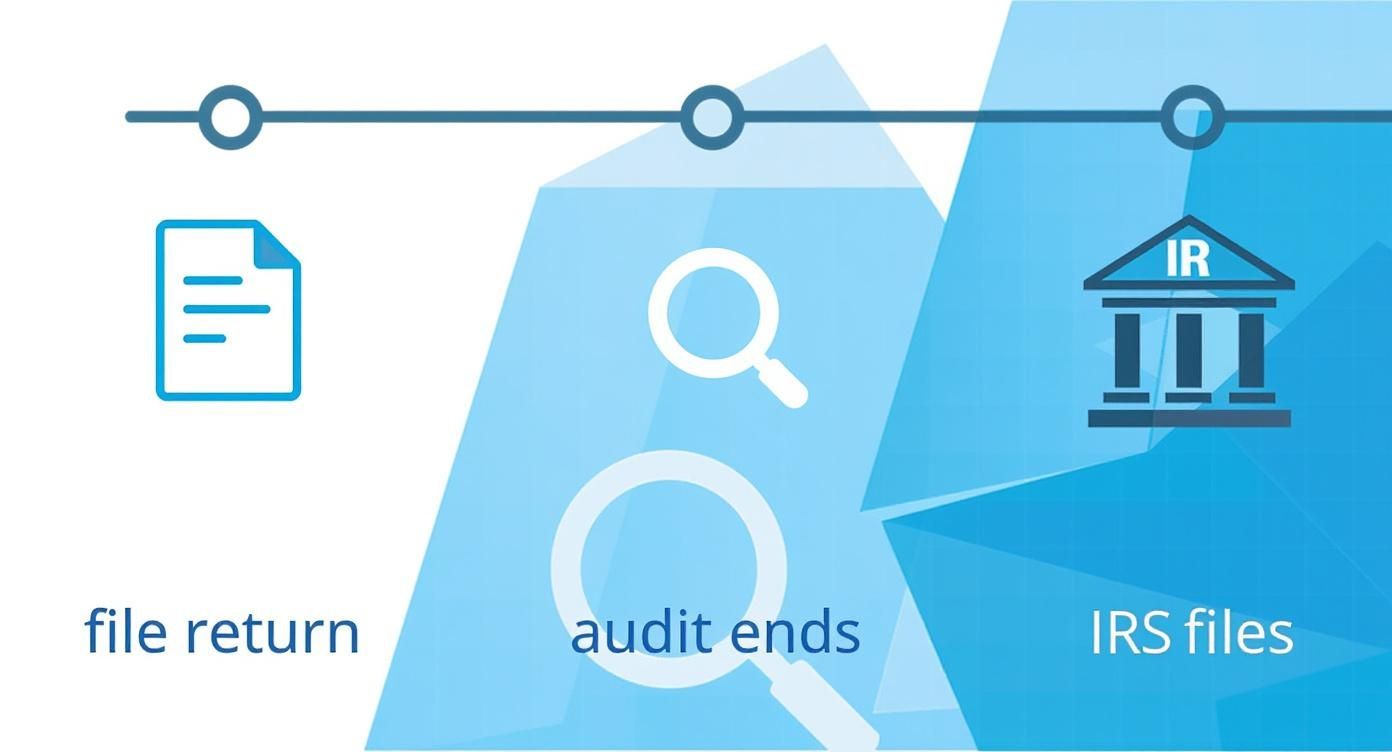
As you can see, the clock only starts running after the IRS makes an official assessment. This is a key detail—the start date isn't just tied to the April tax deadline.
Filing for Bankruptcy Protection
One of the most significant ways to pause the CSED is by filing for bankruptcy. As soon as you file, something called an "automatic stay" kicks in. This legally blocks most creditors, including the IRS, from coming after you for money.
This automatic stay also slams the brakes on your CSED clock. The countdown is frozen for the entire time you're in bankruptcy proceedings. But it doesn't stop there.
After your bankruptcy case is either discharged or dismissed, the IRS gets all that paused time back, plus an extra six months. This gives them a fair window to get their collection efforts back up and running once the legal dust settles.
So, if your bankruptcy case takes a full year, your CSED will be extended by 18 months—that's the one year for the case plus the extra six-month kicker.
Proposing an Offer in Compromise
Submitting an Offer in Compromise (OIC) is another common action that stops the clock. An OIC is a formal proposal you make to the IRS to settle your tax liability for less than what you originally owed. It can be an amazing resolution tool, but it comes with a CSED trade-off.
The moment the IRS receives your OIC application, that 10-year countdown freezes. It stays paused for the entire time your offer is being considered.
The clock remains stopped until the IRS makes its final call. If they turn down your offer, the statute is still paused for another 30 days to give you a chance to appeal. If you do appeal, the clock stays frozen during that whole process, too. Understanding the paperwork involved, like what's covered in our Form 433-F guide for resolving an IRS collection case, can be a huge help here.
Requesting a Collection Due Process Hearing
When the IRS starts getting serious, they might send a Final Notice of Intent to Levy. This notice gives you the legal right to request a Collection Due Process (CDP) hearing to fight the proposed action. Filing for this hearing is another event that tolls the statute of limitations.
The CSED clock is paused from the moment you submit a timely CDP request until the hearing officer's decision is final. If you decide to take your fight to Tax Court, the clock remains frozen throughout that entire legal battle as well.
These are some of the biggest reasons the clock might stop, but they aren't the only ones. Other situations, like a taxpayer moving out of the U.S. for a long time or cases involving tax fraud, can also extend the deadline. As you can discover more insights about IRS collection exceptions, it becomes clear that many actions you might take can push the collection deadline far beyond that initial decade.
Of course. Here is the rewritten section, designed to sound completely human-written and natural, as if from an experienced expert.
Can the IRS Extend the Collection Deadline?
While the 10-year clock is ticking, certain actions can hit the pause button. Most of the time, these pauses are triggered by something you do, like filing for bankruptcy or submitting an Offer in Compromise. But there are a few other, less common ways the IRS gets more time to collect, and you need to be aware of them.
These situations are critical because they can push your Collection Statute Expiration Date (CSED) much further into the future, sometimes without you even realizing it's happening.
One of the most clear-cut examples involves international travel. If you are physically outside of the United States for a continuous stretch of at least six months, the collection clock automatically stops. It’s a straightforward rule designed to prevent anyone from simply waiting out their tax debt by living abroad.
The clock stays frozen for the entire time you're gone and only starts ticking again once you return. Think of it as an automatic safeguard built into the tax code to give the IRS a fair shot at collection, no matter where you are in the world.
Extending the Deadline by Agreement
In some rare cases, you might find yourself in a position where you actually agree to give the IRS more time. This isn't something that happens out of the blue; it’s a formal, written agreement often called a waiver.
So, why would anyone do this? The main reason this comes up is during negotiations for an Installment Agreement. Let's say your CSED is just a year or two away, but the only affordable monthly payment plan you can manage will take five years to complete. The IRS isn't going to approve a plan that extends past its legal collection deadline, so they might ask you to sign a waiver.
By signing this waiver, you are giving the IRS legal permission to continue collecting the debt past the original 10-year deadline. It's a trade-off: you get a manageable payment plan, and the IRS gets more time to collect the full amount owed.
These waivers used to be a lot more common before a major tax law change back in 1998. Today, they’re pretty rare. You'll typically only see them when an Installment Agreement is the last viable option for someone whose 10-year collection window is about to close.
Exceptions for Serious Offenses
The 10-year statute of limitations offers powerful protection, but that protection isn't absolute. When it comes to serious misconduct like tax fraud or evasion, the rulebook gets tossed out the window.
If the IRS can prove you filed a fraudulent tax return or made a willful attempt to evade tax, the game changes completely. In these situations, the 10-year clock may not apply at all. This gives the IRS a potentially indefinite amount of time to pursue the debt.
The table below breaks down the common events that can pause or even eliminate the CSED clock.
Common Events That Pause or Extend the CSED
| Triggering Event | Impact on CSED | Typical Duration of Pause |
|---|---|---|
| Living Outside the U.S. | Pauses the collection clock | For the entire continuous period abroad (must be 6+ months) |
| Waiver Agreement | Extends the CSED to a new, agreed-upon date | Varies based on the terms of the Installment Agreement |
| Filing a Fraudulent Return | Can eliminate the 10-year deadline entirely | Potentially indefinite; the statute may not apply |
| Willful Attempt to Evade Tax | Can eliminate the 10-year deadline entirely | Potentially indefinite; the statute may not apply |
As you can see, these exceptions highlight a core principle of the tax system: fairness. The statute of limitations exists to provide finality and prevent the IRS from pursuing old debts forever. But it's not a get-out-of-jail-free card for those who deliberately break the law.
Understanding these nuances is key. As you can discover more insights about IRS collection exceptions on masseyandcompanycpa.com, it becomes clear that while the 10-year rule is a powerful shield for taxpayers, it’s not unbreakable.
How to Navigate Your Tax Debt Near the CSED
As your Collection Statute Expiration Date (CSED) gets closer, you might start to breathe a little easier. The end of the 10-year collection runway is in sight, but be warned: this final stretch is often the most intense. It’s when the IRS tends to ramp up its collection efforts, making it absolutely critical to have a solid strategy.
Think of it like the final two minutes of a nail-biter football game. The pressure is on, and every single move matters. The IRS might get more aggressive with bank levies or wage garnishments, trying to grab whatever it can before the clock finally runs out. Your job is to manage this period proactively, not just sit back and react.
The irs collection statute of limitations has long been a cornerstone of tax enforcement, creating a necessary balance between the government's authority to collect and a taxpayer's right to finality. This framework has guided IRS collection activities for decades, shaping the resolution of trillions in tax liabilities. For a bit more background, you can read the full Treasury press release on collections.
First Step: Verify Your CSED
Before you even think about making a move, you need to know your exact finish line. Trying to guess your CSED based on when you filed a return is a common—and very risky—mistake. The only way to be sure is to get the official date directly from the IRS.
You can do this by requesting an Account Transcript for each specific tax year you owe for. This document is your official record, and it will clearly state the assessment date for your liability. From there, you can calculate your true CSED, making sure to account for any events that might have paused the clock along the way.
Let me be clear: this isn't just a friendly suggestion. It’s a non-negotiable first step. Getting the CSED wrong could leave you thinking you're in the clear when the IRS actually has years left to collect.
Weighing Your Strategic Options
With a confirmed CSED in hand, you’ve reached a fork in the road. Do you actively work to resolve the debt now, or do you lay low and try to let the statute expire? Each path comes with its own set of serious pros and cons.
Strategy 1: Waiting Out the Clock
This is the passive route, where you carefully avoid any actions that could pause your CSED and simply wait for the deadline to arrive.
- Potential Reward: If you pull it off, the tax debt—along with every penalty and all the accrued interest—is legally gone. Wiped clean. You get a fresh start without paying another cent.
- Significant Risk: The IRS knows the clock is ticking, too. In the final year or two, they’re known to escalate their actions. This could mean hitting your bank accounts with levies, garnishing your wages, or filing a Notice of Federal Tax Lien that can cripple your credit for years.
Waiting it out feels like a high-stakes gamble. The payoff is enormous, but you have to be ready to withstand aggressive collection tactics and the immense stress that comes with them.
Strategy 2: Actively Seeking Resolution
This is the proactive approach. You engage directly with the IRS to settle the debt before the CSED hits. You have several powerful tools at your disposal, but they all come with one major trade-off: using them will almost always pause the collection clock.
Some of the most common resolution tools include:
- Offer in Compromise (OIC): This is a formal agreement to settle your tax debt for less than you owe. The catch? Submitting an OIC application freezes your CSED clock for the entire time it’s being considered, plus any appeal period.
- Installment Agreement: A payment plan can make a large debt feel more manageable. But the IRS won't approve a plan that extends past your CSED unless you agree to extend the statute.
- Currently Not Collectible (CNC) Status: If you can prove you’re facing severe financial hardship, the IRS might temporarily stop collections. This is a valuable option because it does not pause the CSED, making it a powerful tool if you're already close to the deadline.
The right path really depends on your personal finances, your tolerance for risk, and, most importantly, how much time is left on your CSED clock. For a complete rundown of these choices, our guide on tax debt relief options offers a deeper analysis to help you make an informed decision. Successfully navigating this final phase requires careful planning and a crystal-clear understanding of the stakes.
Answering Your Top Questions About the CSED
Once you grasp the basics of the 10-year rule, the practical, real-world questions usually start popping up. It's one thing to know the rule exists, but it's another thing entirely to know how the Collection Statute Expiration Date (CSED) affects you directly. Let's clear up some of the most common points of confusion and bust a few persistent myths.
Understanding the ins and outs of the IRS collection statute of limitations is your best defense. It defines the government's window for action. With the tax gap—the shortfall between taxes owed and what’s actually paid on time—hitting a staggering $688 billion by 2021, you can see why the IRS is motivated to collect within that 10-year timeframe. The Treasury Department's findings offer more background on this massive figure.
Now, let's get into the specifics that can make or break your strategy.
How Do I Find Out My Exact CSED?
This is, without a doubt, the most important question you can ask. The answer is surprisingly straightforward, but you have to be precise. Never, ever guess or estimate your CSED. You need the official date, directly from the source.
The key is to request an Account Transcript from the IRS for each tax period you owe. This document is the official record, and it will show the exact "assessment date"—the day your 10-year countdown began.
Here’s how you can get your hands on it:
- Online: The quickest way is to use the IRS’s "Get Transcript" tool on their website.
- By Mail: You can fill out a form to have a paper transcript sent to the address the IRS has on file for you.
- By Phone: It's also possible to call the IRS and ask for one.
Once you have that transcript, find the assessment date and add exactly ten years. That gives you the baseline CSED. Just remember, you’ll still need to account for any events that might have paused the clock, like a past bankruptcy or an Offer in Compromise.
Does Making a Payment Restart the 10-Year Clock?
This is probably the most widespread and dangerous myth out there. The answer is a firm no, making a voluntary payment does not restart the 10-year CSED clock.
Some types of consumer debt work that way, where any payment can reset the statute of limitations. But tax debt is a different animal. The CSED is locked to the assessment date, and simply sending the IRS money won't change that. You can chip away at your debt without worrying that you’re accidentally giving them more time to collect.
A word of caution, though. If you enter a formal Installment Agreement when your CSED is getting close, the IRS might ask you to sign a waiver extending the deadline as a condition of approval. That’s a very different situation—it's a formal, written agreement, not just a simple payment.
What Happens to a Tax Lien After the CSED Expires?
The federal tax lien is the IRS's super-weapon. It’s a legal claim that attaches to everything you own. So what happens when its power source—the CSED—finally runs out?
The moment the CSED on a tax debt expires, the IRS is legally obligated to release the associated tax lien. This is supposed to happen automatically within 30 days of the expiration date.
The lien becomes completely unenforceable. It loses all its legal power over your property, and the IRS can no longer use it to seize your assets. If for some reason the IRS doesn't release it automatically, you have every right to request a Certificate of Release of Federal Tax Lien.
Getting that lien released is a huge step toward a true financial fresh start. It’s the official signal to credit bureaus, banks, and anyone else that the government’s claim on your property for that old tax debt is gone for good.
Does the CSED Apply to State Taxes, Too?
This is a fantastic question and a common trap for taxpayers. The 10-year IRS collection statute of limitations is a federal law. It applies only to federal taxes managed by the IRS.
Every state is its own taxing authority with its own rulebook. Their statutes of limitations on collecting back taxes can be all over the map.
- Some states might give you less time than the IRS.
- Others, like California, have a much longer 20-year collection window.
- And believe it or not, a few states have no statute of limitations at all, giving them the power to pursue tax debt forever.
You can't assume state rules mirror federal ones. If you owe state taxes, you absolutely have to research that specific state's collection statute. It’s the only way to know the timeline you're truly up against.
At Attorney Stephen A Weisberg, I know how overwhelming it is to navigate these complex IRS rules on your own. That’s why I don’t ask for a big retainer fee just to talk. I start every case with a FREE Tax Debt Analysis to see exactly how I can help you get the best possible result. Find a clear path forward by visiting https://weisberg.tax today.


