What an Ideal Tax Review Looks Like and Why You Need One
Learn what an ideal tax review covers, the step-by-step process, key documents, red flags, costs, and when to bring in an IRS controversy attorney.

In this article
- Why a Tax Review Is Not Just an Annual Filing Checkup
- The annual review misses structural exposure
- Review throughout the year, not after the damage
- The Four Building Blocks of an Ideal Tax Review
- The foundation is the reporting posture
- The framing is complete income reporting
- The mechanical system is deductions and basis
- The risk envelope surrounds the building
- How the Review Process Actually Works Step by Step
- Start with intake and scope
- Pull the underlying data
- Test, grade, and route
- A Self-Employed Risk Screen Most Reviews Miss
- Red Flags the IRS Looks For and How to Triage Them
- Reporting red flags
- Classification red flags
- Transactional red flags
- Timelines, Costs, and the Right Engagement for Your Situation
- Review vs. Representation Scope Timeline and Cost
- Turning Review Findings Into a Real Resolution Path
- Match the facts to the remedy
- Your Ideal Tax Review Checklist and Next Steps
- Gather the core file
- Test the high-risk areas
- Produce an action plan
Most taxpayers hear “tax review” and think of a year-end exercise, matching W-2s and 1099s to a return before filing. That advice is incomplete. An ideal tax review is a year-round risk and transaction-management process that identifies structural problems before an IRS notice, business sale, divorce, bankruptcy, or lending closing exposes them.
The stakes are larger than a missed deduction. The IRS estimated a $696 billion projected annual gross tax gap for tax year 2022, meaning a substantial amount of tax liability wasn't paid on time even within a major tax administration system. Earlier IRS estimates for tax years 2014 through 2016 put the gross gap at $496 billion, with $68 billion expected to be paid late, and estimated that about 83.6% of taxes were paid voluntarily and on time for tax years 2011 through 2013. Those figures come from the IRS tax gap estimates, and they show why accurate reporting, complete documentation, and timely correction matter.
An annual reconciliation catches arithmetic. A serious review catches income-reporting gaps, worker-classification problems, deduction drift, entity mismatches, and tax debt that can derail a financial transaction.
Why a Tax Review Is Not Just an Annual Filing Checkup
A CPA reconciliation asks whether the numbers on the return tie to the records provided. An ideal tax review asks a harder question: what could make the return fail under IRS scrutiny, due diligence, or a transaction deadline?
That distinction matters because IRS audit coverage has historically been limited and has declined over time. The Tax Policy Center reported that about 153.9 million individual returns were filed for tax year 2018, while about 520,000 were audited, an overall audit rate of 0.3%. The Tax Policy Center's audit-rate analysis also describes the decline in average individual audit rates from 0.9% in 2010 to 0.25% in 2019. Low audit coverage doesn't make a weak return safe. It means taxpayers and advisors must assess where scrutiny is concentrated rather than assuming every error will be caught or ignored.
The annual review misses structural exposure
Consider a contractor preparing to sell a business. During buyer due diligence, the buyer's accountant notices that five years of Schedule C returns show recurring losses, aggressive vehicle deductions, and expenses that don't clearly support an active profit motive. The seller may have filed on time every year, but the returns now look like a hobby-loss posture. The issue can delay the closing, reduce the buyer's confidence, or force the seller to explain years of records under pressure.
A filing checkup may confirm that the return was accepted. It won't necessarily determine whether the business activity was reported consistently, whether deductions match the actual business, or whether prior filings create a liability that must be disclosed before the sale.
Review throughout the year, not after the damage
The right triggers include:
- A transaction: Business sales, real estate transfers, refinancing, and lending requests can expose unresolved tax balances or inconsistent income.
- A life event: Divorce and bankruptcy require a liability analysis that separates filing mistakes from collection, discharge, allocation, and representation issues.
- A business change: New workers, an entity election, a new payment platform, or a shift from services to inventory can change reporting obligations.
- A notice or transcript issue: An IRS notice, wage levy, balance due, or transcript mismatch requires action before the problem expands.
Practical rule: Review the return when the facts change, not merely when the calendar says it's time to file.
The OECD describes compliance risk management as a sequence of assessing and prioritizing risks, analyzing the behavioral causes of noncompliance, and then selecting treatments and implementation plans. Its compliance risk management framework also notes that compliance verification activities can consume about 30% of tax administration staff. A targeted review follows the same logic. It focuses attention on the exposures most likely to affect the taxpayer's outcome instead of treating every line as equally important.
The Four Building Blocks of an Ideal Tax Review
An ideal tax review is built on four components that must survive scrutiny. Each one addresses a different failure point, from the taxpayer's reporting position to the event that may determine whether a transaction, divorce, bankruptcy, or lending deal proceeds.
The foundation is the reporting posture
Start with the entity and its filing position. Confirm whether the taxpayer operates as a sole proprietor, single-member LLC, partnership, S corporation, or another structure. Verify the forms, elections, ownership records, payroll treatment, and state filings that support that position.
A wrong classification can affect several years. A shareholder who treats personal withdrawals as payroll, an LLC that operates inconsistently with its tax election, or a business that pays workers as contractors despite employee-like control may have a structural problem, not a bookkeeping error.
The framing is complete income reporting
Build an income reconciliation independently of the tax return. Compare reported receipts with:
- Forms 1099: Include 1099-NEC, 1099-K, interest, and other information returns.
- Payment records: Review merchant processor reports, payment applications, and settlement statements.
- Bank activity: Trace deposits and identify transfers, loans, refunds, capital contributions, and personal funds.
- Pass-through information: Reconcile K-1s with ownership, basis, and distributions.
The objective is not to label every bank deposit as taxable income. It is to explain every material deposit and show that business receipts were reported completely. For a Schedule C taxpayer, this reconciliation often exposes omissions before the IRS identifies them.
The mechanical system is deductions and basis
Deductions, credits, basis, and depreciation must work together and have records behind them. Test each major deduction for a business purpose, correct classification, and supporting documentation that can be assembled quickly.
Vehicle deductions need usage records. Home-office deductions need facts supporting the space and its business use. Depreciation needs an asset history, placed-in-service information, and basis support. A deduction may be legally available and still fail in practice if the taxpayer cannot establish the underlying facts.
The risk envelope surrounds the building
The final block addresses events that change the consequences of a tax issue. A sale may require tax clearance and liability disclosure. Divorce may require allocation of joint liabilities and coordination with family-law counsel. Bankruptcy may require analysis of which liabilities are potentially dischargeable and which remain collectible. A lender may require returns, transcripts, payment history, or proof that a balance is being resolved.
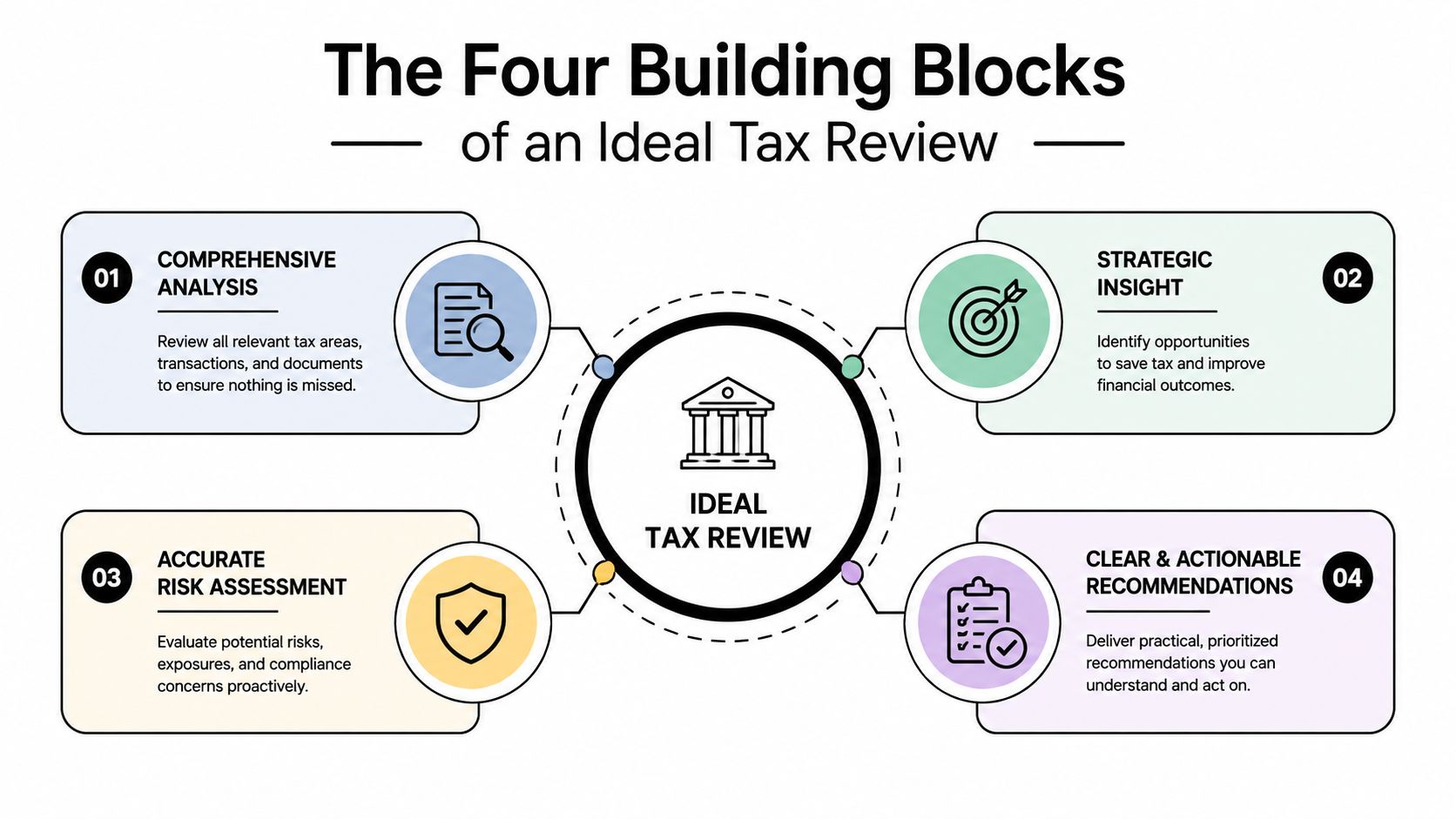
Assign each block a pass, watch, or fail flag. The labels force the reviewer to separate what works from what needs documentation, correction, or escalation. That discipline turns a year-round risk review into a decision tool, rather than another annual filing exercise.
How the Review Process Actually Works Step by Step
A good review follows a controlled workflow. It doesn't begin with random document requests or a promise to “look everything over.” Each stage has a defined purpose and a decision at the end.
Start with intake and scope
Take a small business owner with several years of returns, a current-year profit and loss statement, and an upcoming financing request. The first intake should gather prior federal and state returns, IRS transcripts, notices, entity documents, and the current-year financial picture.
The reviewer defines the exposure window, identifies missing returns, and confirms whether the engagement is a review, correction project, collection analysis, or representation matter. If the taxpayer can't produce the basic returns or transcripts, the reviewer shouldn't jump into detailed deduction testing.
Pull the underlying data
The next request should include bank statements, merchant processor reports, payroll registers, Forms 1099, general ledgers, loan documents, shareholder or member records, and major purchase invoices. Entity formation documents and tax elections belong in this file too.
Technology can help sort and compare large document sets, but it doesn't replace professional judgment. Firms exploring automation can use this guide on AI for accounting firms to evaluate where artificial intelligence may assist with intake, document organization, and workflow management while keeping substantive tax decisions under human review.
Test, grade, and route
Substantive testing reconciles deposits to reported receipts, samples deductions, reviews payroll and contractor treatment, and checks whether entity records agree with the filed returns. The reviewer then writes a findings memo with risk grades, missing evidence, proposed corrections, and deadlines.
The action route may include:
- Amending a return: Correct a factual or reporting error when the legal position is clear.
- Filing protective forms: Preserve a position or claim when facts or timing require a protective filing.
- Adjusting current-year payments: Correct estimated taxes, payroll withholding, or distributions.
- Escalating to representation: Refer the matter when the IRS is already examining it or when civil fraud, trust-fund, or litigation exposure appears.
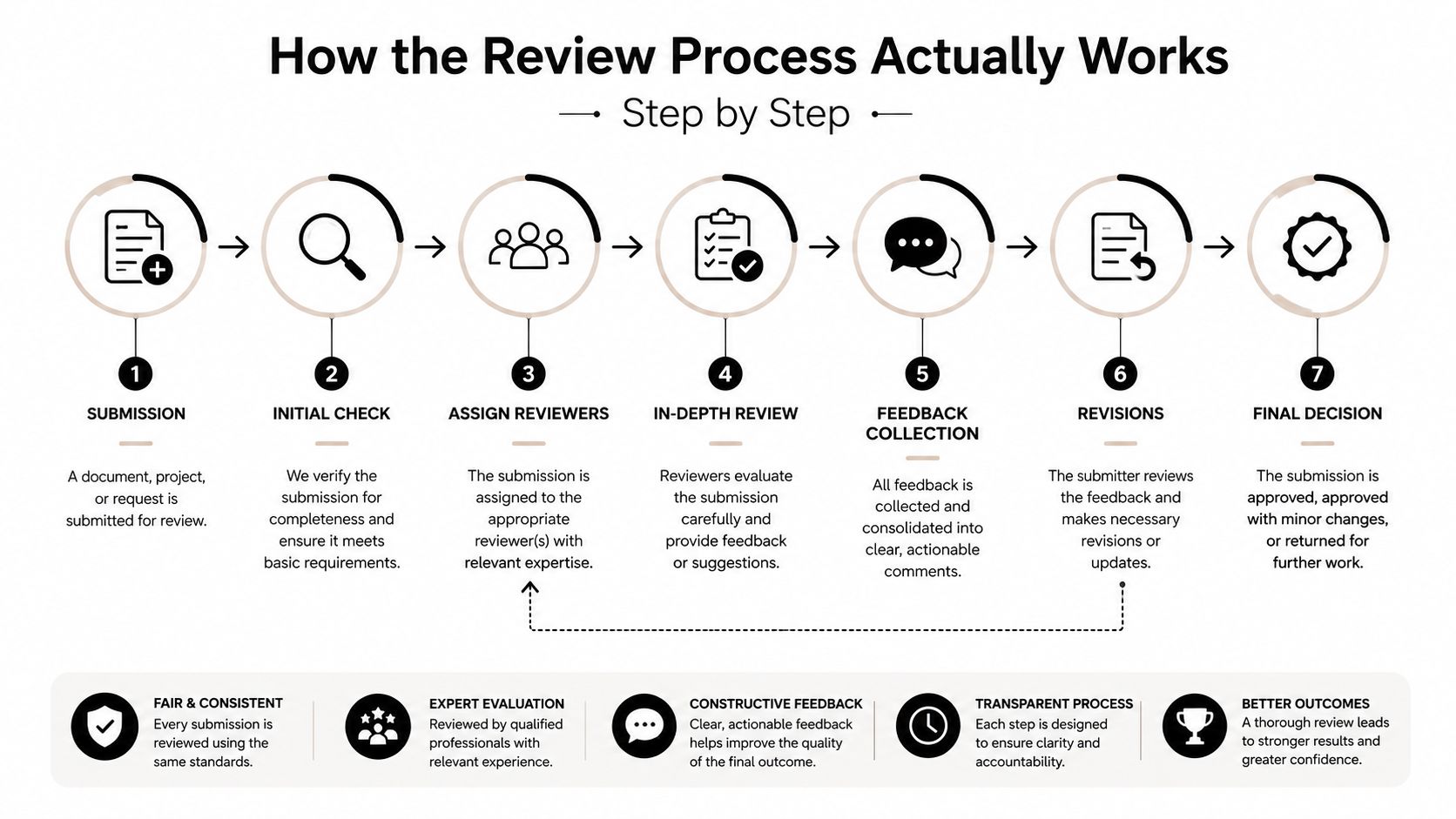
Every stage should end with a go-or-no-go decision. That prevents the taxpayer from paying for downstream work before the reviewer knows whether the records support the next step.
A Self-Employed Risk Screen Most Reviews Miss
Self-employed taxpayers often receive generic advice about keeping receipts. That isn't enough. The reviewer must identify whether the problem is documentation, classification, income reporting, or payment compliance, then rank the risks before the IRS connects them.
Take a solo consultant averaging $180,000 on Schedule C for three years. The taxpayer claims a home-office deduction that exceeds the simplified-method cap, deducts 100% of a vehicle despite mixed personal use, and reports no estimated payments. Those facts don't prove wrongdoing, but together they demand immediate triage.
The first document request should be narrow:
- The last three Forms 1040: Include Schedules C and SE to identify recurring positions, losses, self-employment tax, and changes in reporting.
- The 1099-NEC stack: Reconcile payer information with gross receipts and investigate missing or duplicated income.
- The mileage log or bank and card transactions: Test vehicle use, fuel, repairs, insurance, and the business purpose of expenses.
The home-office issue is a substantiation risk. The reviewer must test the space, its regular and exclusive business use, the chosen method, and the underlying expenses. The vehicle issue is another substantiation risk, but it may also reveal a broader pattern of personal costs being treated as business expenses.
The missing estimated payments create a payment-compliance risk. The return may be accurate in theory while still producing a balance due, penalties, and cash-flow pressure. A reviewer should compare the taxpayer's income pattern, payment history, and current obligations rather than waiting for filing season.
For practical background on deductions, records, and Schedule C reporting, use this self-employed tax guide. The point isn't to scare the taxpayer into deleting legitimate deductions. It's to preserve valid deductions with evidence and correct unsupported positions before they become the center of an examination.
Red Flags the IRS Looks For and How to Triage Them
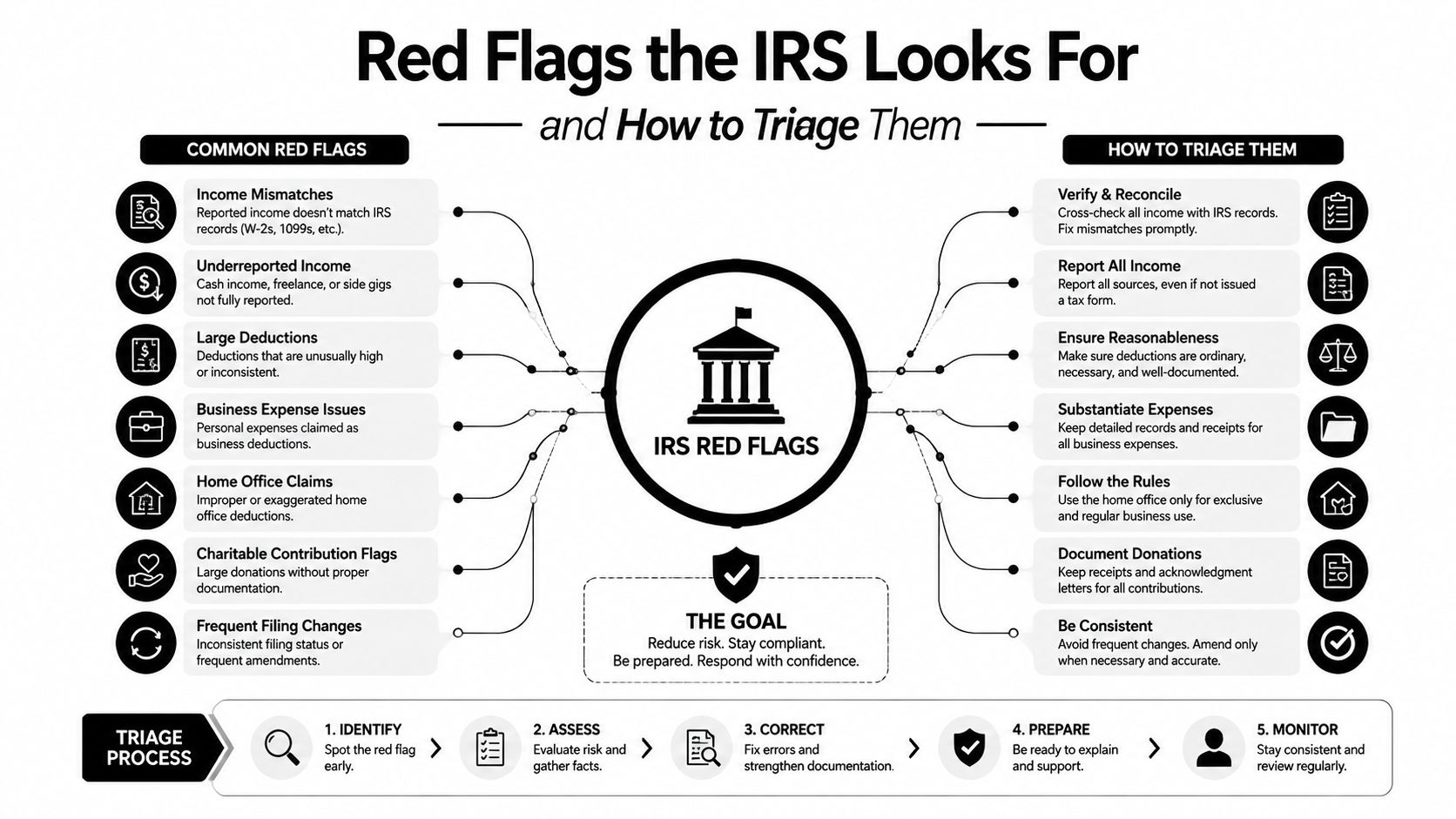
Red flags aren't automatic violations. They're signals that the return deserves an explanation. The reviewer should group them by the type of failure they suggest, then test the underlying records instead of reacting to the line item alone.
Reporting red flags
Reporting problems involve incomplete or inconsistent income. Round-number deductions, sharp income-to-expense swings, and differences between Forms 1099-K, 1099-NEC, and reported gross receipts deserve a reconciliation.
The reviewer should build a source-to-return schedule. Each information return should tie to reported income or have a documented explanation, such as a reimbursement, duplicate reporting, personal transaction, or return of capital. Bank deposits should be classified rather than automatically added to receipts.
Classification red flags
Worker classification is about the actual relationship, not the label on the invoice. A worker treated as a 1099 contractor may function like an employee if the business controls how, when, and where the work is performed. Recurring Schedule C losses can also raise questions about whether the activity is operated for profit, particularly when personal elements and weak records appear together.
A reviewer should document facts, not just recalculate deductions. Contracts, instructions, schedules, supervision, tools, and the parties' conduct all matter.
Transactional red flags
Transactional issues become urgent when money moves between related parties or major assets appear on the return. Structured cash deposits, large vehicle or equipment deductions without usage records, and round-trip transfers between a corporation and its owner may require analysis as receipts, distributions, loans, wages, or capital contributions.
A suspicious-looking line isn't the conclusion. It's the starting point for a document-backed explanation.
The reviewer should preserve a clean chronology and send responses through a reliable channel. When the IRS requires a faxed submission, taxpayers can consult this practical guide on how to send a fax to the IRS, including the importance of retaining transmission confirmation and the complete submission.
For a broader discussion of selection issues, use this guide to what triggers a tax audit. A review should focus first on the few anomalies that can change the character of the return, not spend equal time on immaterial items.
Timelines, Costs, and the Right Engagement for Your Situation
Don't buy a full controversy engagement when you need a focused diagnostic. Don't buy a cheap review when the IRS has opened an examination or the taxpayer faces trust-fund exposure. Scope determines value, and privilege determines what the reviewer may be able to protect.
The following ranges are planning categories, not universal market prices. A lawyer or firm should state the actual scope, assumptions, exclusions, and billing terms in writing before work begins.
Review vs. Representation Scope Timeline and Cost
| Engagement | Deliverables | Typical Hours | Timeline | Fee Range | Privilege |
|---|---|---|---|---|---|
| Limited tax review | Document checklist, return and transcript review, issue list, written findings memo | Varies by records and complexity | Varies by scope and document completeness | Quote required | Generally not attorney-client privileged unless structured as legal services with counsel |
| Limited representation through correspondence | Power of Attorney, IRS correspondence, document preparation, response management | Varies by notice and issue | Varies with IRS response periods | Quote required | Attorney-client privilege may apply to legal communications with the attorney |
| Full controversy matter | Audit representation, appeals strategy, collection defense, or Tax Court work | Varies substantially by forum and complexity | Varies by procedural stage | Quote required | Attorney-client privilege generally applies to legal advice, subject to applicable limits |
A written findings memo is the key deliverable in a limited review. It should identify confirmed errors, unsupported positions, missing records, potential exposure, and the next action. If the memo reveals an open examination, civil fraud indicators, or a collection enforcement threat, stop treating the matter as routine preparation.
For selection criteria and questions to ask before hiring counsel, consult this guide on how to find a good tax attorney. The right advisor should explain who performs the work, who communicates with the IRS, whether the engagement includes legal advice, and what happens if the facts expand.
Turning Review Findings Into a Real Resolution Path
A review has value only when it produces a defensible next move. The same tax balance can require a very different strategy depending on whether the books are clean, the liability is disputed, the taxpayer can pay, or the IRS has already started enforcement.
Match the facts to the remedy
A taxpayer who can pay the confirmed balance may need a pay-in-full plan and penalty analysis. Someone with reliable income but insufficient immediate cash may need an installment agreement. A taxpayer whose financial condition makes full payment unrealistic may need an Offer in Compromise analysis. A taxpayer with reasonable cause or other qualifying facts may benefit from penalty abatement.
Documentation gates every option. The reviewer needs current financial information, filed returns, account transcripts, income records, asset information, household expenses, and evidence supporting the requested treatment. A $40,000 understatement with substantiation gaps is not the same as a $40,000 shortfall supported by clean books and a documented temporary cash crisis. The first raises accuracy and defense concerns. The second may be primarily a resolution and payment problem.
| Finding Profile | Best-Fit Resolution | Referral Trigger |
|---|---|---|
| Confirmed balance, stable ability to pay, complete filings | Pay in full or evaluate an installment agreement | Levy, lien, or urgent transaction deadline |
| Limited ability to pay, documented financial hardship | Offer in Compromise or collection alternative analysis | Incomplete financial disclosure or disputed liability |
| Penalties tied to documented circumstances | Penalty abatement request | IRS denial, repeated periods, or contested facts |
| Unsupported deductions or omitted income | Correction, amended filing, and payment planning | Examination, fraud indicators, or substantial disagreement |
| Payroll withholding or trust-fund concerns | Immediate liability and collection assessment | Trust Fund Recovery Penalty exposure |
Escalation isn't failure. It means the facts now require litigation-grade judgment.
The bright-line referral triggers are an open examination, trust-fund recovery penalty exposure, civil fraud indicators, and unreported foreign accounts. Those issues can affect statutes, burdens of proof, privilege, and the taxpayer's broader legal position. For a practical overview of possible resolution paths, review this guide to settling tax debt with the IRS.
Your Ideal Tax Review Checklist and Next Steps
Use this checklist before signing a return, applying for financing, entering a sale, or responding to a tax problem. The cheapest time to fix an error is before another advisor, buyer, lender, or IRS examiner finds it.
Gather the core file
- Prior returns: Collect federal and state returns, schedules, amendments, notices, and account transcripts.
- Entity records: Confirm formation documents, ownership, elections, operating agreements, and changes in classification.
- Income evidence: Reconcile Forms 1099, K-1s, merchant statements, invoices, payment applications, and bank deposits.
- Bookkeeping records: Assemble general ledgers, profit and loss statements, balance sheets, payroll registers, and loan records.
Test the high-risk areas
- Schedule C substantiation: Review vehicle use, home-office facts, meals, travel, contractors, equipment, and recurring losses.
- Payroll and 1099 reconciliation: Tie payroll reports and contractor payments to filed information returns and employment tax filings.
- Retirement contributions: Test eligibility, contribution records, plan documents, and treatment on the return.
- State nexus: Identify where the taxpayer works, owns property, hires people, sells, or maintains business operations.
- Prior-year liability comparison: Compare balances, payments, notices, penalties, and unresolved adjustments across years.
Produce an action plan
The reviewer should separate confirmed errors from documentation gaps and legitimate positions that need stronger support. The final product should rank each issue, identify the responsible professional, set a deadline, and state whether the matter needs preparation, correction, collection work, or representation.
A free Tax Debt Analysis can serve as the entry point when a balance due, notice, or transaction deadline complicates the review. The useful version isn't a sales pitch. It should determine whether help is appropriate, identify the records needed, convert the checklist into a prioritized action plan, and explain what happens next if representation is recommended.
An ideal tax review isn't paperwork for its own sake. It's the decision that protects every financial transaction a taxpayer makes this year.
Tax Attorney Stephen A Weisberg offers a free Tax Debt Analysis to identify whether an IRS or state tax problem can be addressed and what records are needed before paid resolution work begins. If your return, tax debt, audit, closing, divorce, bankruptcy, or lending request needs a coordinated review, visit Tax Attorney Stephen A Weisberg to request an assessment.


