Your Guide to a Collection Agency for IRS Debt
Facing a collection agency for IRS debt? This guide explains how to verify the agency, know your rights, and resolve your tax debt with confidence.
In this article
- Your First Steps After IRS Debt Is Sent to a Collection Agency
- The Two-Letter Rule You Can't Ignore
- Verifying the Collection Agency
- Initial Contact from an IRS Private Collection Agency
- Why the IRS Outsources Certain Tax Debts
- A Strategy for Efficiency
- Which Debts Get Assigned and Why
- How to Spot an IRS Collection Scam
- The Unskippable Communication Process
- Authorized Agencies vs. Scammer Tactics
- Legitimate IRS Collector vs. Common Tax Scam
- Understanding Your Taxpayer Rights with Private Collectors
- The Foundation of Fair Treatment
- Key Rights You Can Enforce
- How to Use Your Rights in Practice
- Choosing Your Best Path for Debt Resolution
- Pay the Full Amount
- Set Up a Payment Plan
- Dispute the Debt Amount
- Seek Advanced Resolution Options
- When to Hire a Tax Professional for IRS Debt
- Signs You Need an Expert Ally
- The Strategic Advantage of Professional Representation
- Common Questions About the IRS Collection Program
- Can a Private Collection Agency Take My House or Garnish My Wages?
- Will My Credit Score Be Affected by an IRS Private Collection?
- What Happens If I Ignore the Private Collection Agency?
Yes, the IRS can and does use private collection agencies to go after certain overdue tax debts. So, if you've received a letter about this, it’s not automatically a scam. It's part of a real government program.
While getting that notice can be jarring, this is a situation you can absolutely get under control. The most important thing is to know what to do first.
Your First Steps After IRS Debt Is Sent to a Collection Agency

Seeing a letter from a collection agency working for the IRS feels like your tax problem just got a lot more serious. It’s easy to panic, but that’s the worst thing you can do.
Instead, take a deep breath and treat this as a verification exercise. Your first job is to confirm that the contact is legitimate, understand how the process works, and shield yourself from a potential scam. This isn't just about the debt itself; it’s about making sure you’re dealing with a real, government-authorized company.
The entire system is set up to be formal and trackable, and it all begins with old-fashioned mail.
The Two-Letter Rule You Can't Ignore
Here’s the most important thing to know: A legitimate collection effort will always start with two separate letters sent through the mail. This is non-negotiable and your primary defense against fraudsters.
First, the IRS itself will mail you a notice—either a Notice CP40 or a CP140. This official letter tells you two things: that your account is being assigned to a private collection agency and the name of that specific agency. If you haven't received this directly from the IRS, any other letter or call is a major red flag.
Second, the private collection agency named in the IRS notice will send its own introductory letter. This packet will also include a copy of IRS Publication 4518, What You Can Expect When the IRS Assigns Your Account to a Private Collection Agency. Getting both of these documents is what confirms the process is real.
Key Takeaway: No legitimate private collector for the IRS will ever cold-call, email, or text you to start the process. It must begin with two physical letters: one from the IRS, followed by one from the agency.
Verifying the Collection Agency
Once you have those letters in hand, your next step is to double-check that the agency is one of the few actually contracted by the IRS. Scammers are experts at creating company names that sound official, hoping to trick you.
The table below summarizes what to expect and, most importantly, lists the only companies the IRS is currently using for this program.
Initial Contact from an IRS Private Collection Agency
| Action or Item | What You Need to Know |
|---|---|
| Initial IRS Notice | You must first receive a Notice CP40 or CP140 directly from the IRS. It will name the assigned agency. |
| Agency's First Letter | The private agency will then mail you its own letter, which includes information on how to resolve your tax debt. |
| Legitimate Agencies | The only authorized agencies are CBE Group, ConServe, and Coast Professional, Inc. |
| Phone Call Protocol | After you receive both letters, the agency may call you to discuss payment. They must identify themselves correctly. |
If the company name on your letter isn't one of those three, you are almost certainly dealing with a scam. Don't engage with them.
Knowing what to look for in these communications is half the battle. You can get more familiar with the different types of IRS letters and notices to feel better prepared. By taking these careful, informed steps, you can move from a position of stress to one of control.
Why the IRS Outsources Certain Tax Debts
It sounds strange, doesn't it? The IRS is one of the most powerful collection bodies in the world, so why would it ever need to hire a private collection agency for IRS debt? The reality is, it all comes down to simple logistics and managing an immense workload.
Think of the IRS's resources like a hospital's emergency room. The top surgeons and most advanced equipment are reserved for the most critical, life-threatening cases—things like major corporate fraud, complex audits of high-net-worth individuals, and criminal tax evasion. They can't tie up their best people on every single case that comes through the door.
That's where a backlog of older, less complicated tax debts can start to pile up. These are often straightforward cases where the amount owed isn't in dispute, but the taxpayer has simply fallen off the radar. Sending an IRS Revenue Officer after every one of these accounts would be a massive drain on resources, pulling them away from much bigger issues.
A Strategy for Efficiency
This is precisely why Congress gave the IRS the authority to create the Private Debt Collection (PDC) program. The program allows the IRS to hand off certain qualifying tax accounts to approved private contractors. This isn't some radical new concept. Businesses do this all the time, outsourcing specific tasks so they can focus on what they do best. A similar practice exists in the legal field, known as Legal Process Outsourcing (LPO), where law firms hire outside specialists for defined projects.
So, if your account gets assigned to a private agency, it doesn't mean the IRS has given up or that your case is unimportant. It's actually a sign that your account fits a very specific profile that the government has deemed suitable for this particular program.
Which Debts Get Assigned and Why
The IRS is quite picky about which accounts it outsources. Not just any tax debt qualifies. Your account might be flagged for the program if:
- The IRS can’t find you or has outdated contact information.
- More than a third of the 10-year statutory collection period has passed without any payments.
- Your account has sat dormant for more than a year with no payments or communication.
On the other hand, many accounts will never be sent to a private agency. This includes debts owed by active-duty military in combat zones, minors, victims of tax-related identity theft, or anyone who already has a formal resolution in place, like an installment agreement.
The IRS has been at this for a long time. With an enforcement history stretching back more than 150 years, the agency has developed an incredibly complex system for collecting taxes. This long-standing history is why navigating the system without experienced help can be so difficult for taxpayers.
This historical context helps explain why the IRS has so many different tools and methods at its disposal. Using private agencies is just a modern solution to an age-old problem: how to manage collections on a massive scale. As the IRS has faced staffing shortages, it's had to get creative to keep things running. You can learn more about how the IRS is adapting to workforce changes and exploring new strategies.
Ultimately, knowing why you might be hearing from a private collector is the first step toward figuring out how to respond effectively.
How to Spot an IRS Collection Scam

There are few things more terrifying than getting a call from someone who says they're a debt collector for the IRS. It’s a moment of pure panic. Scammers thrive on this fear, using high-pressure tactics to bully you into making a decision you’ll immediately regret.
The best way to protect yourself is to know exactly what a legitimate private collection agency (PCA) can and cannot do. Once you understand their playbook, you can instantly tell a real agent from a criminal. The real collectors follow a strict set of rules, while scammers just want to create chaos.
Here’s the single most important rule: A real collection agency working for the IRS will never threaten you with jail time, arrest, or deportation. They will also never demand payment through a specific, untraceable method like a gift card, cryptocurrency, or wire transfer. Any hint of these tactics is a massive red flag. Hang up.
The Unskippable Communication Process
Before a private collector can even think about calling you, a very specific chain of events must happen, and it all starts with the U.S. Mail. This two-letter sequence is your first line of defense.
- IRS Notice CP40: First, the IRS itself will mail you a Notice CP40 (or a CP140). This is the official heads-up that your account is being assigned to a private collection agency. It will even name the specific company that will be taking over.
- Agency Introduction Letter: Only after you get that letter from the IRS will the private collection agency send you its own introduction letter. This second letter confirms they have your account and explains how you can work with them.
A phone call, text, or email that shows up before you have both of these letters in hand is a scam. It's that simple. A legitimate collector plays by the rules and respects this process.
Authorized Agencies vs. Scammer Tactics
Scammers are clever and often use company names that sound official or very similar to the real ones. So, it's crucial to know who the real players are. As of late 2023, the IRS works with only three private collection agencies:
- CBE Group
- ConServe
- Coast Professional, Inc.
If someone contacts you claiming to represent any other company for an IRS debt, they are not part of the official program. To make it even clearer, let's break down the difference between how a real collector operates and the warning signs of a scam.
Legitimate IRS Collector vs. Common Tax Scam
The table below gives you a quick, side-by-side look at the tactics used by authorized collectors versus the tell-tale signs of a fraudster.
| Tactic or Behavior | Legitimate PCA Action | Scam Warning Sign |
|---|---|---|
| First Contact | Sends an introductory letter by mail after the IRS sends a CP40 notice. | Makes the first contact via an unexpected phone call, email, or text. |
| Payment Method | Directs you to pay the IRS directly online at IRS.gov or by check payable to the U.S. Treasury. | Demands immediate payment via gift cards, wire transfers, or cryptocurrency. |
| Tone and Language | Will be professional and will not threaten you. They must respect your taxpayer rights. | Uses threats of immediate arrest, lawsuits, or deportation to create panic. |
| Identification | Will identify themselves and the agency they work for, and provide a unique number for verification. | Is vague about their identity or refuses to provide verification details. |
Knowing these differences is key. Scammers can also try to hook you with too-good-to-be-true promises, a confusing tactic when you're already stressed about what you owe. You can read more on how to avoid being tricked by these kinds of misleading offers while still pursuing legitimate solutions. By arming yourself with this knowledge, you can confidently shut down scammers and handle your real tax obligations with the correct, authorized agencies.
Understanding Your Taxpayer Rights with Private Collectors

When the IRS hands your account over to a private collection agency, or PCA, it's natural to feel like your protections have been stripped away. But here’s the most important thing to remember: your rights as a taxpayer follow your debt. No matter who is calling you, you are still covered.
Even though it’s a private company on the phone, that collection agency for IRS debt is on a very short leash. They must follow the strict rules laid out in two major federal laws: the Fair Debt Collection Practices Act (FDCPA) and the Taxpayer Bill of Rights. This isn't just a suggestion; it’s a legal requirement.
The Foundation of Fair Treatment
Think of the FDCPA as the official rulebook for any third-party debt collector. Its entire purpose is to stop abusive, deceptive, and unfair collection tactics in their tracks. This means an agent for a PCA can’t legally harass you, lie about what you owe, or use shady methods to get you to pay.
The Taxpayer Bill of Rights adds another powerful layer of protection, guaranteeing you professional and courteous treatment from anyone acting on behalf of the IRS. Knowing these laws exist shifts the balance. It moves you from being on the defensive to being an informed taxpayer who understands the rules of the game.
Key Rights You Can Enforce
The moment a private collector contacts you, you have specific rights you can put into action. These aren't abstract ideas—they are practical tools that give you control over the situation.
Here are the most critical rights you should know about:
- The Right to Be Informed: The collector must tell you exactly who they are, which agency they represent, and that they are calling to collect a tax debt for the IRS. You’re entitled to a clear explanation of what you owe.
- The Right to Dispute the Debt: If you think the amount is wrong or that you don't owe the debt at all, you have the right to challenge it. You have 30 days from their first contact to send a written request for debt verification.
- The Right to Control Communication: You can dictate how and when a collector contacts you. For example, you can tell them in writing not to call your workplace. You can even demand they stop all contact, though this won't make the actual debt go away.
The Taxpayer Bill of Rights is a cornerstone of our tax system. It outlines ten fundamental rights, including your right to challenge the IRS’s position and be heard, and your right to a fair and just tax system. These rights are non-negotiable, even when you're dealing with a PCA.
How to Use Your Rights in Practice
Knowing your rights is step one; actually using them is what matters. For instance, if you're getting far too many calls, you can send a certified letter instructing the agency to communicate with you only by mail. If an agent becomes aggressive or makes threats, you should report them immediately to the Treasury Inspector General for Tax Administration (TIGTA).
Likewise, if you have doubts about the tax bill itself, exercising your right to dispute is essential. Sending that verification letter forces the PCA to stop all collection activity until they provide you with proof of the debt from the IRS. This simple step can give you valuable breathing room and ensures you don't pay a single dollar on a debt that might not even be accurate.
Choosing Your Best Path for Debt Resolution
So, you’ve confirmed the letter is from a legitimate private collection agency. What now? The absolute worst thing you can do is nothing. Ignoring the problem won't make it disappear—it will just get your account sent right back to the IRS, opening the door to much harsher collection tactics like wage garnishments or bank levies.
Think of this as a critical fork in the road. You have several options, and the right one depends entirely on your financial reality. The goal is simple: get back into good standing with the IRS without putting yourself in a state of financial hardship. Let's walk through the paths available to you, from the most straightforward to the more complex.
This flowchart gives you a bird's-eye view of your main choices when facing this tax debt.
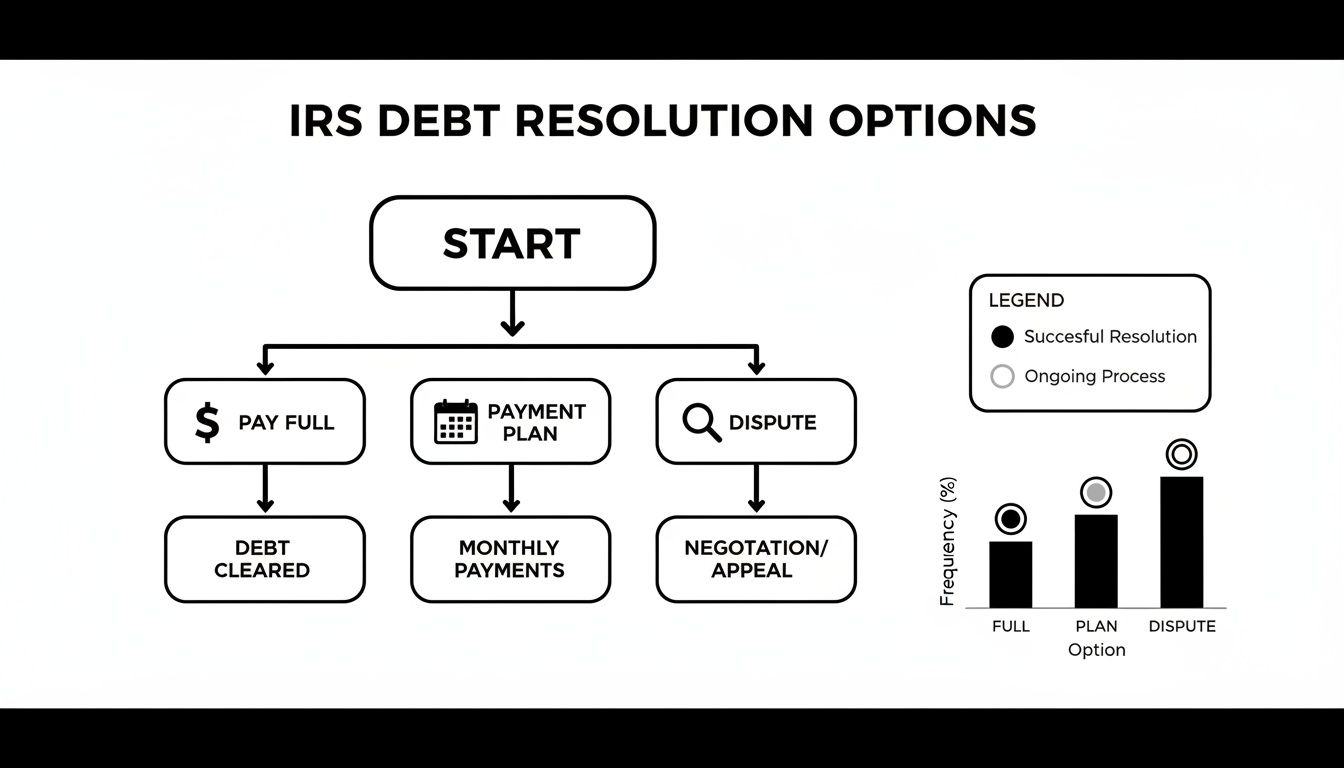
As you can see, whether you decide to pay what you owe, set up a payment plan, or argue the debt is wrong, there's a clear process for each.
Pay the Full Amount
This is the quickest, cleanest way out. If you have the money available, paying the debt in full stops all collection activity, closes the account, and lets you move on. It’s that simple.
But here’s the most important rule: you should never pay the collection agency directly. A legitimate private collector working for the IRS will always instruct you to make your payment directly to the IRS. You can do this online via the IRS Direct Pay portal or by mailing a check made payable to the "U.S. Treasury." This is a crucial safety measure that ensures your money is properly credited and protects you from scams.
Set Up a Payment Plan
For many people, coming up with the full amount at once just isn't in the cards. That’s perfectly okay. One of the most common and practical solutions is to set up an IRS payment plan and tackle the debt in manageable pieces.
The private collection agency is authorized to help you with this. They can get you into a formal Installment Agreement, which allows you to make affordable monthly payments for up to seven years. If you can clear the debt sooner, they can also arrange a short-term plan, giving you up to 180 days to pay in full. It's a great way to resolve the debt without wiping out your savings.
Dispute the Debt Amount
What if you look at the bill and think, "This number can't be right"? You absolutely have the right to question it. If you have evidence to back up your claim—like proof of previous payments, an amended return, or other documents showing an error—you can present it to the collection agency.
The agency's job is to forward your dispute and evidence to the IRS for a formal review. This is a fundamental taxpayer right, and it exists to make sure you never pay a penny more than you legally owe.
Your right to challenge the IRS’s position and be heard is one of the ten core principles of the Taxpayer Bill of Rights. This protection doesn't vanish just because a private collector is involved. It empowers you to ensure the debt is accurate before you pay anything.
Seek Advanced Resolution Options
Sometimes, even a long-term payment plan is out of reach. If your financial situation is particularly difficult, there are other pathways available, though they are more complex and require you to open up your books to the IRS.
- Offer in Compromise (OIC): An OIC is an agreement that allows certain taxpayers to settle their tax debt for less than the full amount owed. This is generally reserved for cases of genuine financial hardship where the IRS doubts it could ever collect the full debt.
- Currently Not Collectible (CNC): If you can prove that paying your tax debt would prevent you from affording basic living expenses like housing and food, you can ask for CNC status. This temporarily pauses collection efforts until your financial situation improves.
Navigating these advanced options requires a hard look at your finances. You can explore our complete guide on tax debt relief options to get a clearer picture of who qualifies for each one. Making the right choice here is your first real step toward reclaiming financial peace of mind.
When to Hire a Tax Professional for IRS Debt
Let's be honest: if your tax bill is small, straightforward, and you have the cash to pay it, you can probably handle this on your own. But when things get complicated, going it alone is a huge gamble. Calling in a professional isn't admitting defeat—it's making a smart, strategic decision to protect yourself.
You should seriously think about getting professional help if your tax debt has any real complexity. Facing the IRS and its collectors without an expert is like walking into a courtroom without a lawyer. You’re immediately at a disadvantage.
Signs You Need an Expert Ally
Think of a tax professional as your personal advocate—a shield, really. They step in and take over all communication, meaning you no longer have to dread phone calls from a collection agency for irs debt. For many people, that peace of mind is worth everything.
Here are some clear signs it's time to bring in an expert:
- The debt is large or spans multiple years. The bigger the number, the more intense the collection efforts can get. The solutions also become far more complicated.
- Your debt involves a business or payroll taxes. The IRS takes these very seriously. A single misstep can lead to dire consequences, including making you personally liable for the company's trust fund taxes.
- You're certain the IRS is wrong about what you owe. To successfully challenge a tax assessment, you need a firm grasp of tax law and IRS procedure. An expert knows how to build that case and fight for you.
- You're completely overwhelmed. If you feel lost and don't know where to begin, a professional can cut through the confusion, analyze your financial situation, and map out the best path forward.
Key Insight: Hiring a professional lets you go on the offensive. Instead of just reacting to threats, you can proactively work toward the best possible long-term resolution for your specific financial reality.
The Strategic Advantage of Professional Representation
A good tax professional does so much more than make phone calls for you. They bring a deep understanding of the system that helps you avoid costly mistakes. The IRS is a massive, powerful organization. In fiscal year 2023 alone, the agency closed over 505,000 audits, which resulted in $29.0 billion in recommended additional tax. Those numbers give you a sense of the scale you're up against. You can see more details in the IRS's extensive data collection and enforcement activities reports.
An experienced representative, like the attorneys here at The W Tax Group, knows this system inside and out. We start every case with a free Tax Debt Analysis so we can figure out exactly how to help before you ever pay a fee. Once we're on your side, we take over completely, dealing directly with both the private collectors and the IRS.
Our job is to use every tool in the playbook—from an Offer in Compromise to securing a Currently Not Collectible status—to find a solution that safeguards your assets and gives you a clear path to freedom. This isn't just about managing debt; it's about getting your life back.
Common Questions About the IRS Collection Program
When you hear from a private collection agency about your IRS debt, it’s natural to have questions. Let’s tackle some of the most common concerns people have when they find themselves in this situation.
Can a Private Collection Agency Take My House or Garnish My Wages?
Let's be crystal clear on this: No. A private collection agency (PCA) working on behalf of the IRS has absolutely no legal authority to seize your assets. They cannot put a lien on your house, levy your bank account, or garnish your paychecks.
Their job is strictly limited to communication. They can call you and send letters to help you figure out a payment solution. Only the IRS itself holds the power to take serious enforcement actions like seizing property. If any collector ever threatens you with this, it's a giant red flag that you're dealing with a scammer.
Will My Credit Score Be Affected by an IRS Private Collection?
The short answer is no. Federal tax debt and any related collection activity from an IRS-assigned agency are not reported to the major credit bureaus—Experian, Equifax, or TransUnion. So, just being in the private collection program won't directly ding your credit score.
There is, however, one very important exception: the Notice of Federal Tax Lien. If your debt situation escalates and the IRS decides to file a tax lien against you, that lien becomes a public record. Credit reporting agencies can and often do pick up on public records, which could then drag your credit score down.
A tax lien is a public claim on your assets. While a private collector can't file one, ignoring them could lead the IRS to do so, impacting your financial life beyond just the tax debt itself.
What Happens If I Ignore the Private Collection Agency?
Sticking your head in the sand is probably the worst thing you can do. If the private collection agency tries to contact you repeatedly and gets no response, they are required by their contract to send your account back to the IRS.
Once your file lands back on the IRS's desk, it’s no longer a low-priority matter. The IRS can then escalate its own collection machine, bringing out the big guns the PCA never had access to. We’re talking about bank levies, wage garnishments, and other powerful enforcement actions.
Navigating IRS debt requires a clear strategy, not guesswork. At The W Tax Group, we start with a free Tax Debt Analysis to find out exactly how we can help before you pay a fee. Get your free analysis today and find your path to resolution at https://weisberg.tax.


